
 EN
EN



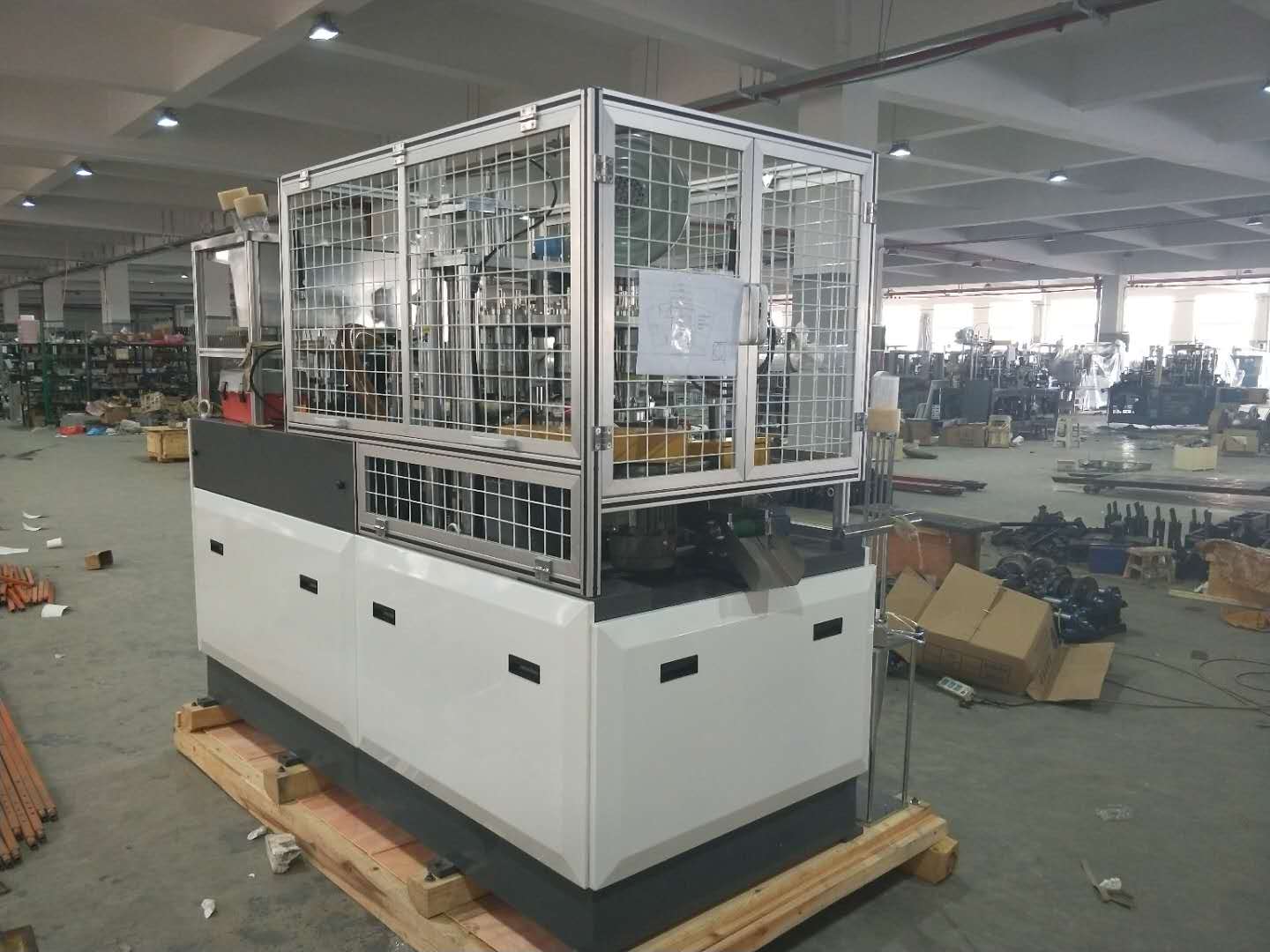
Modern food packaging demands flexibility. A single production facility may need to turn out soup bowls, salad containers, and snack cups all within the same shift, each with distinct diameters, heights, and wall angles. For manufacturers facing that reality, understanding how a paper bowl machine handles multiple bowl dimensions on one continuous line is not just an engineering curiosity — it is a direct business question tied to throughput, changeover cost, and market responsiveness.
The answer lies in a combination of modular tooling design, precise mechanical adjustment systems, and intelligent control architecture. A well-engineered paper bowl machine is not locked into a single geometry. Instead, it is built around interchangeable mold sets and programmable motion profiles that allow operators to shift from one bowl size to another without dismantling the entire line. This article walks through exactly how that multi-dimension capability is achieved, what it means in practice, and what operators should understand before relying on it at full production scale.
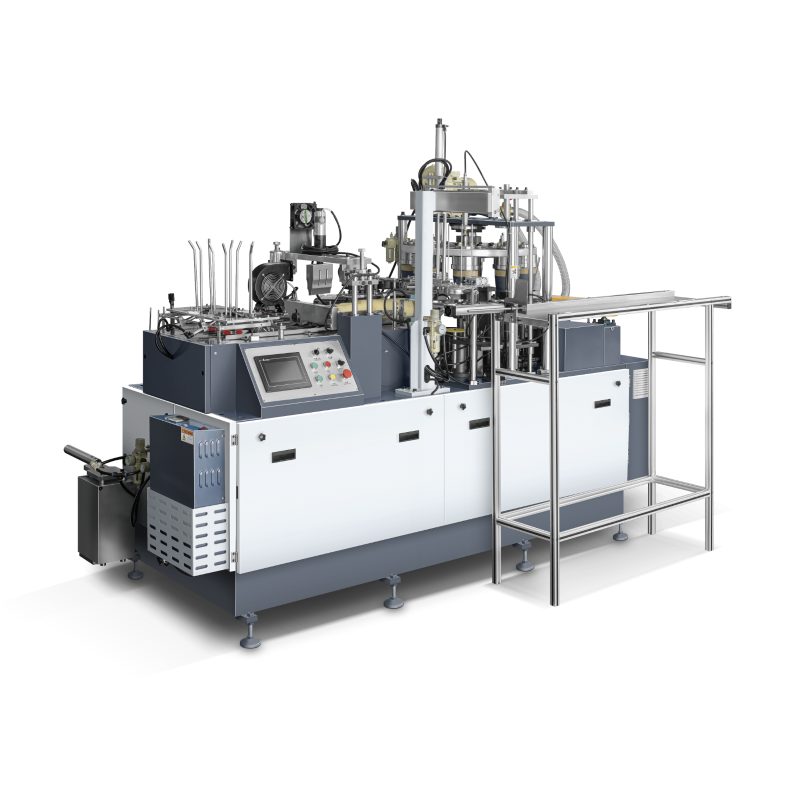
The Core Forming Mechanism and Why It Supports Size Variation
How the paper blank becomes a bowl
Every paper bowl machine begins its work with a pre-cut fan-shaped paper blank. That blank is drawn from a magazine, curled into a cone, and then pressed into a forming mold where heat and pressure bond the sidewall seam. The bottom disc is then inserted and ultrasonically or thermally sealed to complete the vessel. The dimensional outcome — diameter, height, taper angle — is almost entirely determined by the geometry of the mold set and the mechanical parameters governing how the blank is fed and wrapped.
Because the mold is the primary shape-defining component, changing bowl dimensions fundamentally means changing the mold. This is the foundational design logic behind multi-size capability on a single paper bowl machine. Rather than rebuilding the drive train, heating system, or transport indexer, manufacturers engineer the machine so that the mold carrier accepts standardized mold inserts of different sizes. The rest of the machine stays in place while only the shape-critical parts are swapped.
This approach is not accidental. It reflects decades of equipment refinement aimed at reducing the cost per SKU changeover. A paper bowl machine that requires complete teardown for every size change would be impractical in a market where packaging sizes proliferate rapidly in response to portion-control trends and quick-service restaurant specifications.
Forming station geometry and its role in dimensional flexibility
The forming station of a paper bowl machine typically contains an outer mold (the die) and an inner punch or mandrel. The outer mold controls the external profile of the bowl, while the inner punch governs the internal volume and wall uniformity. When a different bowl dimension is required, both elements must be replaced as a matched pair to maintain wall thickness consistency and seam alignment.
Advanced paper bowl machine designs incorporate quick-release clamping on the mold carrier, allowing a trained operator to swap the mold set in a matter of minutes rather than hours. The mold locating surfaces are machined to extremely tight tolerances so that each mold set re-seats in exactly the same position regardless of how many times it has been installed. This repeatability is essential — even a fraction of a millimeter of mold misalignment translates into visible seam defects or lid-fit failures at the finished bowl stage.
Some paper bowl machine configurations go further by using segmented outer molds with adjustable cam rings. These allow a limited range of diameter adjustment without a full mold swap, which is particularly useful when a manufacturer needs to accommodate slight regional size variations within the same product family. This kind of adjustability narrows the number of complete mold sets a facility needs to keep in inventory.
Mechanical Adjustment Systems That Enable Multi-Dimension Operation
Blank feed path and cut-size coordination
A paper bowl machine that handles multiple bowl dimensions must also handle multiple blank sizes. The fan-shaped blank for a 32-ounce bowl is considerably larger than the blank for a 12-ounce cup, and the feed path — including the blank magazine, the suction transfer arm, and the wrapping guide — must accommodate that difference. Machines designed for multi-size operation use adjustable magazine width guides and programmable suction cup positioning so that blanks of different arc lengths and radii can be handled without hardware replacement.
The wrapping guide, which curls the blank around the mandrel, is particularly sensitive to blank geometry. If the guide radius does not match the blank's intended curvature, the sidewall will either over-lap unevenly or leave a gap that weakens the seam bond. On flexible paper bowl machine models, the wrapping guide is either interchangeable as part of the mold set package or continuously adjustable via a calibrated screw mechanism. Operators log the guide setting for each bowl dimension in a setup reference card or, on newer machines, in the HMI parameter memory.
Blank size coordination also involves the paper roll or blank supply upstream. If the paper bowl machine is integrated with an in-line die-cutting station, the cutting die must also be changed or reprogrammed to match the new blank geometry. Standalone paper bowl machines that use pre-cut blanks simply require a changeover of the blank magazine contents, which is faster but requires advance preparation of pre-cut stock for each active SKU.
Sealing temperature and pressure profiles by bowl dimension
Thermal sealing performance in a paper bowl machine is directly related to material thickness, coating type, and the contact area between the blank overlap and the bottom disc. When bowl dimensions change, all three of these variables may shift simultaneously. A larger bowl typically uses heavier board stock with a thicker PE coating, requiring higher sealing temperature and longer dwell time. A smaller, thinner bowl may need less heat to avoid delaminating the coating or scorching the paper fibers.
Sophisticated paper bowl machine platforms store dimension-specific sealing profiles in their PLC memory. When an operator calls up a saved job number corresponding to a particular bowl size, the machine automatically adjusts heater setpoints, hot-air flow rates, and the sealing head pressure. This eliminates the trial-and-error tuning that once consumed a significant portion of every changeover window and helps protect paper quality during the transition period between one bowl size and the next.
Some paper bowl machine designs also feature independent temperature zones for the sidewall seam heater and the bottom seal station, allowing each zone to be optimized separately. This is especially valuable when running bowls where the sidewall material weight differs from the bottom disc material — a common situation when manufacturers use lightweight printed outer blanks paired with heavier uncoated inner discs for leak resistance.
Control Systems and Changeover Workflow
Programmable logic and saved job parameters
The control architecture of a modern paper bowl machine is as important to multi-dimension flexibility as the mechanical design. A touchscreen HMI connected to a PLC allows operators to store complete job recipes for every bowl size in the machine's active product portfolio. Each recipe captures not only the sealing temperatures discussed above, but also the index timing, the blank feed stroke length, the forming pressure, and the output speed. Recalling a saved recipe turns what was once a skilled-only adjustment task into a structured, repeatable procedure that any trained operator can execute.
Parameter memory depth varies by paper bowl machine model. Entry-level units may store ten to twenty job recipes, while high-capacity industrial models can hold hundreds of distinct configurations. For facilities running a wide portfolio of portion sizes across multiple QSR customers, deep recipe memory reduces the setup documentation burden and lowers the risk of keying errors during changeover. Some machines also offer USB export of recipe files, allowing a production manager to maintain a master backup and push parameter updates across multiple paper bowl machine units on the same floor.
Closed-loop feedback is another control feature that supports stable multi-dimension production. Sensors monitoring blank presence, seam temperature, and formed cup height feed real-time data back to the PLC. If a formed bowl falls outside the programmed height tolerance — a signal that the mold alignment may have shifted or that blank curl is insufficient — the machine flags the deviation and pauses automatically rather than continuing to produce out-of-spec product. This kind of adaptive control is particularly valuable when running smaller-batch specialty bowl sizes that don't benefit from the long setup stabilization runs typical of high-volume standard sizes.
Changeover sequence and downtime reduction strategies
The actual changeover sequence on a multi-dimension paper bowl machine follows a logical order designed to minimize time off-line. The operator first exhausts or removes the remaining blank stock for the outgoing bowl size, then calls up the target job recipe on the HMI to pre-load the new parameter set. While the heating elements begin ramping to the new temperature targets, the operator performs the mechanical changes — swapping the mold set, repositioning the blank feed guides, and loading the new blank magazine. By the time the mechanical work is complete, the heaters are typically within range of the new setpoints, eliminating additional waiting time.
Well-organized paper bowl machine facilities maintain a dedicated changeover cart for each active mold set. The cart holds the matched mold pair, the corresponding guide insert, any required spacer components, and a pre-printed setup verification card. Using a standardized cart approach prevents the common problem of operators hunting for components across a storage room during a time-pressured changeover, which is one of the most frequent sources of unexpected line downtime on paper bowl machine installations.
Total changeover time on a professionally maintained paper bowl machine with quick-release mold holders typically runs between fifteen and forty-five minutes depending on bowl size differential and operator experience. Lines switching between adjacent sizes — say, a 16-ounce and a 20-ounce bowl sharing similar blank proportions — often achieve changeovers at the lower end of that range. Transitions between very small and very large bowls, where almost every mechanical setting changes significantly, approach the upper end. Tracking changeover time as a KPI encourages continuous improvement and helps justify investments in additional mold sets or upgraded quick-change hardware.
Practical Implications for Production Planning
Scheduling multi-dimension runs efficiently
Understanding the changeover capability of a paper bowl machine has direct consequences for production scheduling strategy. Facilities that run frequent small batches across many bowl sizes benefit from grouping similar-dimension orders into sequential runs, minimizing the magnitude of each mechanical adjustment. This is sometimes called family scheduling — organizing the production sequence so that consecutive jobs share as many machine parameters as possible, reducing both changeover time and the risk of quality drift between runs.
A paper bowl machine running five bowl sizes across a single shift will perform best when the size sequence moves in one directional sweep — from smallest to largest or vice versa — rather than jumping arbitrarily between sizes. This approach means the mechanical adjustments accumulate in one direction, which is easier to track and verify than bidirectional oscillation between large and small settings. Production planners who understand the mechanical logic of the paper bowl machine can translate that knowledge into scheduling decisions that protect both throughput and quality.
Inventory planning for paper blanks and bottom discs also interacts with multi-dimension scheduling. Pre-cut blanks for each bowl size must be available in the correct quantity at the time of changeover. A paper bowl machine forced to pause mid-run because the blank supply for the next size is not yet cut and staged wastes the efficiency gained by a fast mechanical changeover. Integrating blank preparation into the production schedule — with a target of having the next size's blanks ready at least one run cycle ahead — is a straightforward operational discipline that multiplies the value of the machine's inherent flexibility.
Mold set investment and its role in overall line economics
A paper bowl machine's multi-dimension flexibility is only as broad as the mold sets a facility has invested in. Each mold set — comprising the outer die, inner punch, wrapping guide, and associated tooling — represents a capital expenditure that must be justified by the volume of bowls produced in that size. For established bowl sizes with predictable long-term demand, full mold set investment is straightforward to justify. For emerging sizes or trial SKUs, some manufacturers arrange mold rental or cost-sharing agreements with their paper bowl machine supplier.
Mold maintenance also enters the economics. Mold surfaces in a paper bowl machine are exposed to repetitive thermal cycling, mechanical pressure, and abrasive contact with coated paperboard. Over time, minute surface wear can affect seam quality and bowl dimension consistency. A disciplined mold inspection and refurbishment schedule — typically tied to production cycle counts rather than calendar intervals — extends mold service life and prevents the gradual quality degradation that can otherwise go unnoticed until customer complaints arrive.
The total cost of multi-dimension operation on a paper bowl machine therefore includes not just the machine itself but the mold set portfolio, the storage and maintenance infrastructure, and the training investment required to execute clean changeovers consistently. Facilities that account for all of these factors when evaluating a paper bowl machine purchase make better-informed decisions about which machine specifications they actually need versus which capabilities would remain unused given their real product mix.
FAQ
How long does it take to change bowl dimensions on a paper bowl machine?
On a paper bowl machine equipped with quick-release mold holders and saved HMI job recipes, a trained operator can typically complete a dimension changeover in fifteen to forty-five minutes. The exact time depends on the degree of difference between the outgoing and incoming bowl sizes, the organization of tooling storage, and the operator's experience level with the specific machine model.
Does running multiple bowl dimensions on one paper bowl machine affect product quality?
Running multiple dimensions does not inherently reduce quality as long as the changeover is executed correctly. Quality risks arise when mold alignment is not verified after installation, when sealing parameters are not properly adjusted for the new material weight, or when blank feed settings are left at the previous size's values. A structured changeover checklist specific to each bowl dimension minimizes these risks on any well-maintained paper bowl machine.
How many bowl sizes can a single paper bowl machine typically accommodate?
Most industrial paper bowl machine models are designed with a mechanical adjustment range that covers a defined span of diameters and heights — for example, from roughly 90mm to 180mm top diameter and from 40mm to 90mm height. Within that range, the number of distinct sizes a machine can run is limited only by the number of mold sets purchased and the control system's recipe storage capacity. It is common for active production facilities to maintain four to eight distinct bowl size configurations per paper bowl machine.
What is the difference between a paper bowl machine and a paper cup machine in terms of size flexibility?
Paper cup machines and paper bowl machines share similar forming principles but differ in the geometry they are optimized to produce. Bowl machines are typically engineered for wider-diameter, lower-height vessels with greater taper angles, which requires different mold geometry and blank proportions compared to the taller, narrower cylinders produced on a cup machine. A paper bowl machine can generally accommodate a wider range of diameter variation relative to height than a cup machine can, making it better suited to the diverse shallow-vessel formats common in food service applications.
Table of Contents
- The Core Forming Mechanism and Why It Supports Size Variation
- Mechanical Adjustment Systems That Enable Multi-Dimension Operation
- Control Systems and Changeover Workflow
- Practical Implications for Production Planning
-
FAQ
- How long does it take to change bowl dimensions on a paper bowl machine?
- Does running multiple bowl dimensions on one paper bowl machine affect product quality?
- How many bowl sizes can a single paper bowl machine typically accommodate?
- What is the difference between a paper bowl machine and a paper cup machine in terms of size flexibility?