
 EN
EN



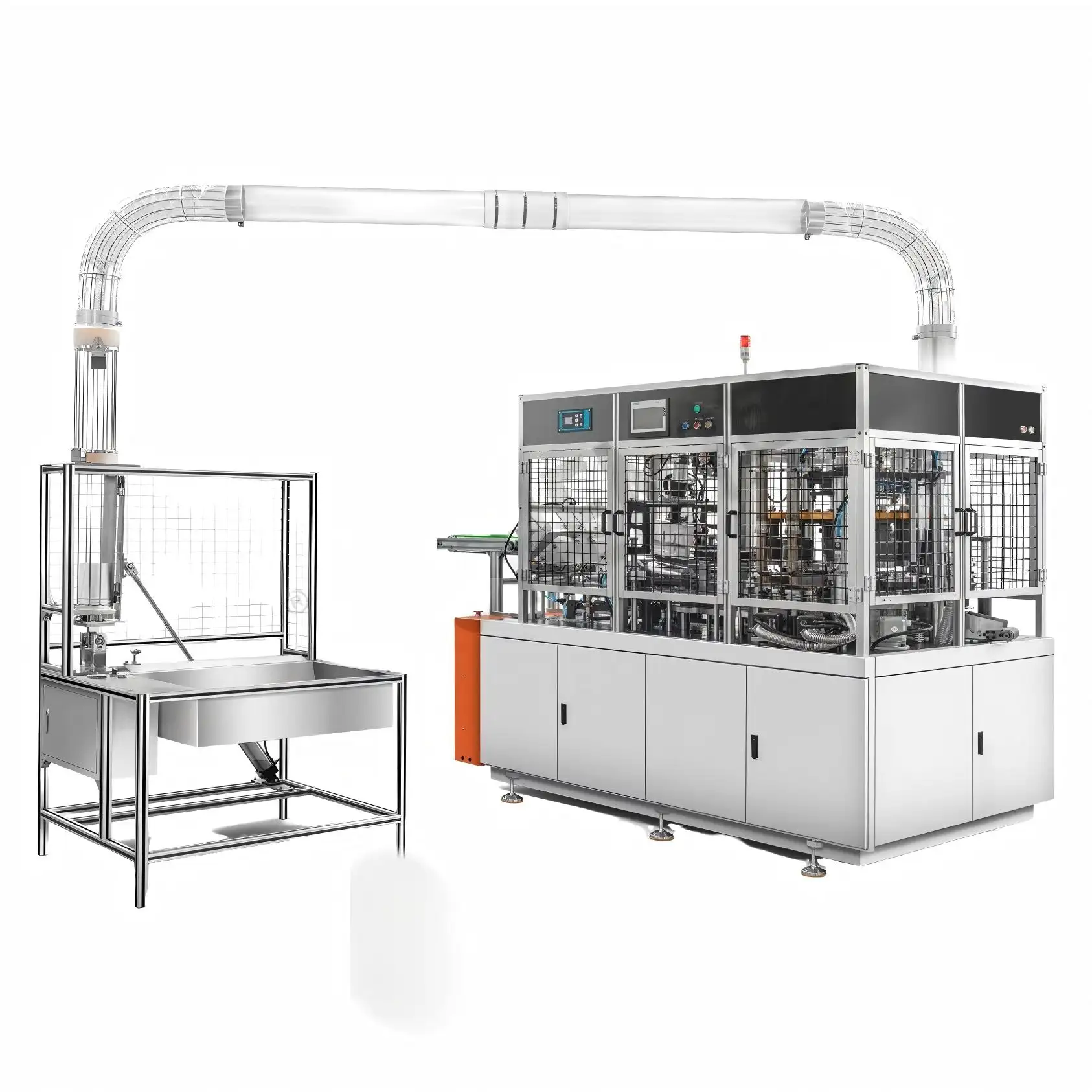
Manufacturing paper cups at scale requires precision machinery that operates continuously under demanding conditions, yet production facilities frequently encounter disruptions that impact output quality, efficiency, and profitability. Understanding the common issues that arise during paper cup machine operation is essential for manufacturers seeking to minimize downtime, reduce waste, and maintain consistent product standards. These challenges range from material handling complications and mechanical wear to process control inconsistencies that affect cup integrity. By identifying the root causes of these production obstacles and implementing targeted solutions, operators can optimize their paper cup machine performance and achieve more reliable manufacturing outcomes.
Production managers and equipment operators must navigate a complex landscape of potential failures that can emerge at any stage of the manufacturing cycle. From raw material feeding errors to final inspection defects, each phase presents unique technical challenges that demand both preventive maintenance strategies and rapid troubleshooting capabilities. The financial implications of unresolved production issues extend beyond immediate equipment repair costs to include material waste, labor inefficiency, delayed order fulfillment, and potential customer dissatisfaction. This comprehensive examination explores the specific problems that compromise paper cup machine productivity, analyzes their underlying causes, and provides practical guidance for maintaining optimal operational performance in industrial paper cup manufacturing environments.
Material Feeding and Handling Complications
Paper Roll Alignment and Tension Problems
One of the most frequently encountered issues in paper cup machine operations involves improper alignment and inconsistent tension of the paper roll feedstock. When paper rolls are not correctly positioned on the unwinding station, the material enters the forming section at an angle, causing uneven cup wall thickness and dimensional variations that fail quality standards. Tension irregularities create additional complications as excessive tightness leads to paper tearing during high-speed production, while insufficient tension results in slack material that forms wrinkles and folds in the finished cups. These alignment and tension problems often stem from inadequate operator training, worn tension control mechanisms, or incompatible paper roll specifications that do not match the machine's designed parameters.
The consequences of material feeding errors extend throughout the entire production cycle. Misaligned paper causes the automated cutting mechanism to produce blanks with incorrect dimensions, which subsequently fail to form proper seams during the cup body construction phase. Operators must frequently stop the paper cup machine to manually adjust roll positioning, significantly reducing overall equipment effectiveness and creating production bottlenecks. Regular calibration of tension sensors, implementation of automatic web guiding systems, and establishment of strict material specification protocols can substantially reduce these feeding complications and improve first-pass quality rates.
Raw Material Quality Inconsistencies
Variations in paper substrate characteristics present persistent challenges for maintaining stable production conditions. Paper weight fluctuations across different sections of a roll cause the paper cup machine to experience irregular forming behavior, as lighter sections may not provide adequate structural rigidity while heavier areas can overwhelm the heating and sealing systems. Moisture content variations similarly disrupt production stability, with excessively dry paper becoming brittle and prone to cracking, while paper with high moisture content fails to properly bond with polyethylene coatings during the heat sealing process. These material inconsistencies force operators to constantly adjust machine parameters, preventing the establishment of optimized production settings.
Coating uniformity problems compound material handling difficulties. When polyethylene or other barrier coatings are applied unevenly to the paper substrate by external suppliers, the paper cup machine encounters adhesion failures during bottom and rim sealing operations. Thin coating areas do not generate sufficient heat-activated bonding, resulting in leaking cups that must be rejected, while excessively thick coating zones create residue buildup on heating elements that requires frequent cleaning. Implementing incoming material inspection procedures, establishing supplier quality agreements with specific coating tolerance requirements, and maintaining backup material sources can mitigate the production disruptions caused by raw material variability.
Mechanical Component Wear and Failure
Heating Element Degradation
The heating components that activate polyethylene sealing represent critical wear points in paper cup machine operation. These elements must maintain precise temperature profiles to create leak-proof seams without burning through the paper substrate, yet continuous thermal cycling causes gradual performance degradation over time. Heating plates develop uneven surface temperatures as internal resistance elements age, creating seal zones with insufficient bonding adjacent to areas with excessive heat that char the paper. This temperature non-uniformity becomes progressively worse as production continues, eventually reaching a threshold where seal integrity becomes unpredictable and rejection rates escalate dramatically.
Maintenance teams often struggle to determine optimal replacement intervals for heating elements because failure patterns vary based on production volume, paper specifications, and operational practices. Premature replacement wastes resources and creates unnecessary downtime, while delayed replacement allows defective products to enter the market and damages the machine's reputation for reliability. Implementing thermal imaging inspection protocols during scheduled maintenance periods allows operators to identify developing temperature irregularities before they compromise production quality. Modern paper cup machine designs incorporate modular heating element assemblies that enable rapid replacement without extensive machine disassembly, significantly reducing maintenance-related production interruptions.
Mechanical Drive System Problems
The mechanical systems that drive the various stations within a paper cup machine experience continuous operational stress that leads to predictable wear patterns and eventual failure. Timing belt degradation represents a particularly problematic issue because these components synchronize the movements of multiple production stages, and their failure causes immediate production stoppage with potential damage to other machine elements. As timing belts stretch over thousands of operating hours, the precise coordination between blank cutting, cup forming, bottom attachment, and rim curling operations gradually deteriorates, producing cups with misaligned seams and structural weaknesses that become evident during use.
Bearing wear in rotating assemblies creates additional mechanical complications. When bearings supporting forming mandrels or knurling wheels develop excessive clearance, the affected components experience vibration and positional instability that translates directly into product defects. These worn bearings also generate heat and noise that serve as early warning indicators for attentive operators, yet in high-ambient-noise production environments, these signals may go unnoticed until catastrophic failure occurs. Establishing vibration monitoring programs, implementing predictive maintenance schedules based on bearing life calculations, and maintaining adequate spare parts inventory enable production facilities to address mechanical wear proactively rather than responding to emergency breakdowns that halt production unexpectedly.
Process Control and Consistency Challenges
Temperature Regulation Instability
Maintaining consistent thermal conditions throughout the production cycle poses significant challenges for paper cup machine operators. Temperature fluctuations in the sealing zones directly impact seal quality, with even minor deviations of five to ten degrees Celsius producing measurable differences in bond strength. These variations can originate from multiple sources including electrical supply voltage instability, cooling system inadequacies, ambient temperature changes in the production facility, or worn temperature sensors that provide inaccurate feedback to control systems. When thermal regulation becomes unstable, operators face the difficult choice between stopping production to investigate the root cause or continuing operation while accepting higher defect rates.
The interaction between multiple heating zones in a paper cup machine compounds temperature control complexity. Bottom sealing, side seam bonding, and rim curling operations each require specific thermal profiles, and interference between these zones can create unpredictable heating patterns. Inadequate thermal insulation between adjacent heating stations allows heat transfer that disrupts the intended temperature distribution, while insufficient cooling between heating cycles prevents proper reset of thermal conditions for the next production cycle. Advanced paper cup machine models incorporate multi-zone temperature controllers with individual feedback loops and predictive algorithms that compensate for thermal lag, substantially improving process stability compared to simpler control architectures.
Lubrication System Deficiencies
Proper lubrication of moving components in a paper cup machine is essential for maintaining smooth operation, yet lubrication systems frequently become sources of production problems rather than solutions. Insufficient lubrication causes accelerated wear on slides, cams, and pivot points, generating metal particles that contaminate the production environment and potentially embed in finished cups. Conversely, excessive lubrication creates oil mist in the production area and can transfer lubricant onto paper surfaces, creating contamination that prevents proper polyethylene bonding and renders affected cups unsuitable for food contact applications.
Automated lubrication systems designed to deliver precise quantities of lubricant at programmed intervals sometimes malfunction due to clogged delivery lines, failed metering pumps, or depleted lubricant reservoirs that go unnoticed. These failures typically manifest gradually rather than catastrophically, making detection difficult until significant component wear has already occurred. Manual lubrication procedures provide greater operator control but introduce human variability and potential for both over-lubrication and missed lubrication points. Establishing clear lubrication schedules with visual confirmation requirements, selecting food-grade lubricants appropriate for paper cup production environments, and implementing level sensors on lubricant reservoirs help ensure consistent lubrication practice across production shifts.
Quality Defects and Product Rejection Issues
Leak and Seal Failure Problems
Leak defects represent the most critical quality failure mode in paper cup manufacturing because they directly compromise the product's fundamental function. These failures typically occur at the bottom seal junction where the cup body meets the base disc, or along the side seam where the paper blank's edges bond together. Bottom seal leaks often result from insufficient sealing pressure, inadequate heating temperature, contamination of sealing surfaces by paper dust or lubricant residue, or misalignment between the cup body and bottom disc during the bonding operation. Each of these root causes requires different corrective approaches, making leak diagnosis a complex troubleshooting exercise.
Side seam failures present additional diagnostic challenges because the seam quality depends on precise coordination between paper overlap dimension, heating temperature profile, dwell time under pressure, and coating activation characteristics. When a paper cup machine produces cups with intermittent side seam leaks rather than consistent failures, operators must systematically evaluate each process parameter to identify the source of variability. Statistical process control methods that track seam strength measurements across production runs can reveal subtle trends that indicate developing problems before leak rates become commercially unacceptable. Implementing automated leak detection systems that test every cup or statistically significant sample quantities provides rapid feedback that enables timely process corrections.
Dimensional Variation and Aesthetic Defects
Paper cups must conform to specified dimensional tolerances to function correctly with automated filling equipment and lid systems, yet maintaining consistent dimensions throughout long production runs challenges even well-maintained equipment. Cup height variations arise from inconsistent blank positioning during forming, wear in the mandrel assembly that changes the forming profile, or temperature changes that affect material shrinkage rates. Rim diameter variations similarly result from worn knurling wheels, inconsistent curling pressure, or material thickness variations that alter the curling behavior. These dimensional inconsistencies create functional problems for customers who operate high-speed automated filling lines calibrated for narrow tolerance ranges.
Aesthetic defects including wrinkles, scoring marks, and surface contamination may not compromise cup functionality but significantly impact consumer perception and brand value. Wrinkles typically form when paper tension is insufficient during the forming operation or when moisture content is excessive, while scoring marks result from damaged tooling that should be replaced during preventive maintenance cycles. Surface contamination from oil mist, paper dust accumulation, or handling damage during transfer between production stations requires environmental controls and careful material handling procedures. Modern paper cup machine installations incorporate enclosed production zones with filtered air supply and automated transfer systems that minimize human contact with cups, substantially reducing contamination-related rejections.
Operational Efficiency and Downtime Factors
Setup and Changeover Time Losses
Transitioning a paper cup machine from one cup size or specification to another consumes significant production time and requires skilled technician intervention. Changeover procedures typically involve replacing forming mandrels, adjusting heating element positions, modifying bottom disc feeding mechanisms, recalibrating sensors, and conducting trial runs to verify quality before releasing production for commercial sale. The complexity of these adjustments varies substantially based on the magnitude of the specification change, with transitions between similar cup sizes requiring minutes while changes from small to large cup formats may demand hours of setup time.
Production facilities serving diverse markets with multiple cup specifications face continuous pressure to reduce changeover time while maintaining setup accuracy. Quick-change tooling systems that enable mandrel replacement without removing the entire forming turret, pre-calibrated adjustment settings stored in machine control systems for common specifications, and standardized setup procedures documented with visual guides all contribute to changeover time reduction. Some manufacturers maintain dedicated paper cup machines for high-volume specifications to eliminate changeover losses entirely, while others invest in flexible equipment capable of rapid reconfiguration to accommodate smaller production runs economically. The optimal approach depends on the facility's product mix, production volume distribution, and capital equipment availability.
Operator Skill and Training Gaps
The performance of a paper cup machine depends heavily on operator expertise, yet many production facilities struggle with inadequate training programs and high workforce turnover that prevents development of the deep equipment knowledge required for optimal operation. Inexperienced operators may fail to recognize early warning signs of developing problems, apply incorrect troubleshooting approaches that worsen issues rather than resolving them, or make unauthorized adjustments that disrupt carefully optimized process parameters. These skill gaps translate directly into higher defect rates, increased material waste, more frequent unplanned downtime, and accelerated equipment wear from improper operation.
Comprehensive training programs must address both theoretical understanding of paper cup machine principles and practical hands-on experience with common troubleshooting scenarios. Effective training includes detailed explanation of how material properties affect production outcomes, demonstration of proper adjustment procedures with clear criteria for determining when adjustments are necessary, and supervised practice with actual production issues under controlled conditions. Documentation of standard operating procedures, troubleshooting guides with decision trees that lead operators through systematic diagnostic processes, and readily accessible technical support from equipment manufacturers all enhance operator capability. Facilities that invest in building operator expertise through structured training and knowledge retention programs consistently achieve superior production performance compared to operations that treat machine operators as easily replaceable resources requiring minimal skill development.
FAQ
What causes paper cup machines to produce cups with bottom leaks?
Bottom leaks in paper cups typically result from four primary causes: insufficient sealing temperature that fails to fully activate the polyethylene coating bonding, inadequate sealing pressure that prevents intimate contact between the cup body and bottom disc, misalignment between these components during the sealing operation, or contamination of sealing surfaces by paper dust, lubricant residue, or moisture. Operators should systematically verify each parameter, starting with temperature measurement using thermal imaging or contact thermometers to confirm heating elements are reaching target values, then checking pressure settings and seal dwell time. Regular cleaning of sealing surfaces and inspection for worn tooling that causes misalignment will address the remaining common causes of bottom seal failures.
How often should paper cup machine heating elements be replaced?
Heating element replacement intervals vary significantly based on production volume, operating temperatures, paper specifications, and maintenance practices, making universal time-based schedules impractical. Instead, manufacturers should implement condition-based replacement strategies that monitor heating element performance through regular thermal imaging inspections conducted during scheduled maintenance periods. When thermal imaging reveals temperature variations exceeding five degrees Celsius across sealing surfaces, or when seal quality data shows increasing defect trends despite parameter adjustments, heating element replacement should be scheduled. High-volume operations running continuously may require replacement every six to twelve months, while lower-volume facilities might extend element life to eighteen months or longer with proper monitoring and maintenance.
Why does cup dimension consistency deteriorate during long production runs?
Dimensional consistency degradation over extended production periods typically results from thermal expansion of tooling components, particularly forming mandrels and knurling wheels that heat up during continuous operation and expand beyond their room-temperature dimensions. This thermal growth changes the effective forming diameter and curling geometry, producing cups that gradually deviate from specification as the production run progresses. Additionally, accumulation of paper dust and polyethylene residue on tooling surfaces effectively increases their dimensions, while mechanical wear in positioning mechanisms allows increased clearances that reduce positional accuracy. Implementing periodic measurement checks during production runs, establishing thermal stabilization periods at startup, and maintaining rigorous cleaning schedules for tooling surfaces can substantially improve long-run dimensional consistency.
What maintenance schedule is recommended for paper cup machine mechanical components?
Effective maintenance programs for paper cup machines should incorporate multiple inspection frequencies based on component criticality and failure consequence. Daily maintenance should include visual inspection for obvious wear or damage, verification of proper lubrication at key points, and cleaning of paper dust accumulation from critical areas. Weekly maintenance should add detailed inspection of timing belts for wear and proper tension, examination of heating elements for uniform temperature distribution, and verification of all sensor functions. Monthly maintenance should include replacement of consumable items like cutting blades, thorough cleaning and inspection of all forming tooling, bearing inspection with vibration measurement, and calibration verification of temperature and pressure control systems. Annual maintenance should involve complete disassembly and inspection of critical assemblies, replacement of all bearings and timing belts regardless of apparent condition, recalibration of all measurement and control systems, and documentation of wear patterns to predict future maintenance needs.