
 EN



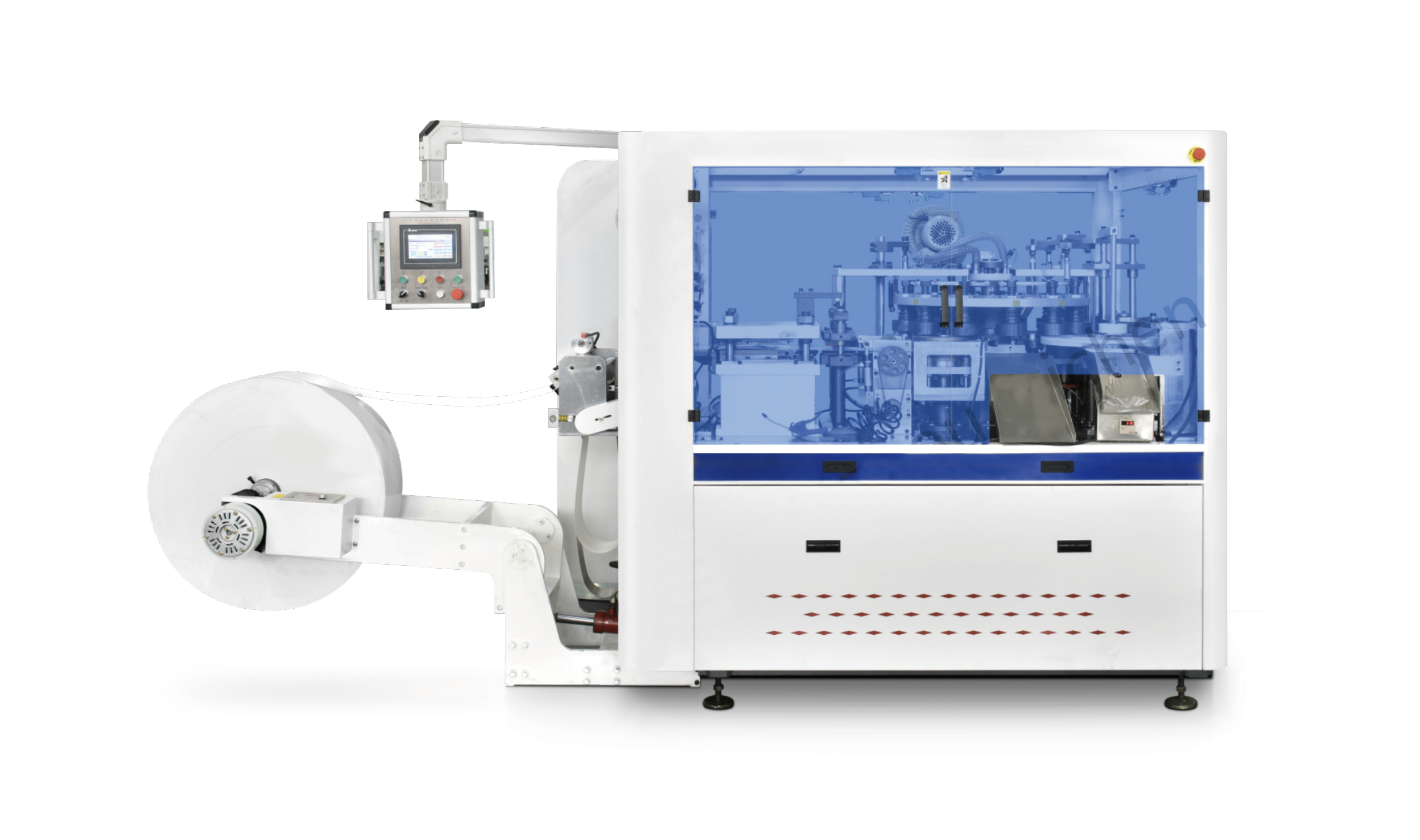
Manufacturing paper covers at scale demands precision, reliability, and unwavering quality standards. A paper cover machine is engineered specifically to deliver consistent results across thousands of units, ensuring that every single product meets exact specifications regardless of production volume. In high-demand industries such as food packaging, beverage distribution, and protective product manufacturing, inconsistency translates directly into waste, customer dissatisfaction, and lost revenue. Understanding how a paper cover machine maintains this consistency is crucial for operations managers, quality directors, and procurement specialists who rely on these systems to keep production lines running smoothly and profitably.

A modern paper cover machine combines mechanical precision, digital control systems, and predictive quality safeguards to achieve repeatability that manual or semi-automated systems simply cannot match. The technology behind this consistency is not accidental; it represents decades of engineering refinement focused on eliminating variables that cause defects, dimensional drift, and surface imperfections. When you invest in a quality paper cover machine, you're acquiring a system designed to handle sustained high-volume demands while maintaining the exact specifications that your customers expect and your supply chain depends upon.
Mechanical Precision and Automated Calibration
Servo-Driven Positioning Systems
At the heart of every reliable paper cover machine lies servo-driven positioning technology. These electric motors receive continuous feedback through encoders that measure actual position versus target position thousands of times per second. Unlike pneumatic or purely mechanical systems that rely on fixed stops and spring tension, a paper cover machine with servo control adapts in real time. If material thickness varies slightly or if ambient conditions shift temperature, the servo system compensates automatically, ensuring that each paper cover is formed, cut, or folded at precisely the same position. This active feedback loop is the primary reason why a paper cover machine can maintain consistency even as material batches change or seasonal factors influence production conditions.
Repeatable Tool Geometry and Wear Management
The dies, cutting blades, and forming rollers inside a paper cover machine are manufactured to tolerances measured in tenths of a millimeter. However, even precision tools wear over time. Leading paper cover machine designs incorporate wear compensation algorithms that track tool degradation and adjust feed pressure or stroke depth to maintain output consistency. Some systems include automatic tool offset adjustment, while others flag when replacement is recommended based on cumulative cycle counts. This proactive wear management ensures that a paper cover machine does not gradually drift toward out-of-spec parts as the production run progresses. By the time an operator notices any visual change, the paper cover machine has already self-corrected or alerted maintenance before quality is compromised.
Advanced Material Handling and Feed Control
Constant Tension Roll Unwinding
Consistency in a paper cover machine begins with how raw material enters the system. Constant tension dancer rollers maintain uniform web tension throughout the unwind process, preventing slack that causes wrinkles or misalignment. Variable frequency drives regulate motor speed to match downstream production rhythm, ensuring smooth material flow. When a paper cover machine feeds material under inconsistent tension, wave patterns and dimensional inconsistencies ripple through the entire production run. By contrast, paper cover machine systems with closed-loop tension control automatically adjust unwind speed to match the exact consumption rate of the forming station, eliminating the start-stop behavior that degrades consistency. This seamless material flow is particularly critical when processing thin or delicate paper substrates that are prone to stretching or tearing under uneven load.
Multi-Point Registration and Alignment
A paper cover machine must track where each piece of material sits relative to the forming and cutting tools. Vision-based registration systems scan the material surface and detect reference marks, allowing the paper cover machine to micro-adjust the cutting or forming position before each stroke. Even if the paper web drifts 2 millimeters due to slight roller eccentricity or material run-out, the paper cover machine corrects this deviation within one cycle. This continuous alignment ensures that designs are centered consistently, cut edges are uniform, and formed features align precisely with the material surface. Without this registration capability, a paper cover machine would accumulate small positioning errors that compound across thousands of units, resulting in visual defects and eventual out-of-spec product.
Quality Monitoring and Adaptive Control Systems
Real-Time Sensor Integration and Feedback Loops
Modern paper cover machine technology incorporates embedded sensors that monitor pressure, position, temperature, and material thickness at multiple points in the production cycle. These sensors feed data continuously into a programmable logic controller that compares actual measurements against stored target values. If any parameter drifts outside acceptable tolerance, the paper cover machine automatically triggers a corrective action: increasing pneumatic pressure if compaction is insufficient, reducing speed if material is slipping, or adjusting heating temperature if lamination adhesive viscosity has changed. This adaptive control ensures that a paper cover machine maintains consistency not through rigid fixed settings, but through intelligent responsive adjustment. The result is that a paper cover machine can sustain consistent output even as external factors like humidity, temperature, or raw material batch variations introduce minor disturbances.
Defect Detection and Rejection Capability
A paper cover machine equipped with machine vision or laser measurement systems can inspect each unit immediately after production. If a cover dimension is out of tolerance, if surface defects are detected, or if structural integrity is compromised, the system automatically diverts that unit to a reject bin or flags it for manual inspection. This inline quality gate prevents defective paper cover products from reaching downstream assembly or packaging, where discovering issues is far more costly. Because the paper cover machine catches defects in real time, operators can investigate the root cause—material batch change, tool wear, or sensor miscalibration—and make corrections before large quantities of off-spec product accumulate. This closed-loop quality cycle is fundamental to why high-volume paper cover machine operations maintain consistency across sustained production runs lasting hours, days, or weeks.
Operator Interface and Preventive Maintenance Protocols
Intuitive Setup and Changeover Procedures
Human error during setup is a common source of inconsistency in production systems, but a paper cover machine with guided changeover procedures minimizes this risk. Modern paper cover machine interfaces display step-by-step setup instructions with visual cues, sensor confirmation at each stage, and automatic validation once all parameters are confirmed. When an operator loads a new tool set or switches to a different cover specification, the paper cover machine guides them through the process and locks out operation until setup is complete and verified. This structured approach ensures that each changeover is performed identically, eliminating the variation that arises when different operators interpret written procedures differently. By standardizing the human elements of setup and changeover, a paper cover machine maintains consistency across all production shifts and operator skill levels.
Scheduled Maintenance and Component Tracking
Consistency degrades when components reach end-of-life without replacement. Leading paper cover machine systems track component usage and automatically generate maintenance alerts based on operational hours or cycle counts. Rollers, seals, cutting blades, and other wear items are identified before failure occurs, preventing sudden inconsistency or downtime. Predictive maintenance protocols ensure that a paper cover machine is serviced during planned downtime rather than failing unexpectedly mid-production. Manufacturers who implement these maintenance schedules report that their paper cover machine consistently outperforms competitors using reactive repair approaches, because the paper cover machine never deteriorates to the point where quality suffers.
FAQ
What specific features distinguish a high-consistency paper cover machine from basic equipment?
A premium paper cover machine includes closed-loop servo control, real-time sensor monitoring, vision-based registration, and adaptive parameter adjustment. Basic equipment relies on manual adjustment and fixed mechanical settings, which gradually drift out of tolerance. A paper cover machine with active feedback systems maintains consistency within 0.5 millimeters or tighter, while basic equipment typically tolerates ±2–3 millimeters. For high-volume production where thousands of units are produced daily, this precision difference translates into dramatically lower scrap rates and higher customer satisfaction.
How does temperature and humidity affect paper cover machine consistency?
Paper expands and contracts with humidity changes, and adhesives and coatings behave differently at various temperatures. A sophisticated paper cover machine includes environmental compensation algorithms that adjust feed speed, forming pressure, and heating elements based on real-time temperature and humidity readings. This means a paper cover machine maintains consistent output even when seasonal conditions shift or when production facilities lack climate control. Without this compensation, a basic paper cover machine would produce noticeably different results in summer versus winter, leading to customer complaints and quality variation.
Can a paper cover machine adapt to different material types without losing consistency?
Yes, a modern paper cover machine is designed to handle multiple substrates and weights through programmable parameter profiles. When you switch from standard kraft paper to coated paperboard, the paper cover machine automatically loads the corresponding pressure, speed, and temperature settings. Sensors verify that the new material is feeding correctly and forming properly, alerting the operator if adjustments are needed. This flexibility means a paper cover machine can serve diverse product lines while maintaining consistency within each material type, making it a valuable investment for manufacturers with variable production portfolios.