
 EN
EN



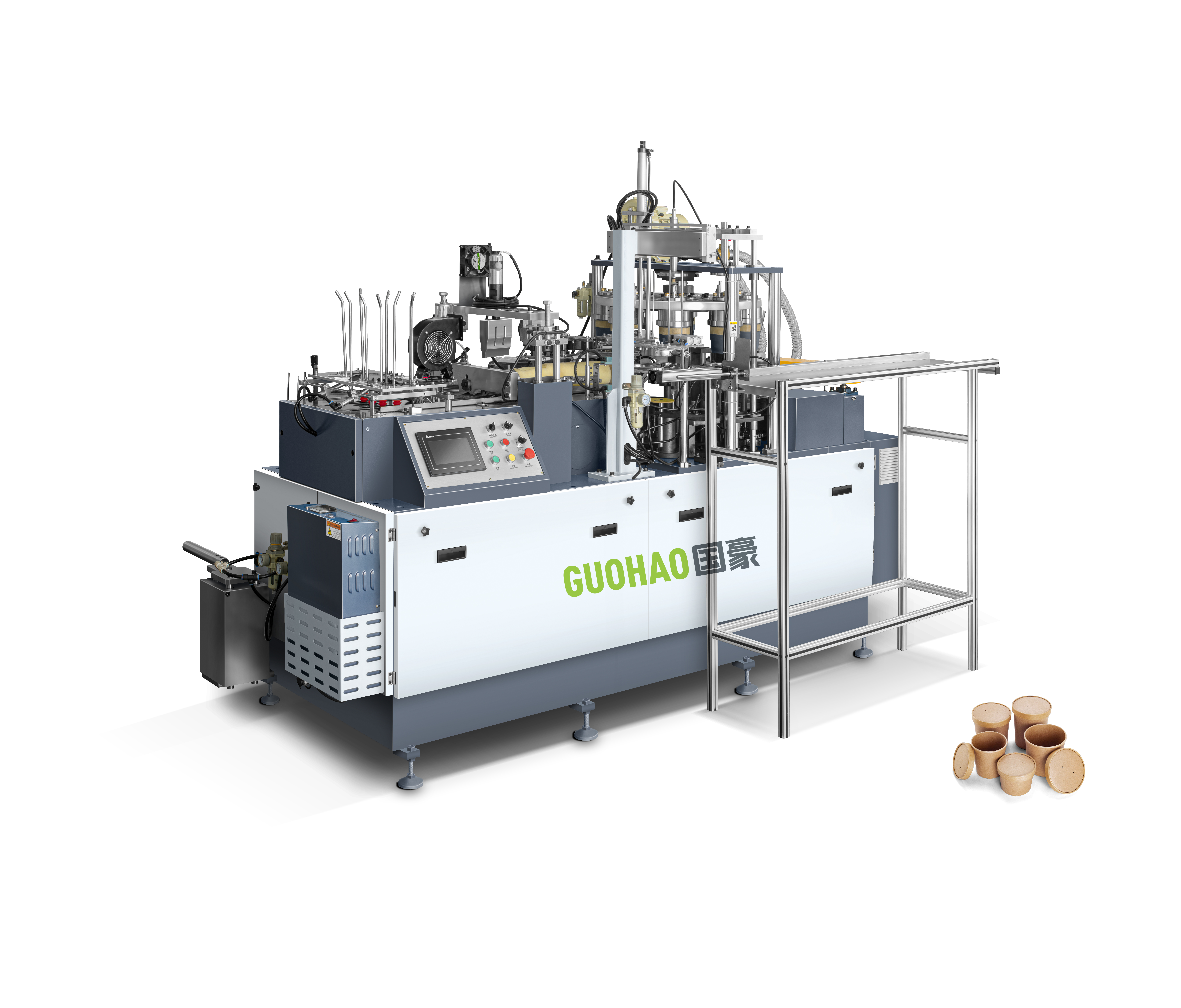
In modern food packaging operations, the ability to connect production equipment seamlessly across multiple stages is what separates a high-performing line from a fragmented one. A paper bowl machine does not operate in isolation — it sits at the upstream end of a broader packaging ecosystem that includes filling, lidding, inspection, and secondary packaging. Understanding how it integrates with downstream processes is essential for manufacturers, packaging engineers, and procurement teams who want to build efficient, scalable production lines.
The integration challenge is not simply mechanical. It involves output synchronization, container handling compatibility, hygiene management, and process control communication. A well-configured paper bowl machine must deliver formed bowls at a rate, orientation, and quality standard that every subsequent downstream station can accept without bottlenecks or manual intervention. This article explains the key integration dimensions, the process logic involved, and what production teams need to consider when designing or upgrading a complete packaging line around a paper bowl machine.
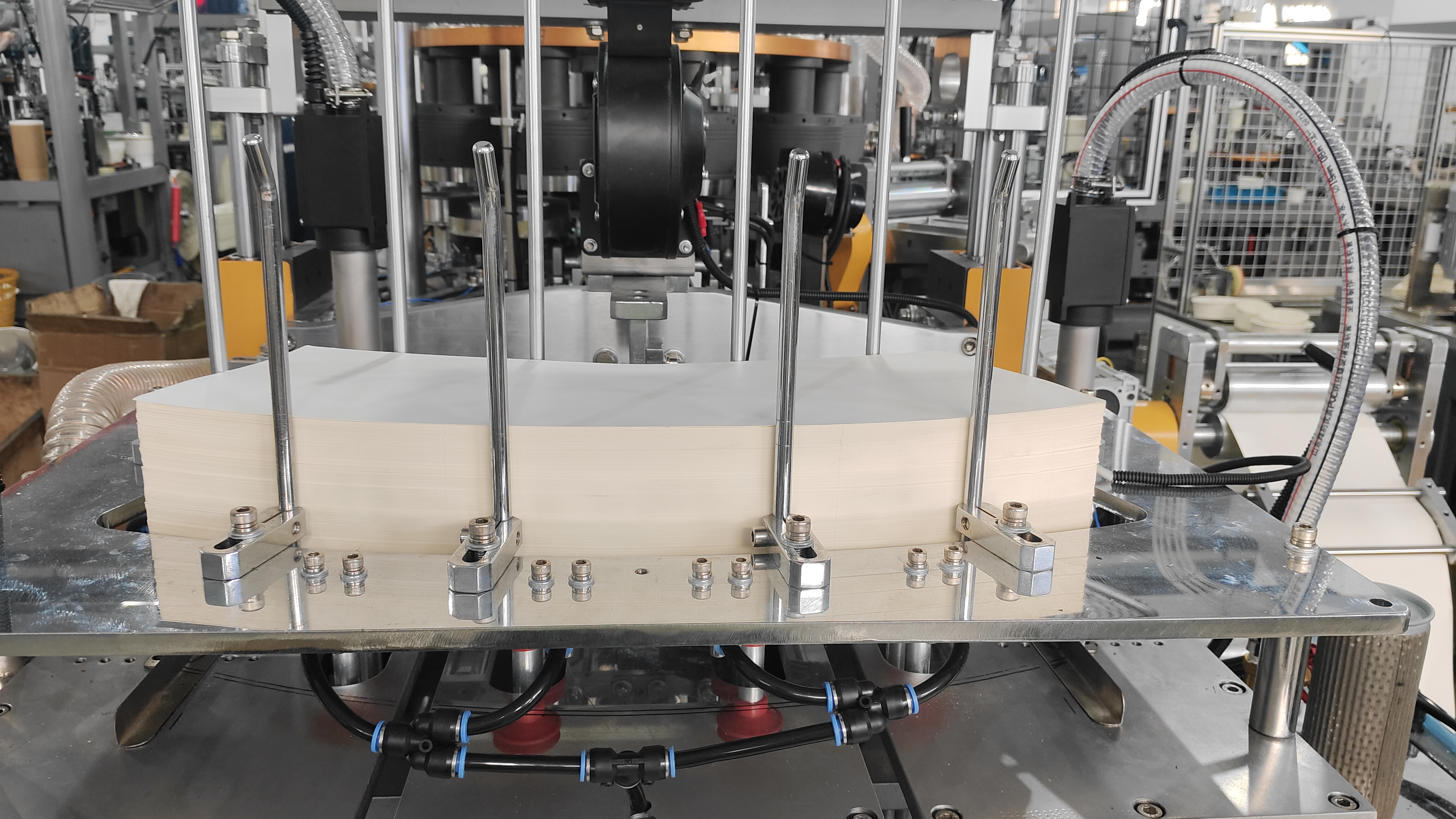
Output Synchronization Between the Paper Bowl Machine and Downstream Equipment
Matching Production Speed to Line Capacity
One of the most fundamental integration requirements is speed alignment. A paper bowl machine operates at a defined output rate, typically measured in bowls per minute or bowls per hour. The downstream equipment — whether a rotary filling station, a linear dosing machine, or an automatic lidding unit — must be capable of processing bowls at the same or higher throughput rate to avoid upstream accumulation.
When the paper bowl machine runs faster than a downstream station, bowls accumulate in the buffer zone and can eventually cause line stoppages. Conversely, if the downstream equipment operates faster than the paper bowl machine's output, the filling or lidding station will run idle, reducing overall equipment effectiveness. Proper line balancing requires that engineers calculate the effective output capacity of the paper bowl machine under real operating conditions, including changeover time and minor stoppages, before specifying downstream machinery.
In high-speed configurations, a paper bowl machine can be paired with accumulation conveyors that act as a buffer, absorbing speed variations between stations and smoothing out production flow. This is particularly useful when the paper bowl machine operates in burst cycles while downstream filling equipment requires a constant, steady bowl feed.
Conveyor and Transfer Mechanism Design
The physical transfer of formed bowls from the paper bowl machine to the first downstream station involves conveyor systems specifically designed to handle round, open-top containers. Standard flat-belt conveyors are often insufficient because bowls can tip, nest, or shift orientation during transport. Slat conveyors, puck-carrier systems, or dedicated bowl-lane guides are commonly employed to maintain upright orientation and consistent spacing.
The exit mechanism of the paper bowl machine must also be compatible with the receiving end of the conveyor. Most modern paper bowl machine designs discharge bowls in a stacked or singulated format. When downstream filling is required, singulated bowl transfer — where each bowl is separated and delivered upright in its own lane position — is essential. The transition from stacked output to singulated, upright presentation often requires a bowl destacker or an inline singulation unit positioned immediately after the paper bowl machine.
Careful attention to the transfer gap, conveyor height alignment, and bowl-to-guide clearance helps prevent jams and orientation errors that would disrupt the entire downstream process. These mechanical details are often finalized through collaborative engineering between the paper bowl machine supplier and the conveyor or filling equipment manufacturer.
Integration with Filling and Portioning Systems
Bowl Presentation Requirements for Automatic Fillers
Automatic filling systems — whether used for soups, noodles, rice, sauces, or dry snack products — require bowls to be presented in a precise, repeatable manner. The paper bowl machine must produce bowls with consistent dimensional tolerances, particularly in rim diameter and depth, because volumetric or weight-based fillers rely on container geometry to achieve accurate fill levels.
Variation in bowl depth or rim flatness, which can result from suboptimal forming conditions in the paper bowl machine, creates filling inaccuracies that affect product weight compliance and visual presentation. For this reason, the dimensional output of the paper bowl machine is a quality parameter that directly impacts filling station performance, not just container appearance.
Filling systems also require bowls to be stationary or precisely indexed during the fill cycle. The timing signals from the paper bowl machine's output conveyor, or from a dedicated bowl-indexing system, are often communicated electronically to the filler's control system, ensuring the fill nozzle or auger activates at the correct bowl position. This requires electrical or signal interface compatibility between the paper bowl machine's control architecture and the filling equipment's programmable logic controller.
Handling Hot-Fill and Cold-Fill Process Requirements
The paper bowl machine produces containers that may be destined for hot-fill, cold-fill, or ambient-fill processes. Hot-fill applications, where liquid food products are filled at temperatures above 80 degrees Celsius, place thermal stress on the bowl's paper and coating layers. The paper bowl machine must be configured to produce bowls with appropriate coating specifications — typically PE or bio-based coatings of defined thickness — to ensure the containers maintain structural integrity during hot-fill.
Cold-fill processes, common in chilled food applications, introduce condensation challenges. The exterior surface of a cold-filled bowl can become wet, which affects downstream label application and carton packing. The paper bowl machine's choice of outer liner material and the sealing quality of the bowl base and sidewall affect how well the bowl handles moisture exposure. Integration planning for cold-fill lines must account for these material properties when specifying the paper bowl machine's forming and sealing parameters.
In either case, the paper bowl machine's output must meet the thermal and structural requirements of the specific fill process. This is a critical but often overlooked dimension of downstream integration that affects both product safety and line efficiency.
Lidding, Sealing, and Inspection Stage Compatibility
Rim Quality and Lid Sealing Performance
After filling, paper bowls typically proceed to a lidding or sealing station where a foil, film, or paper lid is heat-sealed or pressure-applied to the bowl rim. The integrity of this seal depends heavily on the rim quality produced by the paper bowl machine. A rim that is uneven, wavy, or contaminated with adhesive residue from the forming process will produce inconsistent seals that fail integrity tests or require manual inspection and rejection.
The paper bowl machine's curling and flanging mechanisms define the rim profile. A well-set paper bowl machine produces a flat, uniform rim that presents consistently to the sealing tooling. Tolerances in rim width, flatness, and surface smoothness must be defined collaboratively between the paper bowl machine manufacturer and the lidding equipment supplier so that both machines are optimized for each other's requirements.
Sealing station dwell time, temperature, and pressure are all calibrated against the rim characteristics produced by the paper bowl machine. If the paper bowl machine is later adjusted for a different bowl size or paper grade, the sealing parameters typically need recalibration as well. This interdependency reinforces the need to treat the paper bowl machine and the sealing station as integrated systems rather than independent machines.
Vision and Weight Inspection Integration
Most commercial food packaging lines include inline inspection systems positioned between the lidding station and the secondary packaging zone. These systems may include checkweighers, vision inspection cameras, and seal integrity testers. The paper bowl machine's output quality directly determines the pass rate through these inspection stages.
Bowls with sidewall defects, base leakage, or dimensional non-conformity will typically be rejected at the inspection stage, contributing to waste and reducing effective line yield. By maintaining tight process control at the paper bowl machine — monitoring forming temperature, paper tension, and adhesive application — production teams can reduce inspection rejection rates and improve overall line efficiency.
Some advanced production lines connect the paper bowl machine's control system to the inspection station's rejection data feed. When the inspection system detects a pattern of defects consistent with a specific forming parameter drift, this data can be used to trigger an adjustment alert on the paper bowl machine, enabling proactive quality management rather than reactive fault correction.
Secondary Packaging and Case Packing Integration
Bowl Orientation and Counting for Secondary Packaging
After inspection, filled and sealed bowls move into secondary packaging, which typically involves grouping a defined number of bowls into a tray, carton, or shrink-wrap bundle. Automated case packers and tray formers require bowls to arrive in a consistent orientation, at a defined pitch, and in a controllable count sequence. The paper bowl machine's output rate and the downstream conveyor layout must support this organized flow.
In high-throughput lines, a lane-multiplying conveyor or bowl-grouping system is positioned between the inspection zone and the case packer. This grouping system receives individual bowls and arranges them into the required packing pattern. The effective functioning of this grouping system depends on the regularity and spacing accuracy of the bowl stream leaving the paper bowl machine zone, which in turn depends on how well the singulation and conveyor transfer systems were engineered.
Any irregular gaps or doubled-up bowls in the stream — caused by paper bowl machine cycle irregularities or conveyor slippage — can cause miscount events at the case packer, leading to underfilled or overfilled cartons that are rejected or require manual correction. This highlights how even minor variability from the paper bowl machine can cascade into significant downstream quality issues.
Footprint Planning and Line Layout Considerations
Physical space planning is a practical but critical aspect of integrating a paper bowl machine into a broader packaging line. The paper bowl machine typically occupies a defined floor footprint, and the downstream conveyor must follow a layout that accommodates the factory floor geometry, hygiene zoning requirements, and operator access paths.
Curved conveyor sections, elevation changes, and buffer accumulation zones all need to be factored into the line layout. The exit direction of the paper bowl machine's discharge conveyor must be compatible with the entry alignment of the first downstream station. In constrained factory spaces, this often requires close collaboration between the paper bowl machine supplier, the conveyor integrator, and the downstream equipment manufacturers before line installation begins.
Sanitation access is another layout factor. The paper bowl machine and all downstream equipment must be accessible for regular cleaning, especially in food-grade environments. Layout planning should ensure that cleaning-in-place or manual wash-down procedures for each machine are feasible without requiring full line disassembly.
Control System and Data Integration
PLC Communication and Line Control Architecture
Modern packaging lines are increasingly managed through a centralized supervisory control system that coordinates all line stations, including the paper bowl machine. For the paper bowl machine to participate in this architecture, it must support standard industrial communication protocols such as Profibus, EtherNet/IP, or Modbus TCP. These protocols allow the line controller to send start, stop, speed-adjust, and fault-reset commands to the paper bowl machine, and to receive status and output count data in return.
Without this communication capability, the paper bowl machine must be operated manually and independently, which creates coordination delays and increases the risk of misalignment between upstream forming and downstream filling speeds. In semi-automated lines, a simple hardwired interlock that stops the paper bowl machine when the downstream conveyor is full is a minimum integration requirement to prevent bowl overflow and damage.
In fully integrated smart lines, the paper bowl machine's operational data — cycle counts, fault events, forming temperature logs — feeds into a manufacturing execution system or overall equipment effectiveness dashboard. This data visibility allows production managers to identify performance trends, plan preventive maintenance, and benchmark the paper bowl machine's contribution to overall line productivity.
Changeover Coordination Across the Line
When a production line switches from one bowl size to another, the paper bowl machine is not the only machine that requires changeover. The filling station nozzles, lidding tooling, sealing die dimensions, and case packing configurations must all be updated to match the new bowl format. A coordinated changeover process, ideally managed through a shared line management system, ensures that all stations are ready before production resumes.
The paper bowl machine's changeover time — the time required to swap forming tools, adjust paper feed guides, and verify new bowl dimensions — is often the longest single changeover task on the line. Reducing this time through quick-change tooling design and standardized setup procedures has a direct impact on line availability and overall productivity. Changeover protocols should be developed jointly by the paper bowl machine technician team and the broader line operations group to ensure all downstream adjustments are synchronized.
FAQ
What downstream equipment typically follows a paper bowl machine on a production line?
After a paper bowl machine, the most common downstream stations include bowl destacking and singulation systems, automatic filling machines, heat-sealing or lidding units, checkweighers, vision inspection systems, and finally case packers or tray formers for secondary packaging. The exact configuration depends on the product type, fill format, and output volume required.
Does the paper bowl machine need to communicate electronically with downstream equipment?
In modern automated lines, electronic communication between the paper bowl machine and downstream equipment is highly recommended. At minimum, basic interlock signals prevent bowl overflow when downstream stations stop. In more advanced configurations, the paper bowl machine connects to a central PLC or manufacturing execution system via standard industrial protocols, enabling synchronized speed control, fault management, and production data collection across the entire line.
How does rim quality from the paper bowl machine affect the lidding process?
The rim produced by the paper bowl machine directly determines the quality and consistency of the heat seal applied at the lidding station. An uneven, contaminated, or dimensionally inconsistent rim leads to poor seal integrity, which can result in product leakage, failed integrity tests, and increased rejection rates. Maintaining tight control over the paper bowl machine's curling and flanging mechanisms is essential for reliable downstream lidding performance.
Can a paper bowl machine be retrofitted into an existing packaging line?
Yes, a paper bowl machine can often be retrofitted into an existing packaging line, but this requires careful engineering assessment of conveyor compatibility, speed matching, control system interface options, and physical layout constraints. It is advisable to involve both the paper bowl machine supplier and the existing line's equipment integrator in the retrofit planning process to identify and resolve compatibility issues before installation.
Table of Contents
- Output Synchronization Between the Paper Bowl Machine and Downstream Equipment
- Integration with Filling and Portioning Systems
- Lidding, Sealing, and Inspection Stage Compatibility
- Secondary Packaging and Case Packing Integration
- Control System and Data Integration
-
FAQ
- What downstream equipment typically follows a paper bowl machine on a production line?
- Does the paper bowl machine need to communicate electronically with downstream equipment?
- How does rim quality from the paper bowl machine affect the lidding process?
- Can a paper bowl machine be retrofitted into an existing packaging line?