
 EN
EN



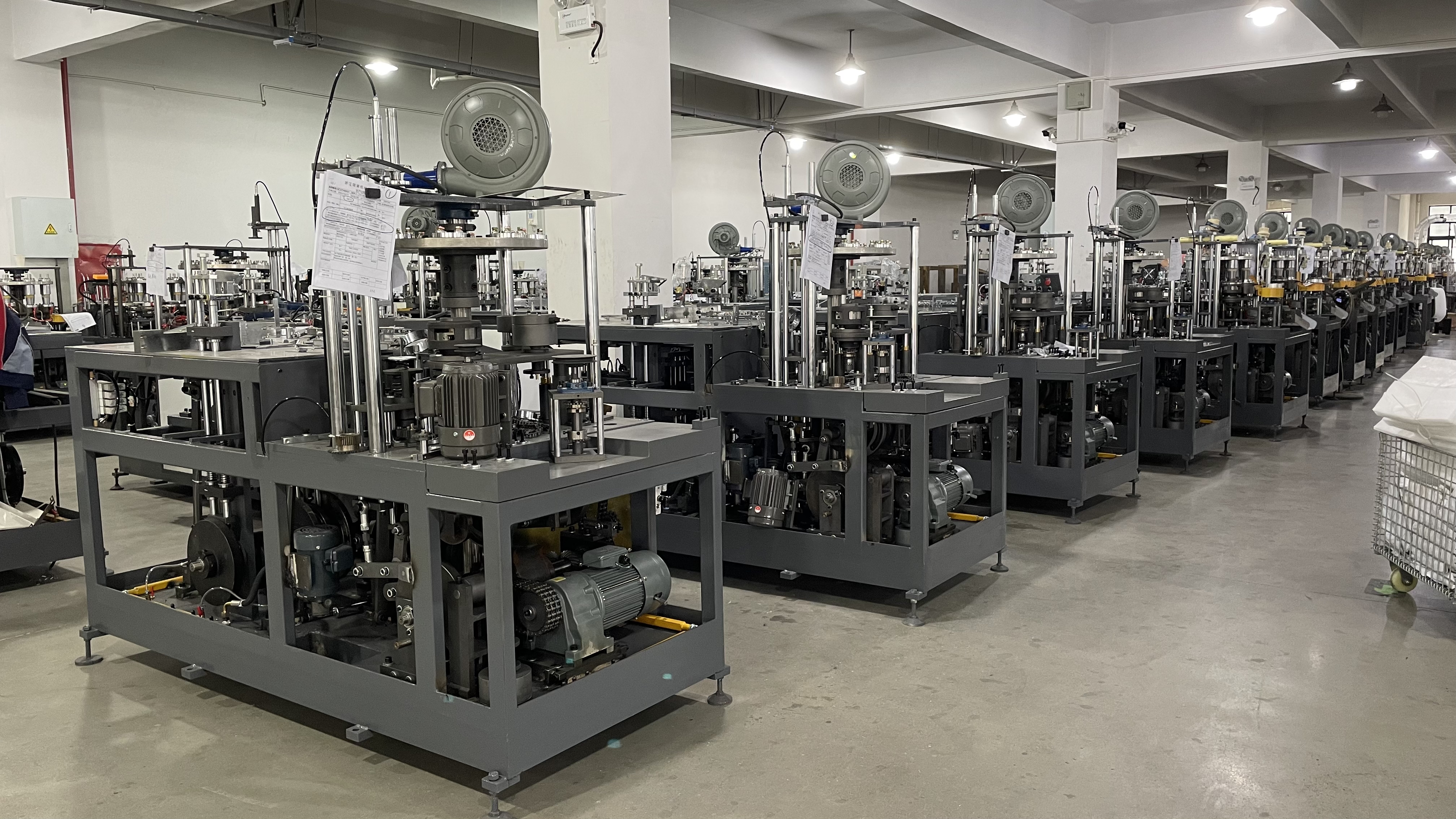
When manufacturers and entrepreneurs look to produce premium insulated paper cups, one of the first decisions they face is whether specialized equipment is truly required — or whether standard machinery can be adapted to meet the demand. The answer, in most serious production scenarios, is clear: a double wall paper cup machine is not just helpful but genuinely necessary if quality, consistency, and commercial viability are priorities. Understanding why requires a closer look at what double wall cups actually are, how they are made, and where standard equipment simply falls short.
Double wall paper cups have become a standard expectation in premium coffee shops, upscale restaurants, and corporate hospitality settings. Their distinctive layered construction provides thermal insulation that keeps beverages hot while protecting the hand from uncomfortable heat. Producing these cups at scale — while maintaining the tight tolerances and structural integrity that define a premium product — demands a double wall paper cup machine engineered precisely for this purpose. This article examines whether that investment is truly necessary and what it means for your production outcomes.
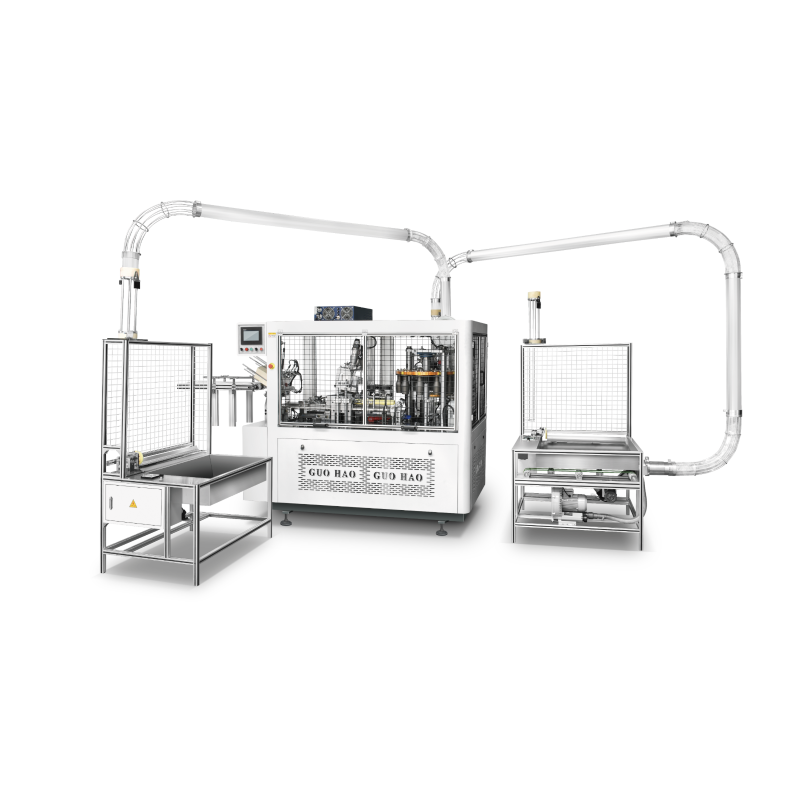
Understanding the Construction Demands of Double Wall Cups
The Structural Complexity That Separates Double Wall Cups From Single Wall Cups
A double wall paper cup consists of two separate paper layers bonded together with a deliberate air gap between them. This air gap acts as the primary insulating barrier, and it is not a feature that happens accidentally during production — it must be engineered into every cup with precision. The outer wall and the inner wall must be formed, aligned, and joined within exacting tolerances, or the insulation performance degrades significantly.
Standard single wall paper cup machinery is designed to handle a single paper web and form a single cylindrical shell. It lacks the mechanisms needed to feed, form, and bond two separate paper layers simultaneously while maintaining consistent spacing between them. Attempting to adapt this kind of equipment for double wall production typically results in dimensional inconsistency, weak seam bonds, and poor thermal performance — outcomes that are entirely unacceptable in a premium product category.
A dedicated double wall paper cup machine addresses these challenges by incorporating dual paper feeding systems, synchronized forming stations, and specialized bonding mechanisms. The machine is built from the ground up to handle the additional material layers, the increased forming complexity, and the precise alignment requirements that define a structurally sound double wall cup.
Material Compatibility and Paper Web Management
The paper used in double wall cup production must meet specific weight, coating, and rigidity requirements for each of the two layers. The outer layer is typically a printed, coated paper that carries the brand identity and provides a clean visual surface. The inner layer is a food-safe, PE-coated paper that contacts the beverage and must maintain a leakproof seal under heat and moisture exposure.
Managing two distinct paper webs simultaneously — each with its own tension, feed rate, and forming path — is a materials handling challenge that a double wall paper cup machine is specifically designed to solve. Its paper feeding system accommodates two rolls independently, allowing operators to set tension and alignment for each web without one affecting the other. This is critical to avoiding skewing, tearing, or misalignment that would compromise cup integrity.
Without this dual-web capability, achieving the consistent paper registration needed for premium double wall cups is practically impossible at production speeds. The machine's engineering directly enables the material precision that premium insulated cup production requires.
The Role of the Double Wall Paper Cup Machine in Production Quality
Seam Integrity and Thermal Performance
The insulating performance of a double wall paper cup depends heavily on the quality of the seam where the two walls meet at the cup's rim and base. If this seam is inconsistent, loose, or incompletely bonded, the air pocket between the walls is compromised — and with it, the cup's ability to insulate. A double wall paper cup machine applies controlled heat and pressure to these seam areas through dedicated bonding units that are calibrated for two-layer paper constructions.
These bonding units typically use ultrasonic sealing, hot air welding, or direct heat application, depending on the machine design and paper specifications. What matters is that the process is repeatable and consistent across every cup in a production run. In a premium product context, consistency is non-negotiable — a single cup that fails to insulate properly represents a brand failure as much as a manufacturing defect.
A properly configured double wall paper cup machine achieves seam quality that manual or adapted production processes simply cannot replicate at volume. This is not a minor advantage — it is the difference between a product that meets premium standards and one that merely looks the part.
Dimensional Accuracy and Cup Profile Consistency
Premium double wall cups are used with specific lids, sleeves, and holders designed for their exact outer diameter and rim profile. Any dimensional variation — even within a few tenths of a millimeter — can cause lid fit failures, stacking problems, and dispensing machine jams. A double wall paper cup machine maintains dimensional consistency through precision-engineered forming mandrels, bottom punch assemblies, and curling stations that are synchronized to hold tolerances across millions of production cycles.
This level of dimensional control is especially important when cups are produced for branded clients who supply their own printed blanks and expect the finished cup to match their packaging specifications exactly. The machine's ability to run these blanks reliably, without drift in cup height, diameter, or base formation, is what allows manufacturers to serve premium clients with confidence.
High-speed production with consistent dimensions is the hallmark of a well-designed double wall paper cup machine. It transforms a complex forming challenge into a repeatable industrial process — and that repeatability is the foundation of any credible premium product line.
Production Efficiency and Commercial Justification
Output Speed and Volume Capacity
Premium insulated cups command higher selling prices, but they also face competitive market pressure on delivery timelines and volume capacity. Buyers in the foodservice and retail sectors expect consistent supply, and a production bottleneck in cup manufacturing can cost supplier relationships. A high-speed double wall paper cup machine is engineered to produce cups at rates that support commercial-scale supply agreements.
Modern double wall paper cup machine designs are capable of producing hundreds of cups per minute, depending on cup size and paper specification. At these speeds, the machine must also maintain the quality parameters discussed earlier — seam integrity, dimensional accuracy, and material consistency — without requiring constant operator intervention. The automation built into these machines is therefore not just a convenience but a commercial necessity.
For manufacturers entering the premium insulated cup segment, the output capacity of a double wall paper cup machine directly determines how quickly they can recoup their capital investment. Higher throughput with lower defect rates means lower cost per unit and faster break-even on equipment expenditure.
Waste Reduction and Material Cost Control
Double wall cup production uses more paper per cup than single wall production by definition, making waste management especially important. A double wall paper cup machine with precise paper feeding and servo-controlled forming minimizes trim waste, reduces start-up scrap, and allows faster changeover between cup sizes — all of which have a direct impact on material cost per thousand cups produced.
Operators who attempt to run double wall cup production on inadequate or repurposed machinery typically see significantly higher scrap rates, longer set-up times, and more frequent quality rejections. These inefficiencies erode the margin advantage that premium cup pricing is supposed to provide. The right double wall paper cup machine protects that margin by keeping waste and rework at commercially acceptable levels.
In a production economics sense, the machine is not simply a capital expense — it is a cost control mechanism that determines whether the premium insulated cup business model is financially viable or continuously undercut by production inefficiencies.
When Is a Double Wall Paper Cup Machine Truly Necessary
Evaluating Your Production Scale and Quality Standards
The necessity of a double wall paper cup machine is not absolute for every scenario — but for any manufacturer targeting genuine premium market positioning, the threshold is reached quickly. If production volume exceeds a few thousand cups per day, if the product will carry a premium brand identity, or if it will be sold into quality-sensitive channels such as specialty coffee or corporate catering, then a dedicated double wall paper cup machine is not optional.
Smaller artisan producers who make cups in very limited quantities for niche markets might explore semi-manual methods, but these approaches do not scale and cannot consistently deliver the structural quality that premium buyers expect. As soon as volume requirements and quality expectations rise above a basic threshold, the double wall paper cup machine becomes the only credible production solution.
It is worth noting that the cost of substandard cups — in terms of returns, reputation damage, and lost client relationships — typically exceeds the cost of proper equipment investment over a medium-term horizon. Framing the decision as a cost savings exercise by avoiding specialized machinery usually leads to a false economy.
Market Positioning and Competitive Differentiation
The premium insulated cup segment is competitive, and differentiation increasingly depends on product consistency rather than on novelty alone. Buyers who have experienced the inconsistency of poorly made double wall cups — lids that do not fit, bases that delaminate, walls that collapse under hand pressure — are highly sensitive to quality signals. A manufacturer who can demonstrate that their double wall paper cup machine produces cups to tight, verifiable specifications has a meaningful competitive advantage.
This is particularly relevant when approaching large foodservice chains, hotel groups, or retail private-label programs, where quality audits are routine and production capability is a formal procurement criterion. Having the right double wall paper cup machine is often a prerequisite for even being considered by these buyers.
Beyond passing audits, the machine's output consistency supports the marketing claims that premium cup brands rely on — heat retention performance, ergonomic comfort, print quality, and structural reliability. These are not just selling points; they are product promises that the manufacturing process must be capable of fulfilling every time.
FAQ
Can a single wall paper cup machine be modified to produce double wall cups?
In most cases, a standard single wall paper cup machine cannot be effectively modified to produce true double wall cups. The structural differences in the production process — dual paper feeding, synchronized layer forming, and specialized bonding — require purpose-built machine architecture. Attempting modifications typically results in poor seam quality, inconsistent insulation performance, and high scrap rates that make production commercially unviable.
What output speed should I expect from a double wall paper cup machine?
Output speed varies by machine model, cup size, and paper specification, but modern high-speed double wall paper cup machine models are generally capable of producing anywhere from 80 to over 150 cups per minute under optimal conditions. It is important to evaluate rated speed alongside quality consistency metrics — a machine that achieves high speed at the cost of seam integrity or dimensional accuracy is not delivering real production value.
How does a double wall paper cup machine affect cup insulation quality?
The double wall paper cup machine directly determines insulation quality by controlling the precision of the air gap between the two paper walls and the integrity of the seam bonds that enclose it. A well-calibrated machine produces a uniform, consistent air gap across every cup in the production run, which translates directly to predictable and reliable thermal insulation performance — the defining characteristic of a premium insulated cup.
Is the double wall paper cup machine suitable for small-scale production startups?
A double wall paper cup machine is available in various capacity configurations, and some smaller-scale models are designed to serve startups or businesses entering the premium insulated cup market without committing to maximum output volumes immediately. However, even at smaller scales, investing in a purpose-built double wall paper cup machine is advisable if product quality and market credibility are priorities. The economics of substandard production typically outweigh the cost of appropriate equipment within a relatively short operating period.
Table of Contents
- Understanding the Construction Demands of Double Wall Cups
- The Role of the Double Wall Paper Cup Machine in Production Quality
- Production Efficiency and Commercial Justification
- When Is a Double Wall Paper Cup Machine Truly Necessary
-
FAQ
- Can a single wall paper cup machine be modified to produce double wall cups?
- What output speed should I expect from a double wall paper cup machine?
- How does a double wall paper cup machine affect cup insulation quality?
- Is the double wall paper cup machine suitable for small-scale production startups?