
 EN
EN



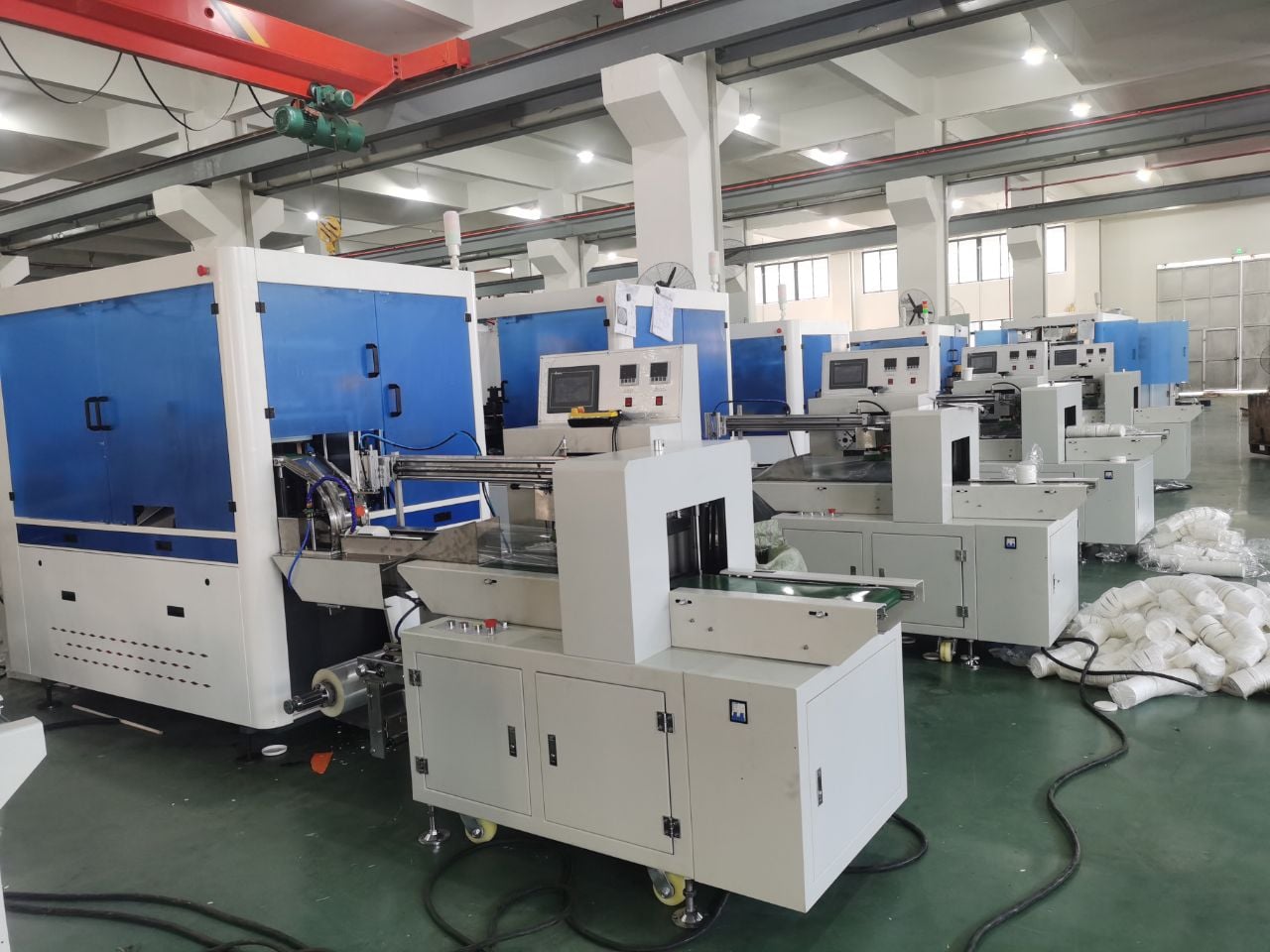
In modern industrial manufacturing environments, production efficiency and consistency directly determine competitive positioning and profitability. When evaluating equipment for high-volume disposable paper cup production, automation emerges as the single most consequential factor influencing operational outcomes. The decision to invest in an automated paper cup machine rather than semi-automated or manual alternatives fundamentally reshapes labor costs, output reliability, quality control capabilities, and long-term scalability. Understanding why automation serves as a critical selection criterion requires examining the specific operational challenges inherent to industrial paper cup manufacturing and how automated systems address these challenges more effectively than traditional approaches.
Industrial paper cup production demands precise coordination of multiple sequential processes including paper feeding, printing registration, sidewall seaming, bottom punching, curling, and final ejection. Each step must execute with microsecond timing precision to maintain production speeds exceeding 100 cups per minute while ensuring structural integrity and dimensional accuracy. Manual intervention or semi-automated processes introduce variability that compounds across production stages, resulting in higher defect rates and reduced throughput. Automation eliminates human-dependent variables, establishing the foundation for predictable output quality and volume that industrial buyers require when fulfilling large-scale supply contracts with beverage companies, quick-service restaurants, and institutional food service operations.
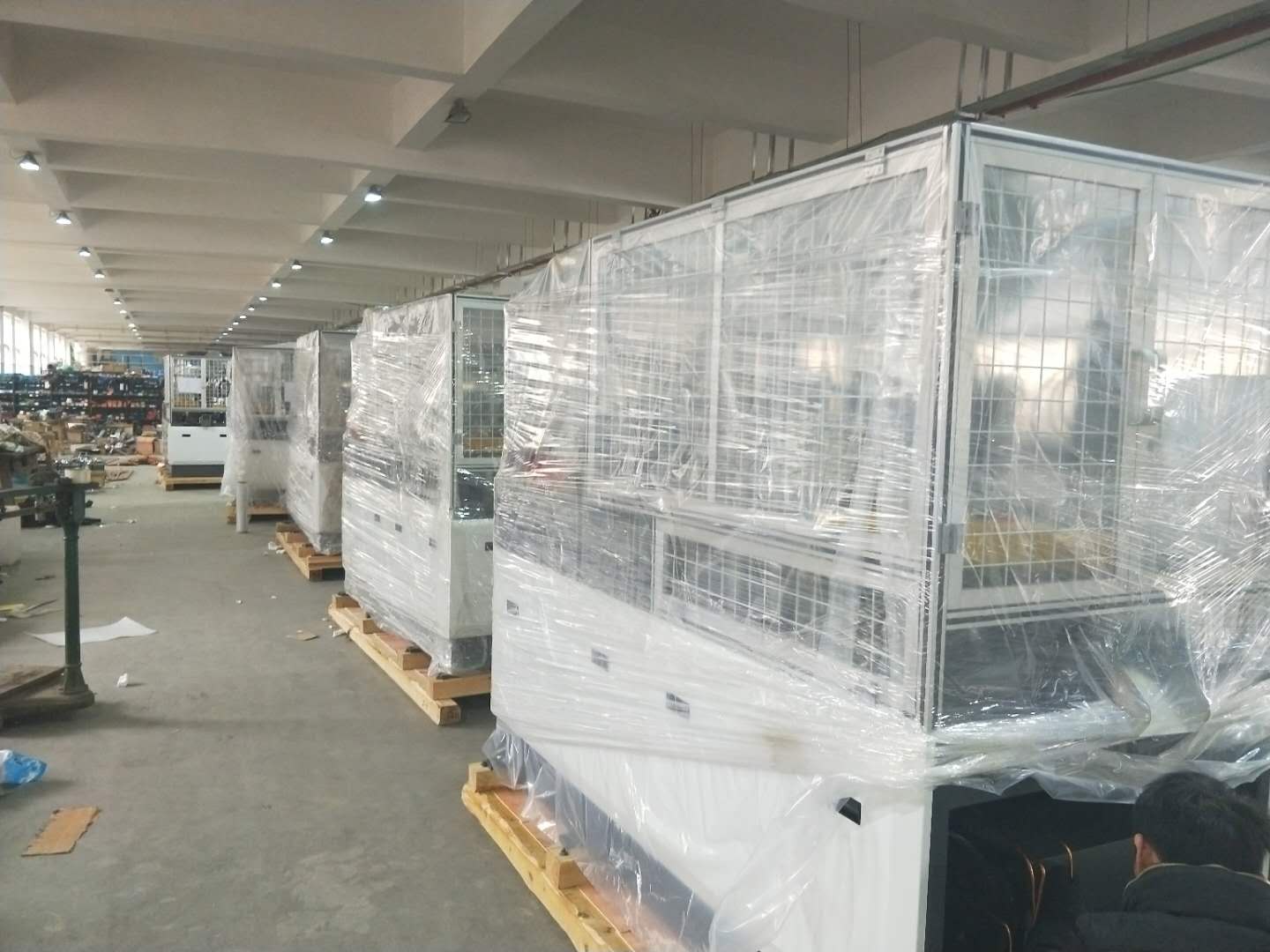
Production Volume Requirements Drive Automation Necessity
Throughput Limitations of Manual and Semi-Automated Systems
Industrial paper cup buyers typically operate under supply agreements requiring daily production volumes ranging from 500,000 to several million units depending on market size and customer base. Manual paper cup machine configurations, even with skilled operators, struggle to exceed 40 to 60 cups per minute due to physical limitations in material handling and process coordination. Semi-automated systems that retain manual feeding or ejection steps typically plateau at 70 to 90 cups per minute. These throughput constraints create fundamental incompatibility with industrial volume requirements, necessitating either multiple machine installations with corresponding floor space and capital investment or acceptance of production shortfalls that jeopardize customer contracts.
Automated paper cup machine platforms eliminate these bottlenecks through continuous material flow systems, servo-driven process stations, and integrated quality monitoring that maintains production speeds between 100 and 150 cups per minute for standard sizes. This velocity difference translates directly into economic advantage. A facility operating three shifts with a 120-cup-per-minute automated system produces approximately 518,400 cups daily, compared to 259,200 cups from a 60-cup-per-minute semi-automated alternative. The productivity differential compounds over months and years, determining whether manufacturers can profitably serve large customers or remain confined to small-batch niche markets with limited growth potential.
Scalability and Capacity Planning Considerations
Market demand for disposable paper cups continues expanding driven by single-use convenience preferences, food safety regulations favoring sealed containers, and sustainability transitions away from plastic alternatives. Industrial manufacturers must anticipate volume growth when selecting production equipment to avoid premature obsolescence and costly retrofitting. Automated paper cup machine architectures provide inherent scalability through modular design that accommodates capacity expansion without complete system replacement. Advanced models incorporate digital control systems allowing speed adjustments, size changeovers, and process parameter modifications through software interfaces rather than mechanical reconfiguration.
This adaptability proves essential when manufacturers diversify product portfolios to include varying cup sizes, wall thicknesses, and specialty configurations such as double-wall insulated cups or compostable substrate variants. Non-automated systems require extensive manual retooling, operator retraining, and production downtime during changeovers, creating operational friction that discourages product range expansion. Automated platforms reduce changeover time from hours to minutes, enabling manufacturers to economically serve diverse customer specifications without sacrificing production efficiency. The strategic value of this flexibility intensifies in competitive markets where responsiveness to customer requirements differentiates successful suppliers from those losing contracts to more agile competitors.
Labor Economics and Operational Cost Structures
Direct Labor Requirements Across Automation Levels
Labor costs constitute one of the most significant and variable expenses in manufacturing operations, particularly in regions with rising wage standards and tightening labor markets. Manual paper cup machine operation requires dedicated personnel for material loading, process monitoring, quality inspection, and finished product handling at each production station. A typical manual line employs four to six operators per shift, resulting in 12 to 18 full-time equivalent positions across three-shift operations. When calculating fully loaded labor costs including wages, benefits, training, and turnover replacement, this staffing model often represents 35 to 45 percent of total production costs excluding raw materials.
Automated systems fundamentally restructure this cost equation by reducing operator requirements to one or two technicians per shift focused on machine monitoring, material replenishment, and periodic maintenance rather than continuous hands-on manipulation. This workforce reduction translates to 60 to 75 percent lower direct labor costs compared to manual configurations. The economic advantage extends beyond simple headcount reduction. Automated operations require fewer specialized skills, simplifying recruitment and reducing training time from weeks to days. Lower personnel requirements also minimize exposure to labor market volatility, workplace safety incidents, and productivity losses from absenteeism or turnover that disproportionately affect labor-intensive manufacturing models.
Consistency Advantages Reducing Waste and Rework
Human operators, regardless of skill level, introduce inherent variability in repetitive manufacturing tasks due to fatigue, attention fluctuation, and inconsistent technique application. In paper cup machine operations, this variability manifests as dimensional inconsistencies, seam misalignment, incomplete bottom seals, and irregular rim curling that compromise product functionality and visual appeal. Quality defects necessitate either costly rework when detectable before packaging or customer complaints and returns when defects reach end users. Industry data indicates manual production processes typically generate defect rates between 3 and 8 percent depending on product complexity and operator proficiency.
Automated paper cup machine systems achieve defect rates below 1 percent through precision servo motors, optical sensors for continuous quality verification, and programmed process parameters that eliminate human judgment variability. Each production cycle executes with identical timing, pressure application, and material positioning, ensuring uniform output that meets specification tolerances consistently. The economic impact extends beyond reduced waste. Lower defect rates decrease raw material consumption, minimize production interruptions for quality troubleshooting, and protect brand reputation by ensuring reliable product performance. For industrial buyers supplying branded customers with strict quality standards, automation provides essential risk mitigation against specification failures that could terminate supply relationships.
Quality Control Integration and Process Monitoring Capabilities
Real-Time Defect Detection and Automated Rejection Systems
Industrial paper cup production for food service and beverage applications must satisfy rigorous quality standards addressing structural integrity, liquid impermeability, and dimensional precision to ensure proper function with automated filling equipment and dispensing systems. Traditional quality control approaches rely on periodic manual sampling and visual inspection, creating inherent gaps where defective products enter inventory undetected. Sampling methodologies typically examine only 0.1 to 0.5 percent of production output, leaving substantial risk of defect-contaminated batches reaching customers.
Automated paper cup machine platforms incorporate inline quality monitoring systems using optical sensors, ultrasonic detection, and weight verification to examine 100 percent of production output in real-time. Vision systems identify seam misalignment, incomplete bottom seals, paper tears, printing defects, and dimensional variations at production speed, triggering immediate rejection of non-conforming units before they enter finished goods packaging. This comprehensive inspection capability eliminates the statistical uncertainty inherent in sampling approaches, providing documented quality assurance that satisfies food safety certifications and customer audit requirements. The traceability enabled by automated quality systems also facilitates rapid root cause analysis when defects occur, accelerating corrective action implementation and minimizing production losses.
Data Collection Supporting Continuous Improvement Initiatives
Modern automated paper cup machine systems function as integrated data generation platforms, capturing detailed process parameters, production metrics, and quality indicators throughout operations. Sensors monitor paper tension, glue application consistency, heating element temperatures, cycle times, and rejection rates, storing this information in accessible databases that support statistical analysis and trend identification. This operational visibility enables manufacturers to implement data-driven optimization strategies that incrementally improve efficiency, reduce waste, and enhance product consistency over time.
Manual and semi-automated systems lack comparable data capture capabilities, leaving operators reliant on subjective observations and anecdotal problem identification. Without quantitative performance baselines and trend analysis, process improvements occur sporadically through trial-and-error rather than systematic optimization. The competitive disadvantage intensifies as industries adopt lean manufacturing principles and continuous improvement methodologies requiring measurable performance tracking. Automated systems provide the foundational data infrastructure supporting these modern operational approaches, positioning manufacturers for sustained productivity gains that manual operations cannot replicate.
Operational Flexibility and Market Responsiveness
Rapid Product Changeover Capabilities
Industrial paper cup manufacturers increasingly serve diverse customer segments requiring different cup sizes ranging from small espresso cups through large beverage containers, various wall configurations including single-wall and double-wall insulated designs, and substrate options spanning conventional paper through compostable and recyclable materials. Successfully addressing this market diversity requires production systems capable of rapid reconfiguration without extended downtime or complex mechanical adjustments that reduce available production time and increase changeover labor costs.
Automated paper cup machine designs accommodate product variations through digitally controlled adjustment systems and modular tooling that simplifies size changes and material transitions. Advanced platforms complete size changeovers in 15 to 30 minutes compared to 2 to 4 hours required for manual system reconfiguration involving mechanical die changes, tension adjustments, and operator retraining. This responsiveness enables manufacturers to economically produce smaller batch sizes tailored to specific customer requirements rather than forcing large minimum order quantities that discourage smaller buyers or limit product range offerings. The strategic advantage manifests through market share gains in specialty segments and strengthened customer relationships based on accommodation rather than constraint.
Integration with Upstream and Downstream Automation
Industrial production environments increasingly adopt end-to-end automation connecting material handling, primary manufacturing, quality inspection, packaging, and logistics through integrated control systems and material flow automation. Isolated manual processes create bottlenecks disrupting workflow continuity and necessitating intermediate inventory buffers that consume floor space and working capital. Automated paper cup machine systems designed with industrial integration capabilities connect seamlessly with automated paper roll handling, finished product conveying systems, automatic packaging equipment, and warehouse management systems.
This connectivity enables lights-out production capabilities where paper cup manufacturing operates with minimal human intervention during extended periods, maximizing equipment utilization and reducing per-unit production costs. Integration also facilitates centralized production monitoring and control, allowing supervisors to oversee multiple production lines from unified interfaces rather than requiring physical presence at each machine. As industrial manufacturers pursue operational excellence through comprehensive automation strategies, selecting paper cup machine platforms compatible with broader automation architectures becomes essential to avoid creating isolated manual islands that undermine overall system efficiency and limit future expansion options.
Risk Mitigation and Business Continuity Factors
Reduced Dependency on Specialized Labor Availability
Manufacturing operations relying heavily on skilled manual labor face ongoing vulnerability to workforce availability fluctuations, competitive wage pressure, and knowledge loss through employee turnover. Specialized paper cup machine operators require weeks or months of training to achieve proficiency in material handling, quality assessment, and troubleshooting, representing significant investment that evaporates when experienced personnel depart. Labor markets in many manufacturing regions exhibit chronic skilled worker shortages, forcing companies to compete aggressively for qualified candidates through elevated compensation packages that compress profit margins.
Automated paper cup machine operation dramatically reduces these human capital risks by simplifying required skills and shortening training timelines. Operators need basic technical competency for machine monitoring and material loading rather than specialized manual dexterity and process judgment developed through extensive experience. This accessibility broadens the potential labor pool, accelerates replacement hiring when turnover occurs, and reduces wage pressure by eliminating dependency on scarce specialized skills. The operational stability advantages prove particularly valuable during periods of rapid business growth when scaling production without proportional workforce expansion enables faster market response and preserves profitability.
Enhanced Workplace Safety Through Hazard Elimination
Manual paper cup machine operation exposes workers to repetitive motion injuries, thermal burns from heating elements, pinch points in mechanical systems, and ergonomic strain from sustained standing and material handling. Workplace injuries generate direct costs through medical treatment and workers compensation claims, indirect costs from productivity losses and replacement labor, and regulatory compliance burdens when incident rates trigger enhanced safety oversight. Industries with elevated injury frequency also face recruitment challenges as word-of-mouth reputation deters potential applicants.
Automation inherently improves workplace safety by isolating operators from hazardous process areas through enclosed machine designs, guarding systems, and elimination of direct material handling during production cycles. Automated paper cup machine platforms incorporate safety interlocks preventing operation when access doors open, emergency stop systems enabling immediate shutdown, and sensor arrays detecting anomalous conditions before they create hazards. The resulting injury rate reductions improve employee morale, reduce insurance premiums, and demonstrate corporate responsibility that strengthens employer branding. For publicly traded companies and those with institutional investors, documented safety performance increasingly influences investment decisions and stakeholder confidence.
FAQ
What production volume justifies investing in an automated paper cup machine?
The economic breakeven point for automated paper cup machine investment typically occurs when production requirements exceed 300,000 to 500,000 cups daily on a sustained basis. At this volume threshold, the labor cost savings, waste reduction, and throughput advantages of automation generate sufficient financial return to justify the higher capital expenditure compared to semi-automated alternatives within 18 to 24 months. Manufacturers anticipating growth trajectories reaching these volumes within two to three years should prioritize automation during initial equipment selection to avoid costly mid-cycle replacements and capture efficiency benefits throughout the growth phase.
Can automated paper cup machines accommodate specialty products like double-wall or compostable cups?
Modern automated paper cup machine designs incorporate adjustable process parameters and modular tooling that accommodate specialty product configurations including double-wall insulated cups, cups manufactured from compostable or recyclable substrates, and custom sizes outside standard dimensions. Advanced systems allow operators to store multiple product recipes in digital libraries, enabling rapid changeover between conventional and specialty products through software selection rather than mechanical reconfiguration. However, buyers should verify specific specialty capabilities with equipment manufacturers during selection since some budget-oriented automated models may offer limited flexibility compared to premium platforms designed for diverse product portfolios.
How does automation affect maintenance requirements and downtime?
Automated paper cup machine systems incorporate sophisticated mechanical and electronic components requiring systematic preventive maintenance to sustain performance and prevent unplanned downtime. Maintenance demands typically include daily lubrication and cleaning, weekly inspection of wear components, monthly calibration verification, and quarterly replacement of high-cycle parts such as cutting blades and sealing elements. While automated systems require more technical maintenance expertise than simple manual machines, the structured preventive approach supported by diagnostic systems and condition monitoring actually reduces unplanned downtime compared to manual equipment that often fails unpredictably. Most manufacturers experience maintenance-related downtime below 3 percent of available production time with properly executed preventive programs.
What workforce skills are necessary to operate automated paper cup machines effectively?
Effective automated paper cup machine operation requires technical competency in computerized control interfaces, basic mechanical troubleshooting ability, understanding of quality standards and inspection procedures, and systematic problem-solving skills rather than manual dexterity or specialized craft knowledge. Most equipment manufacturers provide initial training lasting one to two weeks covering machine operation, routine maintenance procedures, common troubleshooting scenarios, and safety protocols. Operators with manufacturing backgrounds or technical education typically achieve proficiency within two to four weeks of supervised operation. The reduced skill requirements compared to manual systems enable manufacturers to recruit from broader labor pools and implement cross-training programs that increase workforce flexibility across multiple production lines.
Table of Contents
- Production Volume Requirements Drive Automation Necessity
- Labor Economics and Operational Cost Structures
- Quality Control Integration and Process Monitoring Capabilities
- Operational Flexibility and Market Responsiveness
- Risk Mitigation and Business Continuity Factors
-
FAQ
- What production volume justifies investing in an automated paper cup machine?
- Can automated paper cup machines accommodate specialty products like double-wall or compostable cups?
- How does automation affect maintenance requirements and downtime?
- What workforce skills are necessary to operate automated paper cup machines effectively?