
 EN
EN



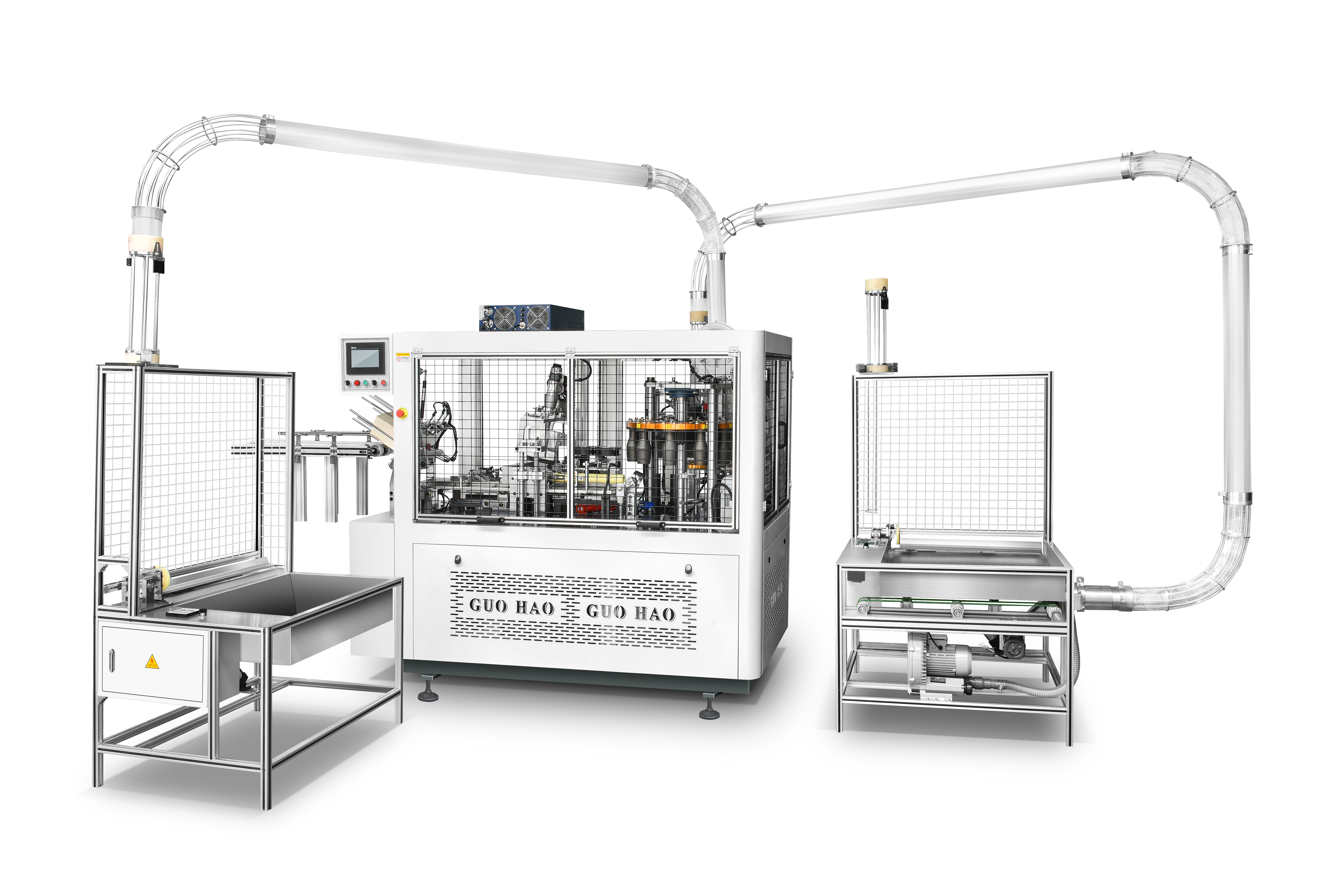
The global shift toward sustainable food packaging has created a remarkable surge in demand for paper-based containers, and manufacturers are paying close attention. At the heart of this transformation is the paper bowl machine — a piece of industrial equipment that directly influences how efficiently, consistently, and profitably a factory can respond to market demand. For manufacturers navigating competitive pressures and rising customer expectations, the decision to invest in automated solutions is no longer just a capital expenditure choice; it is a strategic growth decision that touches every layer of the business.
Understanding why manufacturers gravitate toward automated paper bowl machine solutions requires examining the intersection of production economics, market trends, and operational realities. When a factory upgrades from semi-manual or entry-level equipment to a fully automated paper bowl machine system, the benefits compound across multiple dimensions — from throughput and labor efficiency to product consistency and client retention. This article explores the core reasons behind that choice and why it has become a defining factor in sustainable manufacturing growth.
The Business Case Behind Automated Paper Bowl Machine Investment
Throughput and Capacity as Competitive Levers
One of the most immediate reasons manufacturers choose an automated paper bowl machine is the sheer volume advantage it delivers. Modern automated machines operate at significantly higher cycles per minute compared to semi-automated alternatives, enabling factories to fulfill large orders without proportionally scaling their workforce. This capacity gain is not just a production metric — it directly translates into the ability to accept bigger contracts, serve more clients, and reduce lead times that matter enormously to food service buyers.
In markets where seasonal demand spikes are common — such as food delivery, institutional catering, and retail packaging — manufacturers with automated paper bowl machine lines can ramp up output quickly without operational disruption. The agility to scale production on demand is a concrete business advantage that drives long-term client loyalty. Buyers prefer suppliers who can reliably deliver at volume, and that reliability is fundamentally anchored in the machinery powering the production floor.
Beyond large orders, consistent throughput also improves factory planning. When a paper bowl machine operates predictably at defined cycle speeds, production managers can schedule shifts, manage raw material procurement, and commit to delivery dates with far greater accuracy. This operational predictability is a quiet but powerful contributor to business growth because it reduces costly surprises and strengthens the manufacturer's credibility with buyers.
Labor Cost Reduction and Workforce Optimization
Labor represents one of the largest variable costs in manufacturing, and automated paper bowl machine solutions offer a direct pathway to reducing dependency on manual labor without sacrificing output quality. A single automated line can often replace the equivalent of several manual workstations, with the machine handling feeding, forming, curling, and stacking operations that would otherwise require constant human intervention. Over time, the labor savings compound into a meaningful improvement in the overall cost-per-unit metric.
This does not mean automation eliminates the need for skilled workers. Instead, it reallocates human effort toward higher-value tasks such as machine monitoring, quality inspection, process optimization, and maintenance. A well-run factory with an automated paper bowl machine tends to have a leaner but more skilled workforce, which supports both cost efficiency and better product outcomes. The shift from repetitive manual labor to supervisory and technical roles also tends to improve workplace conditions and reduce turnover-related costs.
For manufacturers operating in regions with rising minimum wages or tightening labor markets, the workforce optimization enabled by an automated paper bowl machine is not optional — it is essential to maintaining competitiveness. Factories that delay this transition often find themselves squeezed between rising labor costs and an inability to lower their pricing for clients, which erodes margins and market position simultaneously.
Quality Consistency and Its Role in Sustaining Growth
Dimensional Accuracy and Product Uniformity
In the paper container industry, product consistency is non-negotiable. Food service operators, retailers, and institutional buyers require bowls that meet precise dimensional standards — correct diameter, depth, rim curl quality, and leak resistance — across every unit in every shipment. An automated paper bowl machine achieves this through servo-driven mechanisms and precisely engineered tooling that repeat the same forming sequence with minimal variation, batch after batch.
Manual or semi-automated production is inherently susceptible to human variation, fatigue, and inconsistency, which introduces quality deviations that can lead to product returns, client complaints, and reputational damage. An automated paper bowl machine eliminates most of these human-introduced variables by enforcing consistent forming pressure, timing, and temperature across all production cycles. This mechanical consistency is what allows manufacturers to credibly offer quality guarantees and pass third-party audits with confidence.
Quality consistency also has a direct commercial impact. When buyers receive uniformly produced paper bowls, they reduce their incoming inspection costs and can more easily integrate the product into their downstream processes. That ease of doing business encourages repeat purchasing and often justifies premium pricing from manufacturers who can prove their quality record. In this way, the automated paper bowl machine contributes to revenue growth not just through volume but also through stronger client relationships built on reliability.
Reduced Waste and Improved Material Efficiency
Material waste is a significant cost factor in paper bowl manufacturing. Each improperly formed bowl represents wasted paperboard, adhesive, coating materials, and machine time. Automated paper bowl machine systems are engineered to minimize these losses through precise material feeding, accurate blank cutting, and optimized forming sequences that reduce scrap rates to very low levels. Over a production run of millions of units, even marginal improvements in material efficiency translate into substantial cost savings.
Furthermore, modern automated machines often incorporate real-time monitoring features that detect forming anomalies early, allowing the system to flag or reject defective units before they accumulate into larger waste batches. This proactive quality control is difficult to achieve in manual production environments and represents another dimension in which the automated paper bowl machine directly supports profitability growth. Lower scrap rates mean more usable product from the same raw material input, improving the return on every kilogram of paperboard purchased.
Material efficiency gains also have sustainability implications, which increasingly matter to corporate buyers with environmental commitments. Manufacturers who can demonstrate lower waste ratios and more responsible material utilization — enabled by an advanced paper bowl machine — are better positioned to win contracts from brands and food service operators operating under sustainability mandates. This alignment of operational efficiency with environmental responsibility strengthens the manufacturer's market positioning on multiple fronts simultaneously.
How Automation Enables Market Expansion and Product Diversification
Serving Multiple Bowl Sizes and Product Lines
Growth-oriented manufacturers rarely focus on a single product size. The food service market demands a broad range of bowl sizes, from small dipping containers to large soup and noodle bowls, and the ability to produce across that range from a single platform is a meaningful competitive advantage. Advanced automated paper bowl machine solutions are designed with quick-changeover tooling systems that allow manufacturers to switch between bowl sizes efficiently without extended downtime, enabling flexible production scheduling that matches diverse client demands.
This product versatility allows a factory to serve a wider range of buyers from a single automated paper bowl machine investment, maximizing the utilization of capital assets. Rather than dedicating separate lines to each product size — an approach that multiplies capital requirements and floor space demands — a well-designed automated machine enables multi-SKU production from a compact footprint. For growing manufacturers, this flexibility is the difference between being a niche supplier and becoming a full-range packaging partner to major food brands.
Diversification also provides protection against demand volatility. If a specific bowl size experiences a downturn due to seasonal trends or market shifts, a manufacturer operating an adaptable paper bowl machine can pivot production toward higher-demand sizes without major capital reinvestment. This resilience is a strategic growth asset that purely volume-focused or single-size operations lack, making automation a hedge against market uncertainty as much as a productivity investment.
Meeting Export and International Quality Standards
For manufacturers with ambitions beyond their domestic market, the quality and documentation standards required for export can be stringent. International food service clients and import regulations frequently require compliance with food safety certifications, dimensional standards, and hygiene production practices that manual or semi-automated facilities struggle to consistently meet. Investing in a certified automated paper bowl machine that operates under controlled production conditions is often a prerequisite for entering export markets.
Automated systems facilitate the documentation and traceability that quality auditors and import buyers require. Production logs, cycle counts, and quality checkpoints can be recorded systematically when a paper bowl machine operates under automated control, providing the audit trail that manual production cannot easily generate. This capability opens doors to international trade relationships that represent significant revenue growth opportunities unavailable to less technologically capable competitors.
The ability to demonstrate consistent, auditable production quality is also increasingly relevant in domestic markets as food safety regulations tighten globally. Manufacturers who invest early in automated paper bowl machine infrastructure are not just growing today — they are protecting their long-term license to operate in markets where regulatory compliance will become ever more demanding.
Long-Term ROI and the Strategic Value of Automation Timing
Calculating Total Cost of Ownership Over Time
A common hesitation among manufacturers considering an automated paper bowl machine is the higher upfront investment compared to manual or semi-automated alternatives. However, when total cost of ownership is calculated over a multi-year horizon, the economics of automation become compelling. Reduced labor costs, lower scrap rates, higher throughput, and fewer production stoppages due to human error all contribute to a payback period that typically arrives well within the machine's productive lifespan.
Manufacturers who evaluate the paper bowl machine investment on a per-unit cost basis rather than a sticker price basis consistently find that automation delivers superior economics at scale. The more units a factory produces, the more aggressively the fixed cost of the machine is amortized, driving unit economics that make the automated manufacturer structurally more competitive than peers relying on labor-intensive methods. This cost advantage compounds over time and becomes a durable competitive moat.
Additionally, well-maintained automated equipment retains operational value over extended service lives, particularly when supported by quality spare parts programs and manufacturer service agreements. The long-term operational reliability of a high-quality paper bowl machine means manufacturers are not constantly cycling through equipment replacements or absorbing the productivity losses associated with frequent mechanical failures, which further strengthens the investment case for premium automated solutions.
Strategic Timing and the Cost of Delayed Adoption
One of the most underappreciated dimensions of the automation decision is timing. Manufacturers who delay upgrading to automated paper bowl machine solutions while competitors move forward risk falling behind not just in production capacity but in their ability to win future contracts. Large buyers increasingly qualify suppliers based on technology capability, and a factory still relying on manual methods may find itself gradually excluded from RFQ processes that require minimum automation and quality assurance standards.
Early adopters of automated paper bowl machine technology also benefit from the learning curve advantage — time spent mastering machine operation, optimizing production parameters, and training technicians pays forward into operational excellence that later adopters must laboriously replicate from scratch. The institutional knowledge built around running advanced automated equipment becomes itself a competitive asset, embedded in the factory's workforce and processes rather than in the machine alone.
Market positioning also shifts over time as automation becomes the industry standard. What is today a differentiator — owning an advanced automated paper bowl machine — may become tomorrow's table stakes for competing at all. Manufacturers who recognize this trajectory early and invest accordingly are those best positioned to lead their segment rather than follow it, making the timing of automation adoption a genuine strategic decision with long-term market share implications.
FAQ
What production volumes justify investing in an automated paper bowl machine?
While minimum volume thresholds vary by market and margin structure, most manufacturers find that automated paper bowl machine investment becomes clearly economical once production needs consistently exceed mid-scale volumes where labor costs and quality control demands begin to strain manual operations. High-speed automated machines are particularly compelling for operations targeting tens of millions of units annually, as the per-unit economics improve dramatically with scale.
How does an automated paper bowl machine improve product quality compared to manual methods?
An automated paper bowl machine enforces consistent forming pressure, temperature, and timing across every production cycle, eliminating the human variation that causes dimensional inconsistencies, weak seams, or poor rim curl quality. The result is a far more uniform product that meets buyer specifications reliably across large shipments, reducing returns and inspection costs for both the manufacturer and the client.
Can a single paper bowl machine handle multiple bowl sizes for different clients?
Modern automated paper bowl machine models are typically designed with interchangeable tooling systems that allow manufacturers to produce different bowl diameters and depths by switching mold sets. Quick-changeover designs minimize downtime between size transitions, enabling a single machine to serve multiple client specifications efficiently without requiring separate dedicated equipment for each size.
What maintenance requirements should manufacturers anticipate with automated paper bowl machine systems?
Automated paper bowl machine systems require regular preventive maintenance including lubrication of moving components, inspection of forming tooling for wear, calibration checks on servo systems, and periodic replacement of consumable parts such as heating elements and sealing components. Establishing a structured maintenance schedule aligned with the manufacturer's recommended intervals is essential to sustaining high uptime and preserving product quality over the machine's operational life.
Table of Contents
- The Business Case Behind Automated Paper Bowl Machine Investment
- Quality Consistency and Its Role in Sustaining Growth
- How Automation Enables Market Expansion and Product Diversification
- Long-Term ROI and the Strategic Value of Automation Timing
-
FAQ
- What production volumes justify investing in an automated paper bowl machine?
- How does an automated paper bowl machine improve product quality compared to manual methods?
- Can a single paper bowl machine handle multiple bowl sizes for different clients?
- What maintenance requirements should manufacturers anticipate with automated paper bowl machine systems?