
 EN
EN



In commercial packaging plants where output targets are aggressive and downtime is costly, the question of whether a paper bowl machine can genuinely increase productivity is not a trivial one. Operations managers and procurement teams are under constant pressure to justify capital investments, and any new piece of equipment must demonstrate measurable gains in throughput, quality consistency, and labor efficiency before it earns a place on the production floor. The answer, in most commercial packaging contexts, is a clear yes — but the degree of productivity improvement depends heavily on the specific machine configuration, the existing workflow, and how intelligently the equipment is integrated into the broader production line.
The global demand for disposable foodservice packaging has grown substantially over the past decade, driven by the expansion of quick-service restaurants, food delivery platforms, and institutional catering. For packaging plants supplying these industries, the paper bowl machine has evolved from a niche piece of equipment into a core production asset. Modern machines are engineered to deliver high-speed forming, precise dimensional accuracy, and compatibility with a wide range of food-grade paper materials — all of which directly translate into higher plant productivity when the equipment is properly specified and maintained.
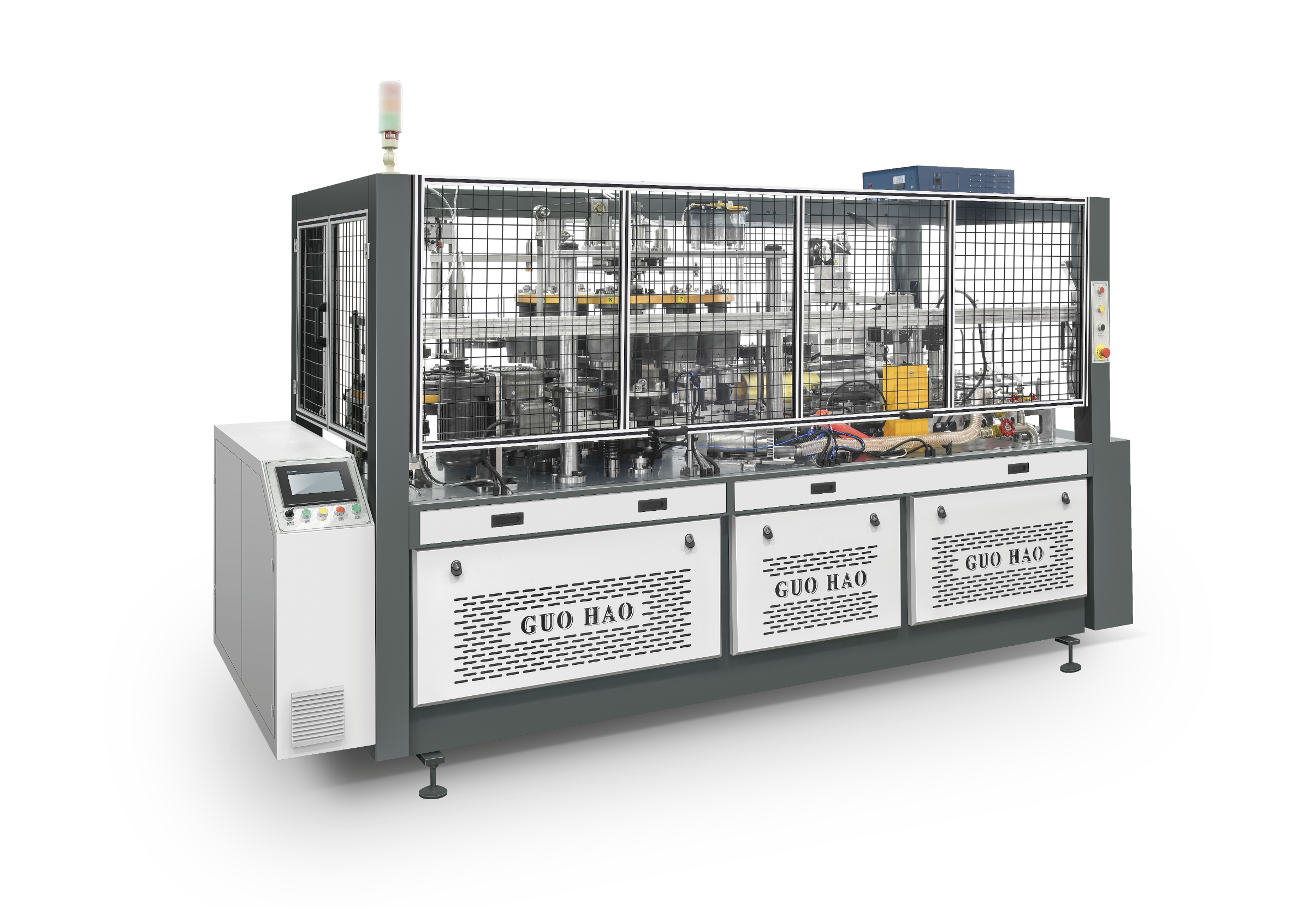
Understanding How a Paper Bowl Machine Contributes to Output Volumes
Cycle Speed and Daily Production Capacity
The most direct productivity metric associated with any paper bowl machine is its cycle speed — the number of bowls it can produce per minute or per hour under sustained operating conditions. Mid-to-high-speed models are capable of producing hundreds of bowls per minute, which means a single machine running a standard shift can generate output volumes that would have required multiple slower machines in earlier production generations. For commercial packaging plants managing tight delivery schedules, this raw capacity increase is immediately valuable.
Beyond peak speed, what matters operationally is sustained throughput — how close to the rated speed a machine performs over a full production shift, accounting for minor stoppages, material loading, and routine adjustments. Well-engineered paper bowl machines are designed with minimal downtime in mind, incorporating automatic material feeding systems, servo-driven forming mechanisms, and real-time fault detection that reduces unplanned stoppages. This sustained performance is what translates rated speed into actual daily production output that plants can commit to in customer schedules.
Plants that have upgraded from older semi-automatic equipment to a current-generation paper bowl machine frequently report that the same floor space now produces two to three times the daily output. This is not simply a function of speed — it is the combined effect of faster cycles, more reliable uptime, and reduced material waste per unit produced. The productivity gain is compounded when the machine operates across multiple shifts, as the capital cost amortizes rapidly against the increased output volume.
Automation Levels and Their Effect on Labor Utilization
A significant portion of the productivity benefit from a modern paper bowl machine comes from its level of automation. Fully automatic machines handle the entire forming sequence — from paper blank feeding and pre-heating through sidewall curling, bottom insertion, and edge rolling — without requiring operator intervention at each stage. This reduces the direct labor requirement per unit produced and allows floor staff to be redeployed toward quality inspection, material replenishment, and output management roles.
In labor-intensive packaging plants, the ratio of operators to machines has historically been a limiting factor in scaling production. A paper bowl machine with high automation reduces this constraint meaningfully. One trained operator can typically oversee multiple machines simultaneously, which changes the labor cost structure in a way that supports higher overall plant productivity without proportionally increasing headcount. For plants operating in markets where labor availability is unpredictable, this is a meaningful operational advantage.
Automation also introduces consistency benefits that affect downstream productivity. When a paper bowl machine forms each unit under controlled, repeatable mechanical conditions rather than relying on manual handling, the dimensional consistency of finished bowls is significantly higher. This reduces rejection rates, rework frequency, and the time quality control teams spend screening output — all of which are hidden productivity costs that many plants underestimate until they operate with well-automated equipment.
Quality Consistency as a Productivity Driver
Reducing Defect Rates and Rework in High-Volume Runs
In commercial packaging production, defect rates are a direct drag on effective productivity. Every bowl that fails dimensional inspection, exhibits a weak seam, or shows surface contamination represents consumed material, machine time, and labor that generates no sellable output. A high-performance paper bowl machine minimizes these losses through precision tooling, consistent temperature control in the forming process, and tight mechanical tolerances that ensure each unit meets specification without operator correction.
Plants producing food-grade bowls for retail or institutional clients often operate under strict quality agreements that specify dimensional tolerances, leak resistance, and surface quality standards. Meeting these requirements consistently at scale is only achievable when the paper bowl machine is engineered to deliver repeatable output across thousands of cycles. When defect rates are low, quality hold time is reduced, shipments proceed on schedule, and the plant avoids the cost and reputational risk of returns or customer complaints.
The relationship between quality and productivity becomes especially clear when plants run multiple product SKUs on the same equipment. A paper bowl machine that allows quick, reliable changeover between different bowl sizes and specifications maintains quality consistency across the product range without requiring extended calibration periods. This versatility supports higher effective utilization of the machine and allows the plant to serve a broader customer base without investing in dedicated equipment for each specification.
Material Yield and Waste Reduction
Material cost typically represents the largest variable cost component in paper bowl production, so the efficiency with which a paper bowl machine uses paper blanks has a direct impact on production economics and effective output value. Precision cutting and forming mechanisms minimize trim waste and ensure that each blank is fully utilized in producing a dimensionally correct bowl. Over a high-volume production run, even small improvements in material yield translate into significant cost savings and resource efficiency.
Advanced paper bowl machines also incorporate tension control systems that prevent paper tearing or misalignment during feeding, which is a common source of material waste in older or poorly maintained equipment. By maintaining consistent blank registration throughout the forming cycle, these machines ensure that material losses are kept at minimum levels even when running at high speeds. Plants that track material consumption carefully often find that upgrading to a more precise paper bowl machine delivers measurable yield improvements that partially offset the capital investment.
Integration with Commercial Packaging Plant Workflows
Upstream and Downstream Line Compatibility
A paper bowl machine does not operate in isolation — its productivity contribution is fully realized only when it integrates smoothly with the upstream material supply and downstream handling, stacking, packaging, and dispatch processes. In a well-designed commercial packaging plant, the output of the forming machine feeds directly into automated counting, stacking, and sleeve packaging equipment, creating a continuous flow that minimizes manual handling and buffer inventory between stages.
Plants that invest in a paper bowl machine without also evaluating the downstream workflow often find that bottlenecks simply shift rather than disappear. If the machine produces bowls faster than the stacking or packaging equipment can handle them, output accumulates in a way that requires manual intervention and undermines the efficiency gains from the forming machine. A comprehensive productivity improvement strategy considers the entire line, ensuring that each stage is matched in capacity so the paper bowl machine can operate at its rated speed without creating downstream congestion.
Similarly, upstream material handling — including paper roll storage, blank cutting where applicable, and loading logistics — must be organized to supply the paper bowl machine without interruption. Frequent material stoppages have a disproportionate impact on effective output, particularly on high-speed machines where even brief interruptions disrupt production rhythm and require restart procedures. Plants that invest in efficient material logistics alongside their equipment investment capture the full productivity potential of their paper bowl machine.
Shift Planning and Equipment Utilization Rates
The productivity of a paper bowl machine is ultimately determined not just by its rated capacity but by how many hours per day and days per year it actually runs at productive output. Equipment utilization rate — the percentage of available time during which the machine is producing salable output — is one of the most important performance indicators for packaging plant management. A machine with a high rated speed but poor utilization due to frequent maintenance, long changeovers, or inconsistent material supply will underperform a moderately rated machine that runs reliably and efficiently.
Commercial packaging plants looking to maximize the productivity benefit of a paper bowl machine should develop disciplined maintenance schedules, train operators thoroughly on the equipment's control systems and fault-response procedures, and build changeover routines that minimize setup time between production runs. These operational practices are as important as the machine's technical specifications in determining the actual productivity gain the plant realizes from its investment.
Shift planning also plays a role. Plants that run the paper bowl machine across two or three shifts amortize the fixed cost of the equipment over a much larger output volume, which improves both the economics and the effective contribution to plant productivity. When combined with reliable equipment performance and consistent material supply, multi-shift operation of a high-speed paper bowl machine can dramatically increase the plant's total annual output without adding floor space or significantly expanding the workforce.
Evaluating the Productivity Case for Your Packaging Plant
Key Performance Indicators to Assess Before and After Investment
Before committing to a paper bowl machine investment, packaging plant managers should establish baseline measurements across the key productivity indicators that the equipment is expected to improve. These include current daily output volume, defect and rejection rates, labor hours per thousand units produced, machine downtime frequency and duration, and material waste percentage. Having clear pre-investment benchmarks makes it possible to quantify the productivity improvement objectively once the new equipment is operational.
Post-installation tracking should cover the same indicators, with particular attention to the ramp-up period during which operators are learning the equipment and the production process is being optimized. Most well-implemented paper bowl machine installations show significant productivity gains within the first few weeks of stable operation, as the combination of higher speed, lower defect rates, and better labor utilization takes effect across full production runs. Tracking these gains systematically allows management to validate the investment and identify any remaining inefficiencies in the workflow that may be limiting the machine's full productivity contribution.
Matching Machine Specifications to Plant Production Requirements
Not every paper bowl machine specification is equally well suited to every commercial packaging plant. The right choice depends on the bowl sizes the plant produces, the volumes required, the paper specifications used, and the level of automation that is practical given the plant's workforce and operational model. Selecting a machine with capabilities that are mismatched to actual production requirements — either over-specified for low-volume operations or under-specified for high-demand environments — will limit the productivity gain relative to what is achievable with a well-matched selection.
Plants producing a range of bowl diameters and depths should evaluate the changeover flexibility of the paper bowl machine, including how quickly and reliably it can be reconfigured between different tooling sets. Rapid, repeatable changeover is a direct productivity enabler in multi-SKU production environments, reducing the non-productive time between product runs and allowing the plant to respond more flexibly to changing customer order patterns. Evaluating changeover performance as part of the selection process ensures the machine delivers its full productivity potential across the entire product range, not just on a single high-volume specification.
FAQ
How much can a paper bowl machine increase production output compared to manual or semi-automatic methods?
A fully automatic paper bowl machine operating at mid-to-high speed can produce output volumes several times greater than semi-automatic or manually assisted processes. The exact improvement depends on the rated cycle speed of the machine, the efficiency of material supply, and how many shifts the equipment runs. Plants that have made this transition commonly report two to four times the daily output from the same floor area, with significantly lower labor cost per unit produced.
What maintenance practices are most important for sustaining high productivity from a paper bowl machine?
Preventive maintenance is the foundation of sustained productivity. This includes regular inspection and lubrication of mechanical forming components, verification of temperature control systems in the sealing and curling stages, checking and replacing worn tooling before it causes quality problems, and ensuring that material feeding mechanisms are clean and properly aligned. Establishing a documented maintenance schedule and training operators to identify early warning signs of mechanical wear prevents unplanned stoppages that erode effective utilization rates.
Can a paper bowl machine handle multiple bowl sizes within a single production plant?
Yes, most commercial-grade paper bowl machines are designed with interchangeable tooling that allows the equipment to be reconfigured for different bowl diameters and depths. The time required for changeover varies by machine design, and more advanced models incorporate features that streamline this process to minimize non-productive time. For plants producing multiple bowl specifications, evaluating changeover speed and tooling flexibility is an important part of the machine selection process.
What factors most limit the productivity improvement a paper bowl machine can deliver?
The most common limiting factors are downstream workflow bottlenecks that cannot keep pace with the machine's output, inconsistent material supply that causes frequent stoppages, inadequate operator training that leads to suboptimal settings or slow fault response, and poor maintenance practices that increase unplanned downtime. A paper bowl machine delivers its maximum productivity contribution when the entire production system — from material logistics through downstream packaging — is organized to match its operating rhythm and capacity.
Table of Contents
- Understanding How a Paper Bowl Machine Contributes to Output Volumes
- Quality Consistency as a Productivity Driver
- Integration with Commercial Packaging Plant Workflows
- Evaluating the Productivity Case for Your Packaging Plant
-
FAQ
- How much can a paper bowl machine increase production output compared to manual or semi-automatic methods?
- What maintenance practices are most important for sustaining high productivity from a paper bowl machine?
- Can a paper bowl machine handle multiple bowl sizes within a single production plant?
- What factors most limit the productivity improvement a paper bowl machine can deliver?