
 EN
EN



In today's fast-growing foodservice and packaging industry, the demand for paper bowls has never been higher. Factories seeking to scale production need equipment that can meet rigorous output requirements without sacrificing consistency or material efficiency. A high performance paper bowl machine is no longer defined simply by the fact that it forms paper bowls — it is defined by a precise combination of engineering specifications that determine whether it truly suits industrial-scale factory operations.
Understanding what makes one paper bowl machine outperform another requires looking beyond marketing language and into the actual technical benchmarks that matter on the factory floor. From speed ratings and forming accuracy to control systems and material compatibility, each specification plays a direct role in a factory's output capacity, operating costs, and product quality. This article examines the core specifications that define a truly high performance paper bowl machine for factory environments.
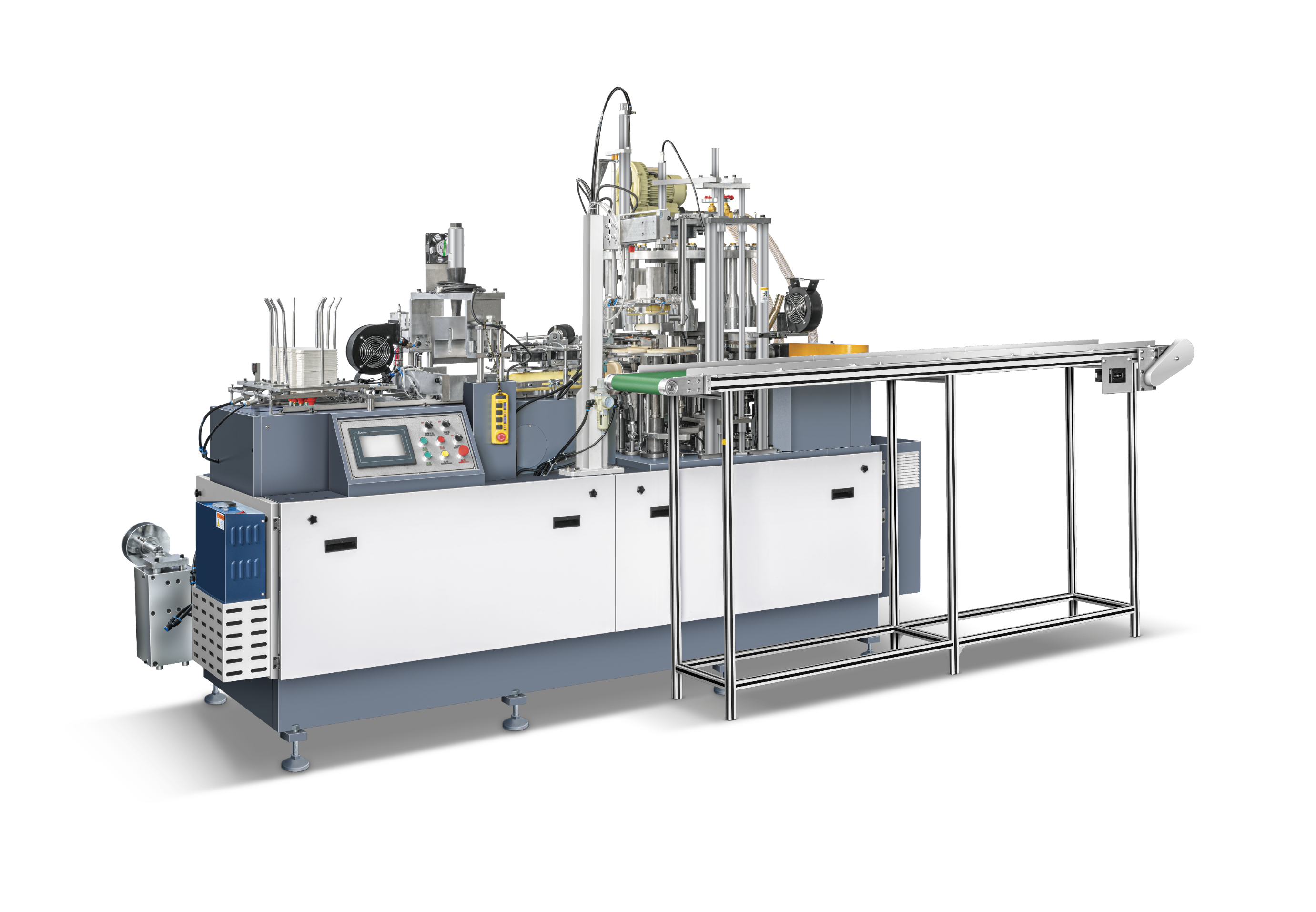
Production Speed and Output Capacity
Speed Ratings as a Primary Performance Indicator
Production speed is one of the first and most critical specifications buyers evaluate when assessing a paper bowl machine for factory use. Speed is typically measured in pieces per minute (PPM) or pieces per hour (PPH), and for a machine to qualify as high performance in an industrial context, it must deliver consistent output at rates that justify the capital investment. A mid-to-high-speed paper bowl machine will typically operate in the range of 45 to 80 pieces per minute, depending on bowl size and wall thickness.
However, rated speed alone is not a complete picture. What matters equally is the machine's ability to sustain that speed continuously over extended production runs without breakdowns, jams, or quality degradation. A paper bowl machine that achieves peak speed only intermittently adds little real value to a factory's production planning. High performance is therefore defined not just by maximum speed, but by stable sustained speed over an 8- to 16-hour production cycle.
Factories should also examine how speed changes when switching between bowl sizes or material gauges. Machines that require long recalibration periods or significant speed reductions during product changeovers reduce overall line efficiency. A well-engineered paper bowl machine should maintain close to rated output even when adapting to reasonable variations in job specifications.
Cycle Efficiency and Uptime Metrics
Beyond raw speed, factory managers need to account for cycle efficiency — the ratio of productive operating time to total scheduled time. A high performance paper bowl machine must have a high mechanical uptime, typically above 95% during a standard production shift. This requires robust mechanical components, precise tolerances, and a well-designed feeding and forming system that minimizes material waste and interruptions.
Effective cycle efficiency also depends on how quickly the machine recovers from minor stoppages or paper jams. Machines with intelligent auto-detection and self-correction features can resume production in seconds rather than requiring manual operator intervention, which significantly improves real-world output per shift. For factories operating multiple shifts, even a small improvement in uptime translates directly into thousands of additional units produced per week.
Forming Precision and Product Quality Standards
Dimensional Accuracy in Rim Forming and Bottom Sealing
A paper bowl machine must produce bowls with consistent dimensional accuracy across every single unit. This includes the diameter of the bowl opening, the depth of the body, the integrity of the rolled rim, and the quality of the bottom seal. In industrial production, even minor dimensional inconsistencies can cause downstream problems — poorly sealed bases lead to leakage, and uneven rims affect stackability and consumer perception.
High performance paper bowl machine specifications should define tolerances clearly. For the rim diameter, tolerances of ±0.3mm or tighter are expected in premium industrial equipment. The bottom knurling and heat-sealing mechanisms must apply uniform pressure and temperature across the entire sealing zone to ensure a watertight joint without over-compressing the material and weakening the bowl structure.
Factories producing bowls for hot food applications face particularly stringent requirements, as thermal expansion during use can stress poorly formed seals. A high performance paper bowl machine must be engineered to form bowl bases and rims that remain structurally sound when exposed to the temperatures involved in soup, noodle, and hot beverage applications.
Consistency Across Long Production Runs
Dimensional consistency must be maintained not just within a single batch but across thousands of continuous production cycles. This requires the paper bowl machine to maintain stable die temperatures, consistent mechanical stroke lengths, and reliable paper tension throughout a full production run. Any drift in these parameters over time results in gradual quality degradation that often goes undetected until a quality audit reveals widespread defects.
Advanced paper bowl machine models incorporate closed-loop control systems that monitor forming parameters in real time and make micro-adjustments to maintain target specifications without stopping the line. This level of engineering sophistication is a clear differentiator between basic commercial models and true factory-grade high performance equipment.
Material Compatibility and Forming Range
Paper Weight and Coating Compatibility
A high performance paper bowl machine must handle a wide range of raw material specifications. Industrial-grade machines are expected to process single-PE coated, double-PE coated, and PLA-coated paper stocks, with basis weights typically ranging from 180 gsm to 350 gsm. The ability to work with biodegradable and compostable coating materials has become increasingly important as regulatory environments push manufacturers toward sustainable packaging solutions.
Machines with adjustable preheating zones and programmable temperature profiles can accommodate multiple coating types without requiring hardware changes between runs. This flexibility reduces tooling costs and allows factories to respond to client demands for different material specifications using the same paper bowl machine platform. It also simplifies inventory management by allowing a single machine to serve multiple product lines.
Material compatibility also extends to how the machine handles variations in paper moisture content and roll consistency. High performance paper bowl machine designs include tension control systems and humidity-resistant feeding mechanisms to maintain stable operation even when incoming material quality varies within acceptable limits.
Mold Size Range and Product Changeover Capability
Industrial factories often produce bowls across multiple size categories — from small 8-ounce soup bowls to large 32-ounce noodle containers. A paper bowl machine defined as high performance must offer a meaningful product size range and a practical changeover process. Typical industrial machines can handle bowl diameters from approximately 90mm to 220mm and heights from 40mm to 120mm, depending on the mold set installed.
The critical specification here is changeover time. If switching molds and recalibrating the paper bowl machine requires more than 30 to 45 minutes, it limits the factory's ability to run multiple SKUs efficiently. High performance designs minimize changeover time through standardized mold mounting interfaces, pre-programmable parameter sets stored in the control system, and clearly labeled adjustment points that reduce operator error during setup.
Control Systems, Automation, and Operator Interface
PLC-Based Control and Parameter Storage
Modern high performance paper bowl machine platforms are built around Programmable Logic Controller (PLC) systems rather than relay-based electrical panels. PLC control offers far greater precision, repeatability, and diagnostic capability than older control architectures. Operators can store complete job recipes — including temperature profiles, forming pressure, cycle timing, and feed speed — and recall them instantly when returning to a previously run product.
The ability to store and recall production parameters eliminates the variability introduced by manual adjustment from shift to shift or operator to operator. For factories running multiple shifts with different crew members, this feature alone can significantly reduce waste rates and product rejection. A paper bowl machine that requires fresh manual calibration at every startup introduces unnecessary risk into the production process.
PLC systems also support remote monitoring and data logging, which are increasingly important for factories operating under ISO quality management standards. The ability to capture production data per shift, track machine performance metrics, and generate compliance records adds real value beyond the mechanical forming function of the paper bowl machine itself.
Touch Screen Interface and Fault Diagnostics
A high performance paper bowl machine should feature an intuitive touch screen Human Machine Interface (HMI) that allows operators to monitor all critical parameters in real time. The screen should display current speed, forming temperature, counter data, and any active alarms or fault codes clearly without requiring the operator to consult a separate manual or interpret cryptic indicator lights.
Fault diagnostic capability is a significant specification differentiator. Machines that identify the specific location and nature of a fault — such as a paper jam in the feeding unit, a temperature deviation in the sealing zone, or a mold position error — enable faster troubleshooting and shorter downtime windows. For high-volume factories, every additional minute of downtime on a paper bowl machine represents a measurable production loss.
Build Quality, Safety, and Maintenance Design
Frame Construction and Component Durability
The physical construction of a paper bowl machine reveals much about its intended performance tier. High performance industrial machines feature heavy-gauge welded steel frames that absorb the vibration and mechanical stress of continuous high-speed operation without flexing or fatigue over time. Lightweight or poorly reinforced frames lead to progressive misalignment of critical forming components, which translates into increasing quality problems as the machine ages.
Key mechanical components — including the main cam shaft, forming dies, curling station, and paper feeding rollers — should be manufactured from hardened alloy steel or stainless steel where food contact is involved. Surface treatments such as chrome plating or nitriding on wear surfaces extend component life significantly and reduce the frequency of replacement part cycles. Factories assessing a paper bowl machine should request detailed specifications on material grades used for primary mechanical components, not just the frame.
Maintenance Access and Service Architecture
A paper bowl machine that is difficult to service creates hidden operating costs that accumulate over its operating life. High performance factory-grade machines are designed with maintenance access as a deliberate engineering consideration. Inspection panels should be clearly located, easily removable, and large enough to allow visual access to all lubrication points, drive components, and adjustment mechanisms without requiring machine disassembly.
Lubrication systems on high performance paper bowl machine models often include centralized grease nipple arrays or automated lubrication circuits that reduce the time required for routine maintenance and ensure consistent lubrication even in high-speed operating conditions. Electrical panels should be clearly labeled and logically organized so that field technicians can trace circuits efficiently without extensive documentation.
Safety specifications are equally important, particularly in factory environments subject to labor safety regulations. The paper bowl machine should comply with applicable CE or equivalent safety standards, featuring properly interlocked safety guards on all moving parts, emergency stop circuits accessible from multiple positions, and clearly documented lockout/tagout procedures for maintenance operations.
FAQ
What production speed should a factory-grade paper bowl machine achieve?
A factory-grade paper bowl machine should achieve a sustained production speed of at least 45 pieces per minute during continuous operation, with high-performance models capable of reaching 70 to 80 pieces per minute. More important than peak speed is the machine's ability to maintain stable output over full production shifts without significant quality deviation or unplanned stoppages.
What paper materials is a high performance paper bowl machine designed to handle?
A high performance paper bowl machine is typically designed to handle single and double PE-coated paper stocks, as well as PLA-coated and other biodegradable coating materials. The compatible paper weight range generally spans from 180 gsm to 350 gsm. Machines with programmable temperature profiles offer the broadest material compatibility and allow factories to switch between coating types without hardware modifications.
How does PLC control improve paper bowl machine performance in factory settings?
PLC control allows a paper bowl machine to store complete production job recipes, enabling instant recall of all critical forming parameters including temperature, pressure, and timing. This eliminates manual recalibration variability between shifts and operators, reduces waste rates, and supports data logging for quality management compliance. PLC systems also enable faster fault diagnosis, which shortens downtime when issues arise during production.
What maintenance features distinguish a high performance paper bowl machine from a standard model?
High performance paper bowl machine models feature centralized or automated lubrication systems, clearly accessible inspection panels, hardened alloy steel wear components, and logically organized electrical panels. These design choices reduce routine maintenance time, extend service intervals, and make fault tracing faster for factory technicians. Machines built with maintenance access as a design priority have lower total cost of ownership over their operating lifespan compared to models where servicing requires significant disassembly.
Table of Contents
- Production Speed and Output Capacity
- Forming Precision and Product Quality Standards
- Material Compatibility and Forming Range
- Control Systems, Automation, and Operator Interface
- Build Quality, Safety, and Maintenance Design
-
FAQ
- What production speed should a factory-grade paper bowl machine achieve?
- What paper materials is a high performance paper bowl machine designed to handle?
- How does PLC control improve paper bowl machine performance in factory settings?
- What maintenance features distinguish a high performance paper bowl machine from a standard model?