
 EN
EN



Production speed is a critical performance indicator for manufacturers investing in disposable cup manufacturing equipment. When evaluating what production speed can be achieved with a modern paper cup machine setup, business owners must understand that output rates vary significantly based on machine class, automation level, and operational configuration. Contemporary high-speed models can produce between 80 to 150 cups per minute, while ultra-high-speed industrial systems reach 200 cups per minute or more under optimal conditions. These figures represent substantial improvements over legacy equipment, driven by advances in servo motor technology, precision forming stations, and integrated quality control systems that minimize downtime.
Understanding achievable production speeds requires examining the interplay between machine specifications, material handling efficiency, and process consistency. Modern paper cup machine configurations integrate multiple subsystems including paper feeding mechanisms, ultrasonic sealing stations, bottom knurling units, and automated ejection systems, each contributing to overall cycle time. Production speed is not merely a theoretical maximum but reflects sustained output during continuous operation, accounting for material changeovers, maintenance intervals, and quality assurance protocols. Manufacturers seeking to optimize their production capacity must consider how machine class, cup specifications, material selection, and operational practices collectively determine real-world throughput rates in their specific manufacturing environment.
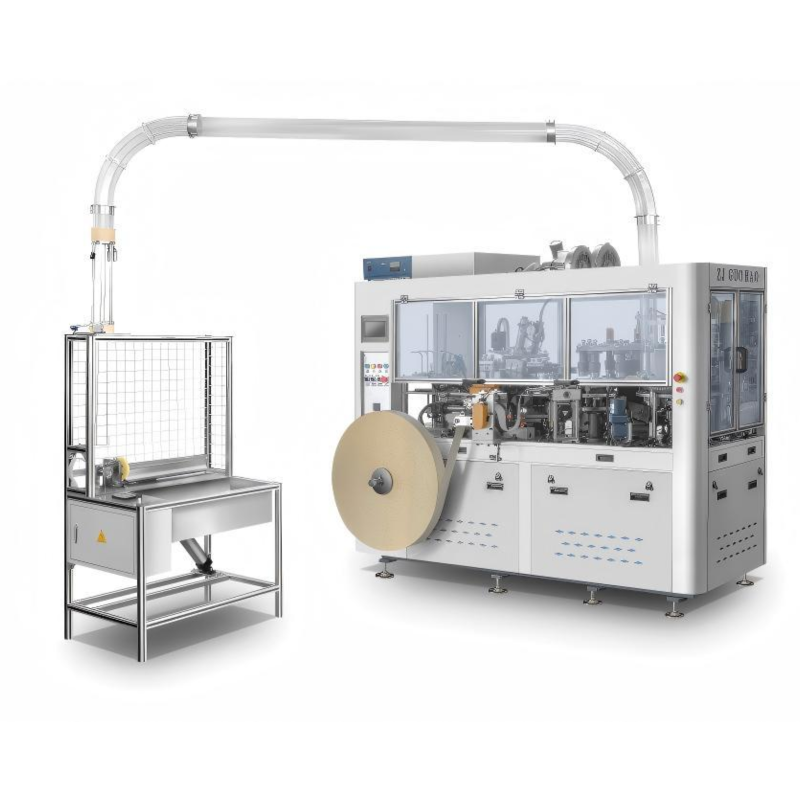
Understanding Production Speed Classifications in Paper Cup Manufacturing
Standard Speed Versus High-Speed Machine Categories
The paper cup machine market segments equipment into distinct speed categories that reflect both engineering capabilities and target market applications. Standard-speed machines typically operate in the 50 to 80 cups per minute range, serving small to medium enterprises where capital investment constraints and moderate production volumes align with mid-tier equipment specifications. These machines incorporate mechanical cam-driven systems and semi-automated material handling, delivering reliable performance for businesses producing 100,000 to 200,000 cups per eight-hour shift. While their cycle times are longer, standard-speed models offer lower entry costs and simpler maintenance requirements suitable for manufacturers establishing initial production capacity.
High-speed paper cup machine configurations represent the current industry standard for established manufacturers requiring significant daily output. Operating between 100 to 150 cups per minute, these systems employ servo motor drives that enable precise motion control across forming, sealing, and bottom curling stations. The transition from mechanical to servo-driven systems reduces vibration, improves registration accuracy, and allows for faster acceleration and deceleration cycles. High-speed machines typically include automated paper feeding with tension control systems, ultrasonic or hot-air sealing technologies, and programmable logic controllers that optimize cycle parameters for different cup sizes. This category delivers 250,000 to 400,000 cups per shift, matching the volume requirements of regional distributors and food service suppliers.
Ultra-High-Speed Industrial Systems
Ultra-high-speed paper cup machine setups exceed 180 cups per minute, with premium models reaching 200 to 220 units per minute under optimal operating conditions. These industrial-grade systems represent the technological frontier in disposable cup manufacturing, incorporating dual-lane configurations, multi-station forming arrays, and sophisticated sensor networks for real-time quality monitoring. The engineering advances enabling these speeds include high-frequency ultrasonic generators producing instantaneous seals, precision cam indexing systems with minimal dwell time, and servo-controlled ejection mechanisms that maintain product integrity at elevated throughput rates. Such equipment serves large-scale manufacturers supplying national retail chains and international markets where production efficiency directly impacts competitive positioning.
The capital investment for ultra-high-speed systems reflects their advanced engineering, typically ranging from $80,000 to $150,000 depending on configuration and automation level. However, the cost-per-unit advantages become significant at scale, as these machines can produce 500,000 to 650,000 cups during an eight-hour shift with appropriate staffing and material handling infrastructure. Manufacturers operating multiple shifts or serving high-volume contracts find that the higher initial investment amortizes rapidly through increased output capacity and reduced per-unit labor costs. The decision to deploy ultra-high-speed equipment requires careful analysis of sustained demand levels, raw material supply chain reliability, and the operational expertise necessary to maintain consistent performance at maximum throughput rates.
Technical Factors Determining Actual Production Speed
Machine Architecture and Drive System Design
The fundamental architecture of a paper cup machine directly determines its maximum achievable production speed. Machines utilizing servo motor systems throughout the drive train achieve faster cycle times compared to mechanical cam-driven alternatives because servo controls enable precise acceleration profiles and instantaneous response to position commands. Modern paper cup machine designs incorporate multi-axis servo coordination, allowing simultaneous execution of forming, heating, and ejection operations that previously occurred sequentially. This parallel processing architecture reduces total cycle time from initial paper feeding to finished cup discharge, directly translating to higher per-minute output rates.
The number and configuration of forming stations significantly impacts production speed capabilities. Single-station machines process one cup at a time through sequential operations, limiting maximum speeds to approximately 60 cups per minute regardless of drive system quality. Multi-station rotary designs position multiple cups around a central turret, with each station performing a specific operation as the turret indexes. Six-station configurations typical of high-speed machines allow six cups to be processed simultaneously at different stages, multiplying effective output. Ultra-high-speed systems may employ eight or ten stations, and some industrial models utilize dual-turret arrangements that effectively double production capacity within the same floor footprint, achieving the highest speeds available in current market offerings.
Material Feeding and Quality Control Integration
Raw material handling speed represents a critical constraint on overall production rates in paper cup machine operations. The paper feeding mechanism must deliver pre-cut fan blanks or continuous roll stock at rates matching the forming station cycle time while maintaining precise registration to ensure proper seam alignment. High-speed machines incorporate servo-controlled paper magazines with vacuum pickup systems that retrieve individual blanks at speeds exceeding three per second, with sensor verification confirming proper positioning before the forming cycle initiates. Any delay or misalignment in material feeding creates downtime that reduces effective production speed, making the reliability of the feeding subsystem as important as the forming station speed rating.
Integrated quality control systems influence achievable production speeds by determining the machine's ability to maintain specifications during continuous high-speed operation. Vision inspection systems using high-speed cameras check cup dimensions, seam integrity, and bottom curl formation at production rates, automatically rejecting defective units without interrupting the main production flow. Advanced paper cup machine models include statistical process control algorithms that monitor dimensional consistency trends and alert operators to developing issues before they cause significant waste. This real-time quality assurance enables sustained operation at maximum rated speeds because manufacturers can confidently maintain throughput without periodic manual inspections that would otherwise slow production. The integration of quality monitoring systems represents a key differentiator between equipment capable of rated speeds in laboratory conditions versus machines that sustain those speeds during extended production runs.
Cup Specifications Impact on Achievable Speed
Size and Capacity Variations
Cup size directly affects the production speed achievable on any given paper cup machine because larger cups require longer cycle times for forming, sealing, and bottom attachment operations. Machines rated at 120 cups per minute when producing standard 8-ounce cups typically achieve only 90 to 100 cups per minute when configured for 16-ounce or 20-ounce sizes. The extended cycle time reflects increased material handling requirements, longer heating durations for larger seam lengths, and additional mechanical travel distances for bigger cup diameters. Manufacturers planning production schedules must account for these speed variations when calculating daily output capacity across their product mix, as the same machine delivers substantially different throughput depending on the cup specifications being produced during any given run.
Small specialty cups including 3-ounce sampling cups and 4-ounce espresso sizes often allow higher production speeds than the machine's standard rating suggests. The reduced material volume and smaller dimensions enable faster acceleration through forming stations and shorter sealing cycles, potentially increasing output to 130 or 140 cups per minute on equipment rated at 120 for standard sizes. However, this advantage depends on the paper cup machine having adjustable turret configurations and programming flexibility to optimize cycle parameters for smaller dimensions. Manufacturers serving diverse market segments benefit from equipment offering wide size-change capabilities, but they must carefully schedule production runs to minimize changeover time between sizes, as the setup adjustments necessary when switching from large to small cups can consume 30 to 60 minutes of productive time.
Wall Structure and Material Specifications
Single-wall and double-wall cup construction significantly impacts achievable production speeds on paper cup machine equipment. Single-wall cups allow maximum production rates because they require only one forming operation and a single seam seal. Double-wall configurations, increasingly popular for hot beverage applications due to superior insulation properties, necessitate two complete forming cycles with precise alignment of inner and outer walls before final assembly. Even on machines designed for double-wall production, the effective output rate typically decreases by 30 to 40 percent compared to single-wall operation. A machine capable of 120 single-wall cups per minute might produce only 75 to 85 double-wall cups in the same timeframe, requiring manufacturers to carefully evaluate demand patterns when selecting equipment specifications.
Paper weight and coating specifications also influence production speed capabilities. Heavier paperboard stocks ranging from 250 to 350 GSM require increased forming pressure and extended heating times to achieve proper seam bonding, potentially reducing production speeds by 10 to 15 percent compared to standard 210 to 240 GSM materials. Polyethylene coating weight affects both material handling characteristics and sealing parameters, with heavier coatings demanding higher temperatures or longer dwell times at ultrasonic sealing stations. Modern paper cup machine designs incorporate programmable recipe systems that automatically adjust temperature, pressure, and cycle timing based on material specifications entered by operators, optimizing speeds for each material type while maintaining consistent quality standards across varying substrate characteristics.
Operational Factors Affecting Sustained Production Rates
Operator Skill and Process Management
The theoretical maximum speed of a paper cup machine differs substantially from sustained production rates achieved during actual manufacturing operations, with operator competency representing a primary determining factor. Skilled operators maintain higher average speeds by minimizing changeover times, quickly diagnosing and correcting minor process deviations before they escalate to quality problems, and optimizing machine parameters for different materials and environmental conditions. Training programs focusing on predictive maintenance awareness, systematic quality checks, and efficient material replenishment procedures can improve effective production speeds by 15 to 20 percent compared to operations with minimally trained staff, even when using identical equipment.
Process management practices including production scheduling, preventive maintenance protocols, and inventory control systems directly impact the percentage of shift time during which a paper cup machine operates at rated speed. Manufacturers implementing lean manufacturing principles with just-in-time material delivery, standardized changeover procedures, and dedicated machine attendants consistently achieve 85 to 92 percent overall equipment effectiveness. In contrast, operations with inadequate material staging, reactive maintenance approaches, and operators responsible for multiple machines simultaneously often realize only 60 to 70 percent effectiveness. This operational efficiency differential means that a well-managed 100 cups-per-minute machine delivers higher daily output than a poorly managed 120 cups-per-minute system, underscoring that equipment specifications alone do not determine production capacity.
Environmental Conditions and Material Consistency
Ambient temperature and humidity conditions in the production environment affect paper cup machine performance and achievable speeds. Paper cup stock is hygroscopic, meaning it absorbs or releases moisture based on surrounding humidity levels. In high-humidity environments, paper can become slightly softer and more prone to tearing during forming operations, potentially requiring reduced machine speeds to maintain quality standards. Conversely, extremely dry conditions can make paper more brittle and increase static electricity that interferes with material feeding systems. Optimal production speeds are achieved when manufacturing facilities maintain climate control within 20 to 25 degrees Celsius and 45 to 55 percent relative humidity, conditions that preserve material characteristics and ensure consistent machine performance.
Raw material quality variation influences sustainable production rates because inconsistent paper characteristics require more frequent machine adjustments and increase rejection rates. Paper stock with variations in thickness, coating uniformity, or moisture content forces operators to reduce speeds or perform more frequent quality inspections to prevent defect accumulation. Premium manufacturers specify tight tolerances on incoming paper specifications and implement incoming material testing protocols that verify consistency before production begins. When using certified materials from reliable suppliers, paper cup machine operators can confidently maintain maximum rated speeds throughout production runs. Operations relying on inconsistent or lower-grade materials often discover that the cost savings on raw materials are offset by reduced effective machine speeds and higher waste rates, making material quality a strategic consideration in production planning.
Maximizing Production Speed Through Configuration Optimization
Automation Level and Ancillary Equipment Integration
Increasing automation levels around core paper cup machine equipment significantly enhances sustained production speeds by minimizing manual intervention requirements. Fully automatic systems integrate robotic material loading, automated waste removal, and computerized production monitoring that eliminates operator tasks limiting throughput on semi-automatic equipment. The addition of automatic stackers and counting systems removes production bottlenecks associated with manual cup collection, as operators on semi-automatic lines must periodically stop machines to clear finished product accumulation. Automatic configurations maintain continuous operation for hours, with production interruptions limited to planned material changeovers rather than frequent manual handling cycles that reduce effective output.
Peripheral equipment integration including inline printing systems, automatic packaging lines, and material handling conveyors transforms individual paper cup machine units into complete production cells capable of higher sustained throughput. When printing, forming, inspection, and packaging occur as a synchronized process flow, the effective production rate approaches the base machine speed rating because manual transfer steps are eliminated. Some advanced manufacturers implement Industry 4.0 connectivity that links machine performance data to enterprise resource planning systems, enabling real-time production optimization and predictive maintenance scheduling that maximizes uptime. The investment in comprehensive automation typically ranges from 40 to 60 percent beyond base machine costs, but the resulting improvements in labor efficiency and sustained production rates provide compelling returns for manufacturers operating at scale.
Maintenance Practices and Consumable Management
Systematic preventive maintenance programs directly impact the achievable production speed by ensuring that paper cup machine components operate within design specifications. Critical wear items including ultrasonic horn tips, forming mandrels, and sealing rollers gradually deteriorate during use, and when not replaced on schedule, they cause increased cycle times, higher rejection rates, and ultimately unplanned downtime. Leading manufacturers implement condition-based maintenance monitoring using vibration sensors, temperature measurements, and cycle time tracking to identify developing problems before they impact production. This proactive approach maintains machines at peak performance levels, sustaining rated production speeds throughout the interval between major overhauls.
Consumable quality and replacement frequency particularly affect production speeds on high-volume equipment. Ultrasonic transducer systems operating at 180 cups per minute experience significantly more stress than those on 90 cup-per-minute machines, requiring more frequent horn replacement to maintain sealing quality and speed. Using manufacturer-specified genuine replacement parts ensures that component performance matches original equipment specifications, whereas aftermarket alternatives may introduce slight dimensional or material variations that necessitate speed reductions to maintain quality. The total cost of ownership calculation for paper cup machine equipment must account for consumable costs scaled to production volume, as higher-speed machines operating at capacity consume wear parts proportionally faster, making routine replacement budgets an important consideration in production planning and cost analysis.
FAQ
How does machine age affect production speed capabilities over time?
Production speed capabilities of paper cup machine equipment gradually decline over years of operation as mechanical components experience wear and control systems become outdated relative to newer technology. Well-maintained machines typically retain 90 to 95 percent of original rated speed for the first five years, with more noticeable degradation occurring beyond seven to ten years as cumulative wear affects precision and reliability. However, systematic rebuilding programs including drive system upgrades, bearing replacements, and control system modernization can restore aging equipment to near-original performance specifications at costs substantially lower than new machine acquisition, making refurbishment an economically viable option for extending productive life while maintaining competitive speeds.
Can production speed be increased beyond rated specifications through modifications?
Attempting to operate paper cup machine equipment beyond manufacturer-rated speeds generally produces diminishing returns and introduces significant risks. While minor speed increases of 5 to 8 percent may be achievable through parameter optimization on some machines, substantial speed improvements require fundamental mechanical redesign including stronger drive components, upgraded servo motors, and enhanced cooling systems. Unauthorized modifications typically void equipment warranties and may compromise safety systems or structural integrity. Manufacturers seeking higher production capacity achieve better results by investing in newer high-speed equipment designed for elevated throughput rather than attempting to extract capabilities beyond what existing machines were engineered to deliver safely and reliably.
What production speed should manufacturers target when sizing equipment for new facilities?
Selecting appropriate paper cup machine speed ratings for new production facilities requires careful analysis of projected demand volumes, product mix complexity, and operational strategies. Conservative planning targets equipment capacity at 125 to 150 percent of anticipated average demand, providing buffer capacity for demand spikes, maintenance downtime, and future growth without requiring immediate additional capital investment. Manufacturers serving markets with highly seasonal demand patterns or rapid product turnover may benefit from multiple moderate-speed machines rather than single ultra-high-speed units, as the flexibility to run different products simultaneously or maintain production during maintenance outweighs the efficiency advantages of maximum-speed equipment. The optimal configuration balances capital efficiency, operational flexibility, and risk management rather than simply maximizing theoretical production speed.
How do production speeds compare between different manufacturing regions globally?
Production speed capabilities of paper cup machine equipment remain relatively consistent globally as major manufacturers distribute similar technology internationally. However, actual achieved production rates vary by region based on operational practices, labor costs, and market demands. Facilities in developed markets with high labor costs typically invest in ultra-high-speed automated systems to maximize output per operator, while manufacturers in regions with lower labor costs may prioritize equipment versatility and lower capital investment over maximum speed. The global trend toward automation and speed optimization continues across all markets as competition intensifies and environmental regulations encourage manufacturing efficiency improvements that reduce waste and energy consumption per unit produced.
Table of Contents
- Understanding Production Speed Classifications in Paper Cup Manufacturing
- Technical Factors Determining Actual Production Speed
- Cup Specifications Impact on Achievable Speed
- Operational Factors Affecting Sustained Production Rates
- Maximizing Production Speed Through Configuration Optimization
-
FAQ
- How does machine age affect production speed capabilities over time?
- Can production speed be increased beyond rated specifications through modifications?
- What production speed should manufacturers target when sizing equipment for new facilities?
- How do production speeds compare between different manufacturing regions globally?