
 EN
EN



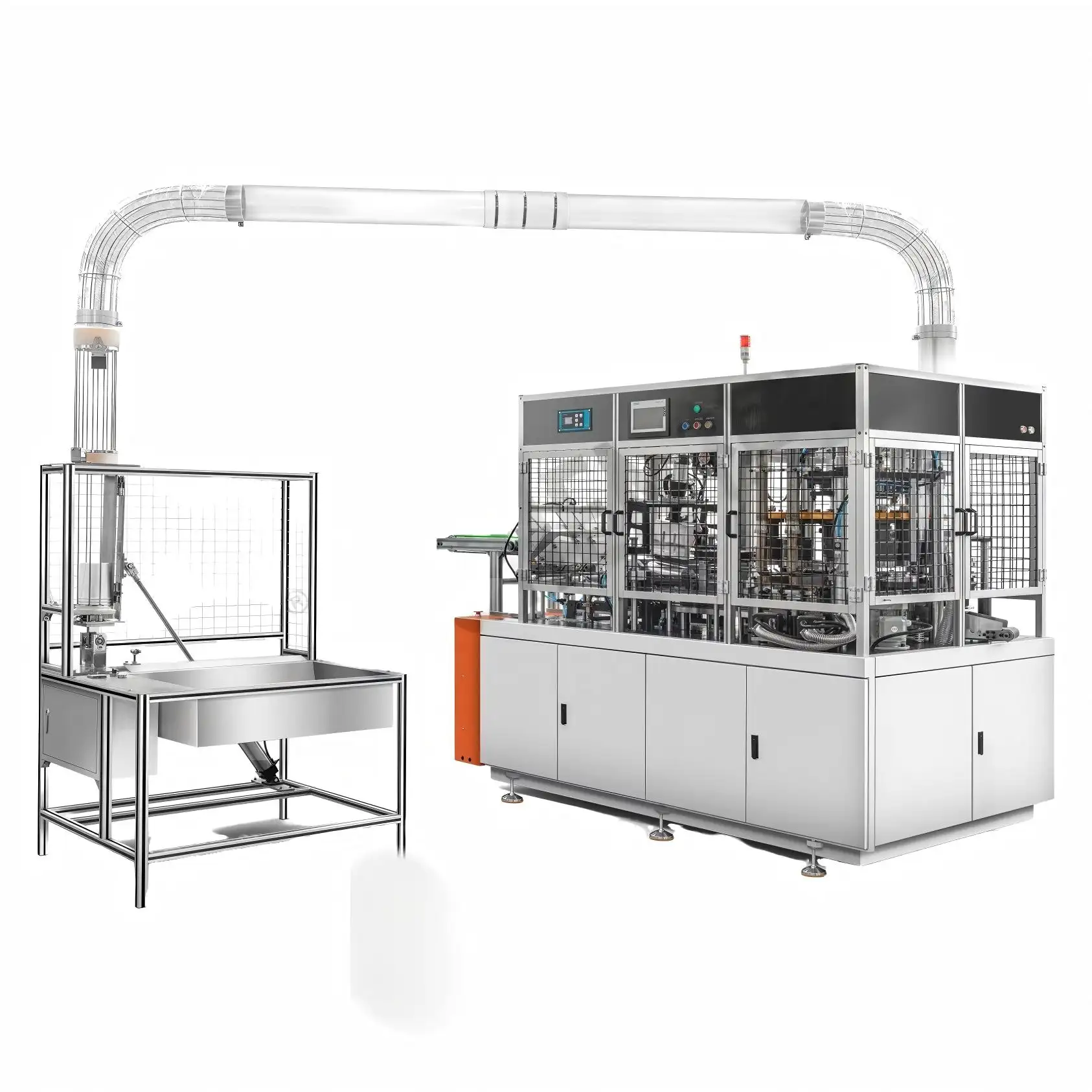
Caption: KCM-12 High-Speed Automatic Paper Cup Machine — CE-compliant, exported to markets across five continents.
Introduction
China leads the global paper cup machine manufacturing industry, offering equipment at 30–60% lower cost than European or Japanese alternatives. However, this cost advantage only pays off if you handle the import process properly — from supplier verification and CE compliance to shipping, customs clearance, and post-arrival installation.
This guide provides a practical, step-by-step framework for importing a paper cup making machine from China, based on Wenzhou Qichen's export processes and proven track record supplying CE-certified equipment to South America, Southeast Asia, the Middle East, Europe, and Africa.
Step 1: Supplier Verification — Manufacturers vs Traders
The first and most important step is confirming your supplier is a real manufacturer, not a trading company. Trading companies add markup, lack technical expertise, and cannot provide direct after-sales support.
Verification Checklist
Verification Item |
How to Check |
Red Flags |
Business License |
Request copy; verify with Chinese government registry |
License shows "trading" not "manufacturing" |
Factory Address |
Cross-check with Google Maps / Baidu Maps |
Address is in an office building, not industrial zone |
Trade Show Participation |
Check exhibition history (Drupa, Canton Fair, China Print) |
No trade show presence in 3+ years |
R&D Capability |
Ask about in-house engineering team and patents |
Cannot explain technical details of their machines |
Export Records |
Request customs export data or Bill of Lading samples |
No direct export history |
Wenzhou Qichen passes all these criteria: headquartered in Wenzhou, Zhejiang’s core machinery production base, the brand has taken part in flagship global expos including Drupa 2024, China Print 2025, the 139th Canton Fair (2026), as well as Convert Flexo Latin America 2026 in Brazil. Beyond large-scale international trade fairs, our team consistently attends regional industry exhibitions across Iran, Turkey, Egypt, India, the US, Saudi Arabia, Germany and Colombia spanning from 2016 to 2025, backed by an integrated full-cycle supply chain covering independent R&D, production, quality inspection and global after-sales support.
Step 2: CE Compliance and Technical Documentation
CE certification is mandatory for the European Economic Area — and increasingly required by other markets adopting EU standards.
What CE Compliance Means for Paper Cup Machines
CE marking confirms the machine meets EU health, safety, and environmental requirements:
Machinery Directive 2006/42/EC
- : Covers mechanical safety, guarding, emergency stops
Low Voltage Directive 2014/35/EU
- : Covers electrical safety for equipment operating at 50–1000V AC
EMC Directive 2014/30/EU
- : Covers electromagnetic compatibility
Documentation to Request from Your Supplier
Document |
Purpose |
Required For |
CE Certificate |
Proof of compliance |
Customs clearance, market access |
Declaration of Conformity |
Manufacturer's legal statement |
Regulatory compliance |
Technical File |
Design specs, risk assessment, test reports |
Due diligence, audits |
Operation Manual (English) |
Safe operation instructions |
Workplace safety |
Electrical Schematic |
Wiring diagram |
Installation, maintenance |
Spare Parts List |
Maintenance planning |
Daily operations |
All Wenzhou Qichen's products comply with CE quality standards, and their documentation package includes all items listed above.
Step 3: Quality Inspection — Before Shipment
Never ship a machine without verifying its performance first. Three inspection approaches:
Option A: Factory Visit (Recommended)
Visit the factory and witness a live production test:
- Bring your own PE-coated paper samples
- Run the machine at full rated speed
- Inspect cup quality (sealing, forming, cutting precision)
- Meet the engineering and after-sales team
Option B: Third-Party Inspection
Hire SGS, Bureau Veritas, TÜV, or a similar agency:
- Cost: 1,500
- Scope: Visual inspection, functional test, documentation review
- Deliverable: Inspection report with photos and pass/fail recommendation
Option C: Remote Video Inspection
If travel is not feasible and third-party inspection is over budget:
- Request a live video call during the test run
- Specify test parameters (paper weight, cup size, speed)
- Ask for close-up shots of critical components and cup output
Step 4: Shipping and Logistics
Packaging Standards
A properly packaged paper cup making machine should include:
- Poly-wood crate with fumigation certificate (ISPM 15 compliant)
- Moisture-proof wrapping and desiccant packs
- Secure component fastening and padding
- Clearly labeled spare parts box
Shipping Terms Comparison
Incoterm |
Buyer Responsibility |
Seller Responsibility |
Recommended For |
EXW |
All logistics |
None |
Experienced importers with own freight forwarder |
FOB |
Shipping from port |
Delivery to Chinese port + export customs |
Most B2B machinery imports |
CIF |
Import customs + delivery |
Shipping + insurance to destination port |
Buyers preferring supplier-arranged shipping |
DDP |
Nothing |
All including import duties |
First-time importers, simplified process |
Wenzhou Qichen usually quotes FOB Wenzhou/Ningbo port, but can also offer CIF or DDP arrangements.
Container Loading
Machine Type |
Container Size |
Notes |
Single cup machine |
20GP |
Machine only, crated |
Cup machine + printer + die cutter |
40HQ |
Full production line |
Cup machine + bowl machine |
40HQ |
Two machines, optimized loading |
Step 5: Customs Clearance and Import Duties
HS Code Classification
Paper cup making machines usually fall under:
HS Code 8441.30
- : Machinery for making paper cups, bowls, and similar articles
HS Code 8441.80
- : Other paper-making machinery (for supporting equipment)
Import Duty Rates by Region
Region |
Duty Rate |
Notes |
European Union |
1.7–2.7% |
Plus 20–21% VAT |
United States |
0–2.5% |
Check Section 301 tariffs |
Southeast Asia (ASEAN) |
0–5% |
Form E may reduce to 0% under ACFTA |
South America |
5–14% |
Varies by country |
Middle East |
5% |
Standard GCC rate |
Africa |
5–20% |
Varies significantly by country |
Required Customs Documents
- Commercial Invoice (with HS codes)
- Packing List
- Bill of Lading
- Certificate of Origin (Form E for ASEAN, Form A for GSP countries)
- CE Certificate (for EU imports)
- Fumigation Certificate (for wooden packaging)
Step 6: Installation, Training, and After-Sales Support
Installation Options
Option |
Cost |
Duration |
Best For |
Remote Guidance (Video) |
Free / Included |
3–5 days |
Experienced technicians |
On-Site Technician |
3,000 + travel |
5–7 days |
First-time buyers, complex installations |
Local Partner Technician |
Varies |
3–5 days |
Markets with established service networks |
After-Sales Service Expectations
A reliable supplier like Wenzhou Qichen should provide:
12-month warranty
- on main components
Stable spare parts supply
- with clear pricing and lead times
Remote technical support
- via video call or messaging
Operation manual
- in English or any other language required with troubleshooting section
Response time
- of 24–48 hours for technical inquiries
Conclusion & Next Step
Importing a paper cup making machine from China is straightforward when you work with a verified, CE-compliant manufacturer. Remember the key steps:
1. Verify the supplier is a genuine manufacturer with R&D capability and export experience.
2. Confirm CE compliance and request full technical documents.
3. Arrange pre-shipment inspection — factory visit, third-party, or remote video.
4. Choose suitable shipping terms and prepare customs documentation in advance.
5. Plan installation and set up after-sales support before the machine arrives.
Ready to import a CE-certified paper cup machine from a verified China manufacturer? Contact Wenzhou Qichen for a complete export package including FOB quote, CE documents, and shipping estimate →
Table of Contents
- Introduction
- Step 1: Supplier Verification — Manufacturers vs Traders
- Wenzhou Qichen passes all these criteria: headquartered in Wenzhou, Zhejiang’s core machinery production base, the brand has taken part in flagship global expos including Drupa 2024, China Print 2025, the 139th Canton Fair (2026), as well as Convert Flexo Latin America 2026 in Brazil. Beyond large-scale international trade fairs, our team consistently attends regional industry exhibitions across Iran, Turkey, Egypt, India, the US, Saudi Arabia, Germany and Colombia spanning from 2016 to 2025, backed by an integrated full-cycle supply chain covering independent R&D, production, quality inspection and global after-sales support.
- Step 2: CE Compliance and Technical Documentation
- Step 3: Quality Inspection — Before Shipment
- Step 4: Shipping and Logistics
- Step 5: Customs Clearance and Import Duties
- Step 6: Installation, Training, and After-Sales Support
- Conclusion & Next Step