
 EN
EN



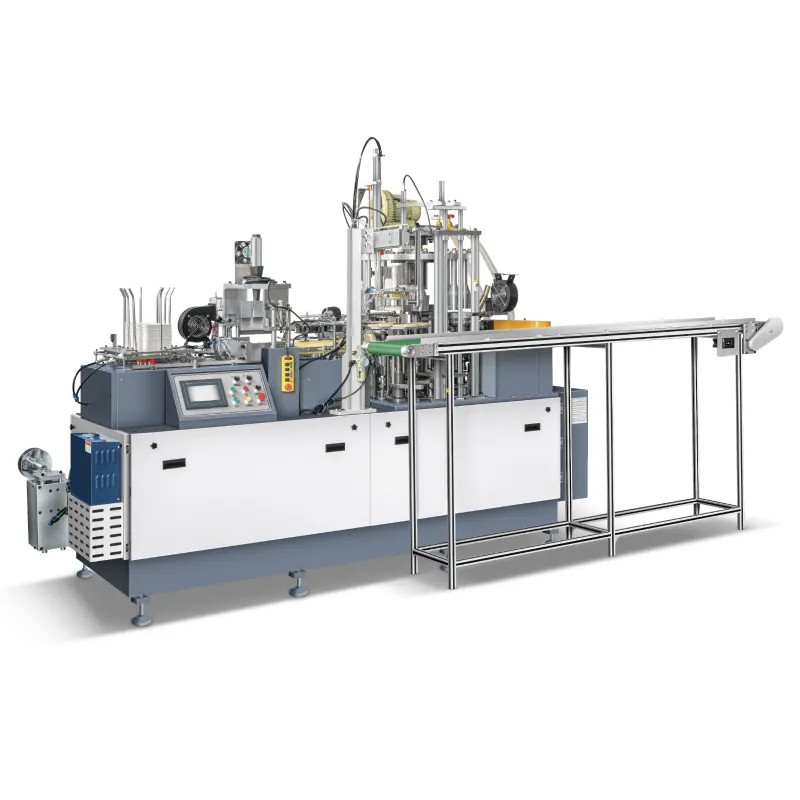
Caption: ZBJ-DP64 Automatic Paper Bowl Machine — designed for food-grade bowl production with high forming precision.
Introduction
For packaging manufacturers entering the disposable paper products market, one of the first key decisions is whether to invest in a paper cup making machine, a paper bowl making machine, or both. While the forming technology is similar, the target markets, profit margins, and production requirements differ significantly.
This comparison uses equipment data from Wenzhou Qichen — a manufacturer of both cup and bowl forming machines, plus supporting equipment like lid machines, printers, die cutters, and packing machines — to help you make a confident investment choice.
Market Demand: Cups vs Bowls
Paper Cup Market
The paper cup market is driven by:
Beverage Industry
- : Coffee shops, tea houses, fast-food chains, and convenience stores
Food Delivery
- : Hot and cold drink cups for delivery platforms
Events and Catering
- : Disposable cups for large events
Office and Institutional Use
- : Water cooler cups, vending machine cups
Global paper cup demand tops 300 billion units per year, with steady growth in emerging markets where disposable income and food service culture are expanding.
Paper Bowl Market
Serves these segments:
Instant Noodles and Ready Meals
- : The largest application for paper bowls
Salad and Poke Bowls
- : Fast-growing health-conscious consumer segment
Soup and Hot Food Containers
- : Food delivery and takeout
Ice Cream and Dessert Cups
- : Smaller bowl formats
Paper bowl demand is growing faster than cups, fueled by the global food delivery expansion and the shift from plastic to paper food containers.
Market Factor |
Paper Cups |
Paper Bowls |
Global Annual Demand |
~300 billion units |
~80 billion units |
Growth Rate (CAGR) |
4–5% |
6–8% |
Average Unit Price |
0.04 |
0.08 |
Profit Margin |
15–25% |
20–35% |
Market Maturity |
Mature |
Growing |
Equipment Comparison: Technical Specifications
Paper Cup Making Machines
Wenzhou Qichen's cup machine line covers multiple speed classes:
Model |
Speed (pcs/min) |
Cup Size Range |
Power |
Weight |
ZBJ-OC12 PRO |
70–90 |
50–135mm height |
~7KW |
~2,200kg |
N12 |
100–120 |
50–115mm height |
~14KW |
~2,500kg |
ZBJ-K150 |
120–150 |
50–115mm height |
16KW |
2,800kg |
G12 / KCM-12 |
120–150 |
50–115mm height |
~12KW |
~2,900kg |
Paper Bowl Making Machines
Model |
Speed (pcs/min) |
Bowl Size Range |
Power |
Weight |
ZBJ-DP64 |
50–60 |
Large format bowls |
~12KW |
~2,800kg |
ZBJ-DP35 |
70–80 |
Medium format bowls |
~12KW |
~2,600kg |
KBM-200 |
70–80 |
Various sizes |
~14KW |
~3,000kg |
KBM-35 |
80–100 |
Various sizes |
~14KW |
~3,000kg |
Key Technical Differences
Forming Depth
- : Bowl machines require deeper forming stations to accommodate larger container depths
Paper Weight
- : Bowls typically use heavier paper (250–400gsm) compared to cups (180–350gsm) for better rigidity
Sealing Method
- : Both use heat sealing, bowls often need extra bottom reinforcement
Output Speed
- : Cup machines run faster due to simpler geometry and smaller forming area
Investment Analysis: Which Machine Delivers Better ROI?
Scenario A: Paper Cup Production Line
Investment Item |
Cost (USD) |
ZBJ-K150 High-Speed Cup Machine |
33,000-36,000 |
Flexographic Printer |
28,000-36,000 |
Die Cutting Machine |
8500-33,000 |
Packing Machine (CP-100) |
10,000-17,000 |
Total Line Investment |
79,500-122,000 |
Monthly Revenue Potential (at 1.6M cups/month, 40,000
Scenario B: Paper Bowl Production Line
Investment Item |
Cost (USD) |
KBM-35 Medium-High Speed Bowl Machine |
35,000-38,000 |
Flexographic Printer |
28,000-36,000 |
Die Cutting Machine |
8500-33,000 |
Packing Machine |
10,000-17,000 |
Total Line Investment |
81,500-124,000 |
Monthly Revenue Potential (at 600K bowls/month, 30,000
Strategic Recommendation
Business Profile |
Recommended Investment |
High-volume, established buyer network |
Paper cup machine (higher throughput) |
Niche market, premium positioning |
Paper bowl machine (higher margins) |
Diversified product strategy |
Both — start with cups, add bowls in Year 2 |
Limited capital, testing market |
Medium-speed cup machine (ZBJ-OC12 PRO) |
Supporting Equipment: Building a Complete Production Line
Whether you choose cups or bowls, a full production line requires supporting equipment. Wenzhou Qichen offers a full range:
Printers
- : Flexographic printing for custom designs and branding
Die Cutting Machines
- : Precision cutting of printed paper into blanks
Lid Making Machines
- : Paper lid/cover machines (e.g., PL-G Automatic Dome Lid Machine) for complete cup sets
Packing Machines
- : Automated counting and packing (CP-100 Vertical, LP-450)
Inspection Machines
- : Automated defect detection for quality control
Sourcing the entire line from one manufacturer ensures mechanical compatibility, unified control systems, and single-point accountability for warranty and service.
Compliance and Quality Standards
Both paper cup forming machines and paper bowl making machines from Wenzhou Qichen comply with CE quality standards. Additional considerations:
Food-Grade Compliance
- :For food-contact containers, confirm heating elements and contact surfaces meet FDA or EU food contact material regulations
Paper Certification
- : Use PE-coated paper from FSC-certified suppliers to meet sustainability requirements in European and North American markets
Quality Consistency
- : Bowl production needs tighter tolerances due to larger forming area — verify machine stability through test runs
Conclusion & Next Step
Your choice between a paper cup machine and a paper bowl making machine depends on your target market, capital availability, and growth plan:
1. Paper cups offer higher volume and broader demand but face more competition.
2. Paper bowls deliver higher per-unit margins and faster growth but serve a narrower market.
3. Many successful manufacturers start with cups and add bowl capacity as they establish market presence.
Unsure which machine fits your market? Contact Wenzhou Qichen for a free market-specific consultation and equipment recommendation → Share your target market, product types, and budget for a tailored production line proposal.