
 EN
EN



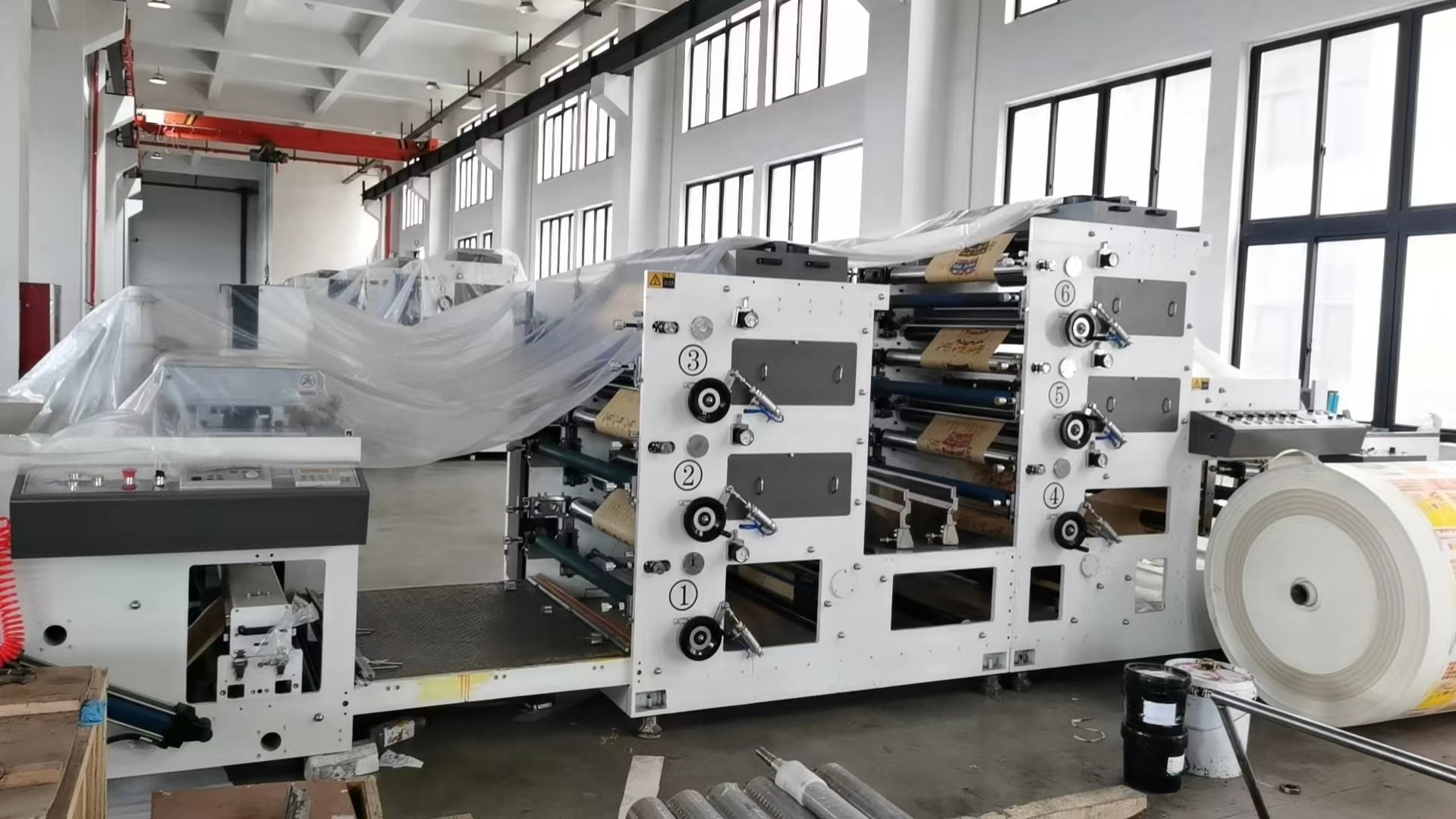
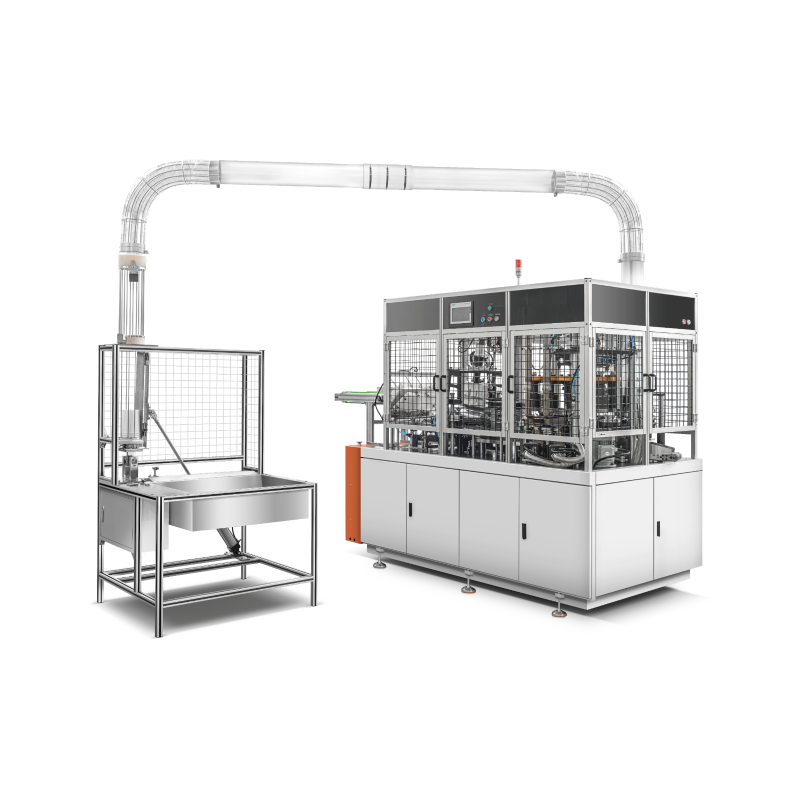
In high volume manufacturing environments where thousands of disposable cups are produced every hour, maintaining consistency across every unit is not just a quality preference—it is a business imperative. Modern paper cup machine systems have evolved to address this challenge by integrating precision engineering, automated process controls, and real-time monitoring capabilities that eliminate the variability inherent in manual or semi-automated production methods. These machines ensure that each cup produced meets exact dimensional tolerances, structural integrity standards, and visual quality benchmarks regardless of shift changes, operator experience, or production speed fluctuations.
The operational mechanics behind consistency improvement in paper cup manufacturing involve multiple synchronized subsystems working in concert to control every variable that affects product uniformity. From the initial paper feeding stage through die cutting, sidewall forming, bottom sealing, rim curling, and final discharge, each step is governed by precise mechanical movements, controlled thermal application, and monitored pressure application. Understanding how these machines achieve repeatable results at production speeds exceeding 100 cups per minute requires examining the specific technologies and design principles that differentiate industrial paper cup machine equipment from conventional manufacturing tools.
Automated Material Handling and Feeding Precision
Servo-Controlled Paper Feed Systems
The foundation of consistent cup production begins with how raw paper material enters the paper cup machine production line. Advanced systems utilize servo motor-driven feed mechanisms that control paper advancement with sub-millimeter accuracy. Unlike pneumatic or mechanical cam-driven systems that can experience timing drift or tension variations, servo-controlled feeding maintains exact paper positioning for every cycle. This precision ensures that each blank is cut from the paper roll at identical positions, eliminating dimensional variations that would otherwise compound through subsequent forming operations.
These feeding systems incorporate tension sensors that continuously monitor paper web stability, automatically adjusting motor torque to compensate for roll diameter changes as material depletes. The result is uniform material presentation to the cutting station regardless of whether the machine is processing the first meter or the final meter of a paper roll. This level of control is particularly critical when working with coated paperboard materials where thickness variations of even 10 microns can affect cup wall strength and sealing performance.
Many modern paper cup machine configurations also feature automatic splice detection systems that recognize when a new paper roll has been joined to the depleting roll. The machine can automatically adjust feed rates during splice passage to prevent defects, then seamlessly return to standard production parameters. This capability maintains production consistency even during material changeovers, which historically represented a significant source of quality variation in high volume operations.
Register Mark Detection and Alignment
For printed cup production, register mark detection systems ensure that graphics align precisely with the cup structure on every unit. Optical sensors scan for registration marks printed on the paper web and trigger cutting and forming operations at exact moments to maintain artwork positioning. The paper cup machine processes this alignment data in real-time, making microsecond-level adjustments to synchronize mechanical operations with printed pattern locations.
This registration control becomes especially important in high-speed production where a timing error of just a few milliseconds can result in misaligned graphics that render entire production batches unsaleable. By maintaining alignment tolerances within ±0.5mm across thousands of cups per hour, these systems ensure that brand imagery, text, and design elements appear in identical positions on every finished product. The consistency extends beyond aesthetics to functional elements such as fill lines and handling zones that must align with cup structural features.
Thermal Management and Sealing Consistency
Ultrasonic Sealing Technology
One of the most critical factors affecting cup integrity and consistency is the quality of sidewall and bottom seals. Traditional hot air sealing methods suffer from temperature fluctuations, uneven heat distribution, and sensitivity to ambient conditions that introduce variability. Modern paper cup machine systems increasingly employ ultrasonic sealing technology that uses high-frequency vibration to generate localized heating through molecular friction. This approach delivers precise, repeatable thermal energy to bonding surfaces without relying on external heat sources that can drift in temperature.
Ultrasonic sealing systems in paper cup machine applications typically operate at frequencies between 15-40 kHz, with amplitude and energy levels precisely calibrated for specific paper grades and coating types. The sealing horn contacts the cup material for a predetermined duration measured in milliseconds, applying consistent pressure and vibration that creates molecular bonding without damaging the paper substrate. Because the heat generation is instantaneous and localized, seal quality remains uniform regardless of production speed or environmental temperature variations.
The consistency advantages of ultrasonic sealing extend to seal width uniformity and penetration depth. Each seal exhibits identical characteristics in terms of bond strength, visual appearance, and structural integrity. This uniformity is measurable through destructive testing protocols where seal failure loads show standard deviations below 5% across production runs—a level of consistency unattainable with conventional thermal sealing methods that can exhibit variation ranges exceeding 20%.
Temperature Monitoring and Adaptive Control
Even in paper cup machine systems using hot air or contact heating for curl forming and final touches, sophisticated temperature control systems maintain thermal consistency. Multiple thermocouples positioned throughout heating zones provide continuous feedback to programmable logic controllers that adjust heating element output in real-time. These closed-loop control systems compensate for ambient temperature changes, material flow variations, and component wear that would otherwise introduce thermal inconsistencies.
Advanced machines incorporate predictive algorithms that anticipate thermal drift based on production duration and cycle counts. The system gradually adjusts heating parameters to maintain target temperatures at the point of material contact rather than at the heating element itself. This approach accounts for thermal transfer losses and ensures that every cup experiences identical thermal processing regardless of when in the production run it was manufactured. The result is uniform curl formation, consistent coating activation, and repeatable structural characteristics across all output.
Mechanical Precision and Motion Control
Synchronized Multi-Station Operation
High volume paper cup machine systems operate as multi-station platforms where cups progress through sequential forming stages in perfect synchronization. Rotary turret designs common in modern equipment feature precision indexing mechanisms that rotate workpiece carriers to successive processing stations with positioning accuracy measured in arc-seconds. This mechanical precision ensures that each cup blank arrives at die stations, forming mandrels, and sealing heads in identical orientations for repeatable processing.
The drive systems powering these rotary platforms utilize high-resolution encoders and servo amplifiers that maintain exact angular velocity and acceleration profiles throughout each index cycle. Even at production speeds where the turret completes a full revolution every few seconds, position repeatability remains within 0.01mm. This level of mechanical consistency eliminates the cumulative tolerance stack-up that can occur in linear transfer systems where positioning errors at early stations compound as workpieces progress through downstream operations.
Force monitoring integrated into forming stations provides additional consistency assurance by detecting anomalies that indicate material variations or mechanical wear. When forming pressure deviates from programmed parameters, the machine can automatically adjust dwell times or die pressure to compensate, or flag the condition for operator attention before defective cups enter the production stream. This adaptive capability maintains output consistency even as tooling experiences normal wear over millions of production cycles.
Tool Wear Compensation and Maintenance Scheduling
Cutting dies, forming mandrels, and knurling wheels in paper cup machine systems experience gradual wear that can affect dimensional consistency if left unmanaged. Modern equipment incorporates wear monitoring algorithms that track cycle counts and process parameters to predict when tool performance begins degrading. The system can implement automatic offset adjustments to compensate for measured dimensional drift, effectively extending tool life while maintaining output specifications.
Predictive maintenance features schedule tool replacement or refurbishment based on actual wear patterns rather than arbitrary time intervals. This data-driven approach prevents both premature tool changes that waste serviceable components and delayed changes that compromise product consistency. Some advanced machines include quick-change tooling systems with embedded identification chips that automatically load optimal processing parameters when new tools are installed, eliminating setup variation and ensuring immediate return to specification after maintenance.
Quality Monitoring and Real-Time Process Control
In-Line Dimensional Verification
Consistency in high volume production requires continuous verification rather than periodic sampling. Modern paper cup machine installations integrate in-line measurement systems using laser micrometers, vision cameras, and contact probes that inspect every cup as it exits the production cycle. These systems measure critical dimensions including top diameter, bottom diameter, height, wall thickness, and rim curl dimensions, comparing each measurement against stored tolerance specifications.
When dimensional readings trend toward specification limits, the quality monitoring system alerts operators and can trigger automatic process adjustments to bring dimensions back to target values. This real-time feedback loop prevents the production of out-of-specification products and maintains consistency by continuously optimizing process parameters. Statistical process control algorithms analyze measurement data streams to distinguish between normal process variation and assignable causes that require intervention, reducing false alarms while ensuring prompt response to genuine quality issues.
The measurement data collected by these systems provides documentation of consistency performance across production runs, shifts, and material lots. Trend analysis identifies subtle process drift before it affects product quality, enabling proactive adjustments that maintain long-term consistency. This data also supports root cause analysis when quality incidents occur, allowing rapid identification of contributing factors and implementation of corrective actions.
Automated Defect Detection and Removal
Vision inspection systems integrated into paper cup machine lines detect cosmetic and structural defects including incomplete seals, misaligned printing, paper tears, and contamination. High-resolution cameras capture images of each cup from multiple angles, with image processing algorithms comparing captured images against defect libraries in milliseconds. Defective units are automatically diverted from the production stream through pneumatic ejection systems, preventing non-conforming products from reaching packaging operations.
This automated quality control ensures that only cups meeting all specification criteria advance to finished goods inventory. By removing defective units immediately rather than allowing them to mix with conforming production, the system guarantees consistency in the product that reaches end customers. The defect detection system also categorizes rejection reasons, providing production teams with actionable intelligence about process stability and material quality that supports continuous improvement initiatives.
Process Documentation and Traceability
Production Data Recording Systems
Industrial paper cup machine installations incorporate comprehensive data logging capabilities that record process parameters, quality measurements, and production events throughout each manufacturing run. These systems capture variables including machine speeds, temperatures, pressures, cycle times, material lot numbers, and operator identifications, creating complete traceability records that link finished products to specific production conditions.
When consistency questions arise regarding specific production batches, this documentation enables detailed forensic analysis of manufacturing conditions during the relevant time period. Quality assurance teams can correlate product characteristics with process parameters to identify relationships between machine settings and output consistency. This analytical capability supports optimization efforts that systematically improve consistency performance through evidence-based process refinement.
The traceability data also satisfies regulatory requirements and customer quality specifications that demand documented evidence of manufacturing control. Electronic batch records generated by the paper cup machine system provide auditable proof that production occurred under controlled conditions with continuous monitoring and verification, supporting quality certifications and customer confidence in product consistency.
Recipe Management and Changeover Control
When production lines manufacture multiple cup sizes or configurations, consistency depends on accurate implementation of format-specific processing parameters. Recipe management systems in modern paper cup machine controls store complete parameter sets for each product variant, including hundreds of individual settings governing speeds, temperatures, positions, and timings. When operators initiate product changeovers, the system automatically loads the appropriate recipe and verifies that mechanical adjustments have been completed correctly before authorizing production restart.
This centralized recipe management eliminates manual setup errors that historically introduced variation following changeovers. Each production run begins with identical parameter settings, ensuring that the first cup produced matches the consistency of cups manufactured in previous runs. Version control features track recipe modifications and maintain audit trails of parameter changes, supporting continuous improvement while preventing unauthorized alterations that could compromise consistency.
FAQ
What accuracy levels do modern paper cup machines achieve in dimensional consistency?
Advanced paper cup machine systems maintain dimensional tolerances within ±0.3mm for critical measurements such as top diameter, bottom diameter, and height across production runs exceeding one million cups. This precision level is achieved through servo-controlled positioning, real-time measurement feedback, and automated compensation for tool wear and material variations. Statistical process capability studies of modern equipment typically show Cpk values above 1.67 for key dimensions, indicating that virtually all production falls well within specification limits with minimal variation.
How do paper cup machines maintain consistency when processing different paper grades?
Modern paper cup machine systems utilize material-specific processing recipes that adjust forming pressures, sealing temperatures, dwell times, and other parameters based on paper characteristics. When operators load new material lots, they select the corresponding recipe that has been optimized for that specific paper grade, coating type, and basis weight. The machine's adaptive control systems then fine-tune these baseline parameters based on real-time sensor feedback, compensating for subtle variations within the specified paper grade. This combination of pre-programmed material knowledge and dynamic adjustment maintains consistency across different substrates.
What role does operator skill play in consistency when using automated paper cup machines?
While automation significantly reduces operator influence on consistency compared to manual production methods, operator expertise remains important for material loading, quality verification, changeover execution, and response to exception conditions. Modern paper cup machine interfaces provide guided workflows and automated validation that minimize the impact of operator experience differences on routine production. However, skilled operators contribute to consistency by recognizing subtle indicators of developing issues, optimizing material splice techniques, and making informed decisions about process adjustments during unusual operating conditions. The combination of automation and operator expertise delivers superior consistency compared to either element alone.
How frequently do paper cup machines require recalibration to maintain consistency?
Preventive maintenance schedules for industrial paper cup machine equipment typically specify calibration verification at intervals ranging from weekly to monthly depending on production intensity and component criticality. However, modern machines with self-diagnostic capabilities continuously monitor performance parameters and alert operators when measurements drift beyond acceptable ranges, enabling condition-based calibration rather than fixed-interval approaches. Critical systems such as temperature controllers and dimensional measurement devices may include automatic calibration routines that execute during production pauses, maintaining accuracy without requiring dedicated downtime. This continuous verification approach ensures that consistency remains stable between formal calibration events.
Table of Contents
- Automated Material Handling and Feeding Precision
- Thermal Management and Sealing Consistency
- Mechanical Precision and Motion Control
- Quality Monitoring and Real-Time Process Control
- Process Documentation and Traceability
-
FAQ
- What accuracy levels do modern paper cup machines achieve in dimensional consistency?
- How do paper cup machines maintain consistency when processing different paper grades?
- What role does operator skill play in consistency when using automated paper cup machines?
- How frequently do paper cup machines require recalibration to maintain consistency?