
 EN
EN



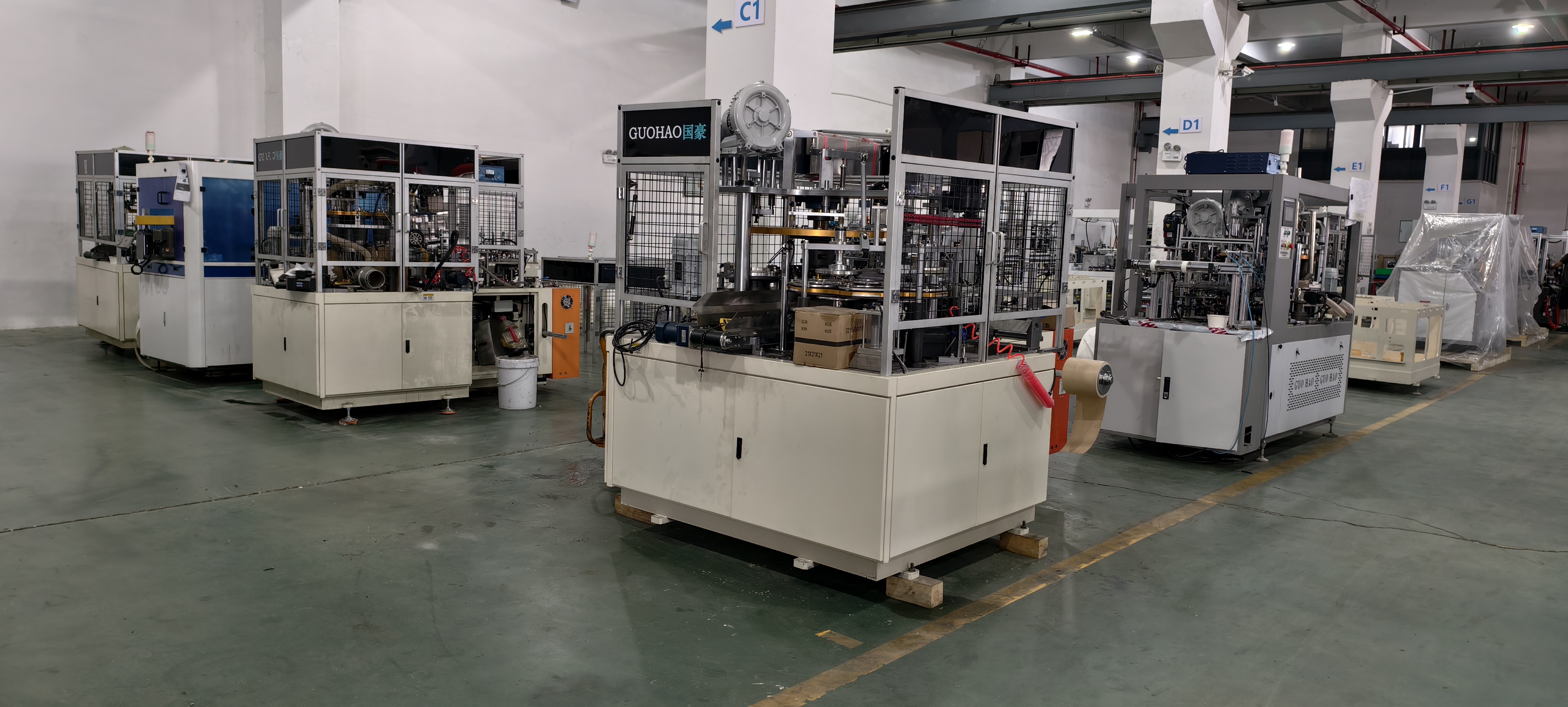
The disposable cup manufacturing industry faces increasing pressure to scale production while maintaining cost efficiency, quality consistency, and operational reliability. As businesses evaluate whether investing in automated equipment justifies the capital expenditure, the question of suitability becomes paramount. A paper cup machine represents a critical decision point for manufacturers transitioning from manual or semi-automated processes to full-scale industrial production, yet the answer depends on multiple operational, financial, and strategic factors that extend beyond simple production capacity.
Understanding whether a paper cup machine aligns with scaling objectives requires examining production throughput capabilities, automation depth, material handling efficiency, quality control mechanisms, and total cost of ownership. Modern paper cup machines offer varying degrees of sophistication, from entry-level models producing 40-60 cups per minute to high-speed industrial systems exceeding 150 cups per minute. The suitability question hinges not merely on speed but on how these machines integrate with existing workflows, accommodate diverse product specifications, minimize waste, and deliver consistent unit economics at higher volumes. For manufacturers targeting regional distribution networks or national retail chains, the scalability equation must account for both immediate production demands and future expansion requirements.
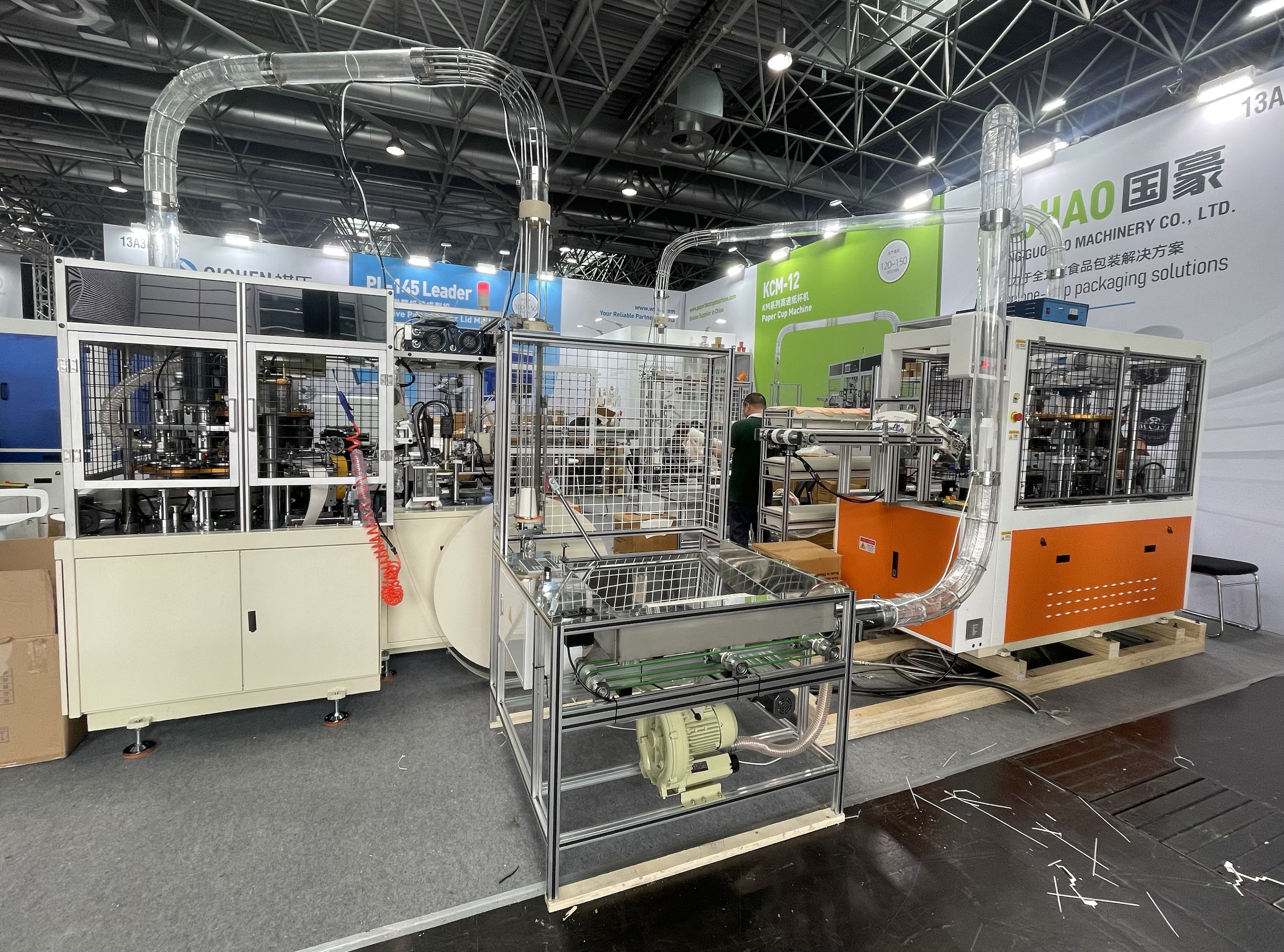
Production Capacity Analysis for Scalable Manufacturing
Throughput Requirements and Market Demand Alignment
Evaluating whether a paper cup machine suits scaling objectives begins with quantifying actual production requirements against equipment capabilities. Entry-level machines typically produce between 40 and 70 cups per minute, translating to approximately 57,600 to 100,800 cups during a standard 24-hour production cycle. For businesses serving local markets or niche segments, these volumes may suffice initially, but scaling operations to meet regional or national demand necessitates equipment capable of producing 100 to 150 cups per minute or higher. The critical assessment involves projecting demand growth trajectories over a 3-to-5-year horizon and determining whether current equipment selections accommodate anticipated volume increases without requiring premature replacement.
Multi-Shift Operation Feasibility and Equipment Durability
Scaling disposable cup manufacturing efficiently requires equipment designed for continuous or multi-shift operation without significant performance degradation. Industrial-grade paper cup machine models incorporate reinforced mechanical components, advanced lubrication systems, and thermal management features that enable 20-hour daily operation cycles with minimal downtime. Manufacturers must evaluate whether target equipment specifications support sustained high-volume production, as machines not engineered for intensive use experience accelerated wear, increased maintenance frequency, and higher total cost of ownership. The suitability determination must account for maintenance intervals, spare parts availability, and manufacturer support infrastructure that collectively influence operational continuity during scaling phases.
Flexible Configuration for Diverse Product Ranges
Efficient scaling requires production systems capable of accommodating diverse product specifications without extensive reconfiguration delays. Modern paper cup machine designs incorporate quick-change tooling systems, adjustable forming stations, and programmable control interfaces that enable transitions between different cup sizes, ranging from 3-ounce sampling cups to 22-ounce beverage containers. Manufacturers targeting multiple market segments benefit from equipment supporting size ranges from 50ml to 650ml without requiring separate production lines. This flexibility proves essential when scaling operations across diverse customer bases, including food service distributors, retail chains, event suppliers, and institutional buyers, each demanding specific size profiles and volume commitments.
Automation Depth and Labor Efficiency Implications
Manual Intervention Requirements and Labor Cost Structures
The suitability of a paper cup machine for scaling hinges significantly on its automation level and corresponding labor requirements. Fully automated systems integrate paper feeding, cup forming, heating sealing, curling, and discharge operations within a single continuous process, requiring minimal operator intervention beyond material replenishment and quality monitoring. Semi-automated alternatives demand manual paper loading, periodic adjustment of forming parameters, and manual product collection, creating labor bottlenecks that limit scalability. As production volumes increase, labor costs associated with semi-automated equipment can erode profitability margins, making fully integrated paper cup machine systems economically superior despite higher initial capital investments.
Quality Consistency Through Process Automation
Scaling disposable cup manufacturing efficiently requires maintaining consistent product quality across increasing production volumes, which manual processes struggle to achieve. Automated paper cup machine systems employ servo-driven positioning mechanisms, precision temperature controls, and optical inspection systems that deliver uniform cup dimensions, seal integrity, and structural strength regardless of production speed. This consistency becomes critical when serving large retail accounts or institutional contracts where quality variations result in order rejections, damaged customer relationships, and revenue losses. Manufacturers evaluating suitability must assess whether target equipment incorporates automated quality control features such as real-time dimensional verification, leak detection, and automated rejection of defective units before they enter packaging workflows.
Integration with Downstream Packaging Systems
Efficient scaling extends beyond cup production to encompass integrated packaging and logistics workflows. Advanced paper cup machine configurations include automated counting systems, stacking mechanisms, and synchronized interfaces with sleeve packaging equipment, carton packing lines, and palletizing robots. This integration eliminates manual handling bottlenecks, reduces contamination risks, and accelerates order fulfillment cycles. Manufacturers planning significant volume increases should prioritize equipment offering standardized communication protocols, such as PLC-based control systems compatible with existing facility automation infrastructure. The suitability assessment must consider not only cup production rates but also how seamlessly the equipment integrates with packaging, labeling, and distribution systems essential for scaling operations.
Material Efficiency and Waste Reduction Capabilities
Raw Material Utilization Rates and Cost Per Unit Economics
Scaling profitability depends critically on minimizing raw material waste, as paper substrate typically represents 60-70% of disposable cup manufacturing costs. High-efficiency paper cup machine systems achieve material utilization rates exceeding 95% through precision cutting mechanisms, optimized blank layouts, and automated scrap recycling. Lower-tier equipment may exhibit utilization rates between 85-90%, with the 5-10% differential translating to substantial cost penalties at high production volumes. For a facility producing 10 million cups monthly, a 5% waste differential equates to 500,000 wasted cups or approximately 15,000-20,000 USD in excess material costs monthly, significantly impacting profit margins during scaling phases.
Energy Consumption Profiles and Operational Cost Structures
Efficient scaling requires evaluating energy consumption profiles across different paper cup machine configurations, as electricity costs constitute the second-largest variable expense after raw materials. Modern equipment incorporating ultrasonic sealing technology, variable frequency drives, and intelligent heating systems consume 30-40% less energy compared to older thermal sealing systems. For manufacturers operating multiple shifts, this efficiency differential becomes financially material, potentially reducing annual energy costs by 15,000-25,000 USD per machine. Suitability assessments must incorporate total energy consumption calculations based on projected production volumes, local electricity rates, and equipment power ratings, ensuring that scaling operations maintain acceptable unit economics even as fixed costs are distributed across larger output volumes.
Defect Rate Management and Quality-Related Waste
Scaling disposable cup manufacturing efficiently requires minimizing quality-related waste resulting from production defects. Advanced paper cup machine systems equipped with servo-controlled forming stations, precision temperature regulation, and automated inspection systems typically maintain defect rates below 0.5%, whereas basic equipment may experience 2-3% defect rates. At production volumes of 100,000 cups daily, this differential translates to 1,500-2,500 additional defective units requiring disposal, material replacement, and disposal costs. The cumulative impact on scaling economics extends beyond direct material losses to encompass labor costs associated with quality sorting, production line interruptions, and customer service issues arising from defective product deliveries. Equipment suitability must therefore account for built-in quality control mechanisms that maintain low defect rates even as production speeds increase.
Financial Viability and Return on Investment Considerations
Capital Investment Requirements and Financing Structures
Determining whether a paper cup machine suits scaling objectives requires analyzing capital investment requirements against projected cash flow generation. Entry-level machines suitable for small-scale operations typically range from 15,000 to 35,000 USD, while high-speed industrial systems capable of supporting large-scale manufacturing demand investments between 80,000 and 150,000 USD. The suitability determination hinges on whether projected volume increases generate sufficient margin contribution to justify these capital commitments within acceptable payback periods. Manufacturers should model scenarios incorporating production volume ramp-up schedules, pricing dynamics, raw material cost fluctuations, and competitive market conditions to establish realistic ROI timelines. Equipment financing options, including lease structures and vendor financing programs, may improve cash flow profiles during initial scaling phases.
Breakeven Analysis and Volume Threshold Identification
Scaling efficiency depends on identifying production volume thresholds where automated paper cup machine systems deliver superior unit economics compared to manual or semi-automated alternatives. Detailed breakeven analyses must account for equipment depreciation, maintenance costs, labor savings, material efficiency gains, and quality improvement benefits. For many manufacturers, breakeven volumes fall between 5 million and 8 million cups annually, beyond which fully automated systems generate progressively higher profit margins. Below these thresholds, capital costs may not be justified by operational savings, rendering semi-automated equipment more suitable for initial scaling phases. Manufacturers must accurately forecast demand trajectories and assess whether current or projected volumes exceed breakeven thresholds within acceptable timeframes.
Maintenance Cost Structures and Long-Term Ownership Economics
The long-term suitability of a paper cup machine for scaling depends significantly on maintenance cost structures and component longevity. Industrial-grade systems designed for high-volume production incorporate hardened tooling, precision bearings, and modular component designs that reduce maintenance frequency and extend operational lifespans beyond 10 years. Conversely, budget equipment may require more frequent component replacements, specialized technical support, and higher downtime rates that undermine scaling economics. Comprehensive total cost of ownership analyses should incorporate annual maintenance expenditures typically ranging from 3-5% of initial equipment cost, spare parts availability, technician training requirements, and manufacturer support responsiveness. Equipment selections must balance initial capital conservation with long-term operational reliability essential for sustained scaling success.
Operational Flexibility and Market Adaptability Requirements
Product Customization Capabilities for Market Differentiation
Scaling disposable cup manufacturing efficiently in competitive markets requires equipment capable of producing differentiated products that command premium pricing or access specialized market segments. Advanced paper cup machine configurations support custom printing registration, embossing features, specialized rim treatments, and dual-layer construction for enhanced insulation properties. Manufacturers targeting premium food service accounts, specialty beverage retailers, or branded promotional markets benefit from equipment offering these customization capabilities without compromising production efficiency. The suitability assessment must evaluate whether target equipment accommodates custom tooling, supports diverse paper grades including PE-coated, PLA-coated, and water-based barrier materials, and enables rapid changeovers between standard and specialty product runs.
Regulatory Compliance and Food Safety Certification Support
Efficient scaling into regulated markets demands paper cup machine systems designed to meet food safety standards including FDA compliance, EU food contact regulations, and industry-specific certifications. Equipment constructed from food-grade stainless steel, incorporating hygienic design principles, and supporting validation protocols for cleaning and sanitation enables manufacturers to access institutional, healthcare, and export markets requiring rigorous compliance documentation. Manufacturers evaluating suitability should verify that target equipment meets relevant regulatory frameworks, includes documentation supporting compliance claims, and incorporates design features facilitating periodic sanitation and inspection procedures. Non-compliant equipment limits market access and creates barriers to scaling across diverse geographic regions and customer segments.
Technology Upgrade Pathways and Future-Proofing Considerations
Long-term scaling suitability requires evaluating whether paper cup machine platforms support technology upgrades and performance enhancements without requiring complete equipment replacement. Modular machine architectures enable incremental additions such as automated quality inspection systems, IoT connectivity for predictive maintenance, robotic material handling integration, and production data analytics platforms. Manufacturers planning multi-year scaling trajectories benefit from equipment platforms offering clear upgrade pathways that extend operational relevance and protect initial capital investments. The suitability determination should assess manufacturer roadmaps for technology development, availability of retrofit packages, and compatibility with emerging industry standards for automation, sustainability reporting, and digital manufacturing integration.
FAQ
What production volume justifies investing in an automated paper cup machine?
Automated paper cup machine investments typically become economically justified when production volumes exceed 5 to 8 million cups annually, depending on labor costs, material prices, and product pricing structures. Below these thresholds, manual or semi-automated equipment may offer adequate returns, while higher volumes benefit from automation through reduced labor costs, improved material efficiency, and enhanced quality consistency. Manufacturers should conduct detailed breakeven analyses incorporating their specific cost structures, market pricing, and growth projections to determine appropriate investment timing.
How does machine speed affect overall manufacturing efficiency during scaling?
Machine speed directly influences manufacturing efficiency by determining the baseline production capacity, but overall efficiency depends equally on automation depth, material handling integration, quality control mechanisms, and changeover flexibility. A high-speed paper cup machine producing 150 cups per minute delivers limited scaling benefits if manual material loading, frequent quality issues, or extended changeover times create bottlenecks. Comprehensive efficiency assessment must evaluate the entire production system, including upstream material preparation, downstream packaging integration, and maintenance downtime patterns that collectively determine effective throughput during scaling operations.
Can a single paper cup machine serve diverse product size requirements effectively?
Modern paper cup machine systems equipped with quick-change tooling and adjustable forming stations can effectively serve size ranges from 3-ounce to 22-ounce capacities, enabling manufacturers to address diverse market segments without maintaining separate production lines. However, frequent size changes reduce effective production capacity due to changeover downtime, typically requiring 30 to 90 minutes depending on equipment sophistication and operator experience. Manufacturers producing multiple sizes should evaluate whether projected production schedules justify single-machine flexibility or whether dedicated equipment for high-volume sizes combined with flexible machines for specialty products delivers superior overall economics during scaling phases.
What maintenance requirements impact long-term scaling viability?
Long-term scaling viability depends on maintenance requirements including daily cleaning and lubrication, monthly component inspections, quarterly precision adjustments, and annual comprehensive servicing. Industrial-grade paper cup machine systems designed for high-volume production typically require 2-4 hours weekly maintenance per machine, with major component replacements occurring at 3-5 year intervals. Manufacturers should establish preventive maintenance programs, maintain spare parts inventories for critical components, and develop relationships with equipment suppliers offering responsive technical support. Inadequate maintenance planning undermines scaling objectives through unexpected downtime, accelerated component wear, and quality deterioration that damages customer relationships and revenue stability.
Table of Contents
- Production Capacity Analysis for Scalable Manufacturing
- Automation Depth and Labor Efficiency Implications
- Material Efficiency and Waste Reduction Capabilities
- Financial Viability and Return on Investment Considerations
- Operational Flexibility and Market Adaptability Requirements
-
FAQ
- What production volume justifies investing in an automated paper cup machine?
- How does machine speed affect overall manufacturing efficiency during scaling?
- Can a single paper cup machine serve diverse product size requirements effectively?
- What maintenance requirements impact long-term scaling viability?