
 EN



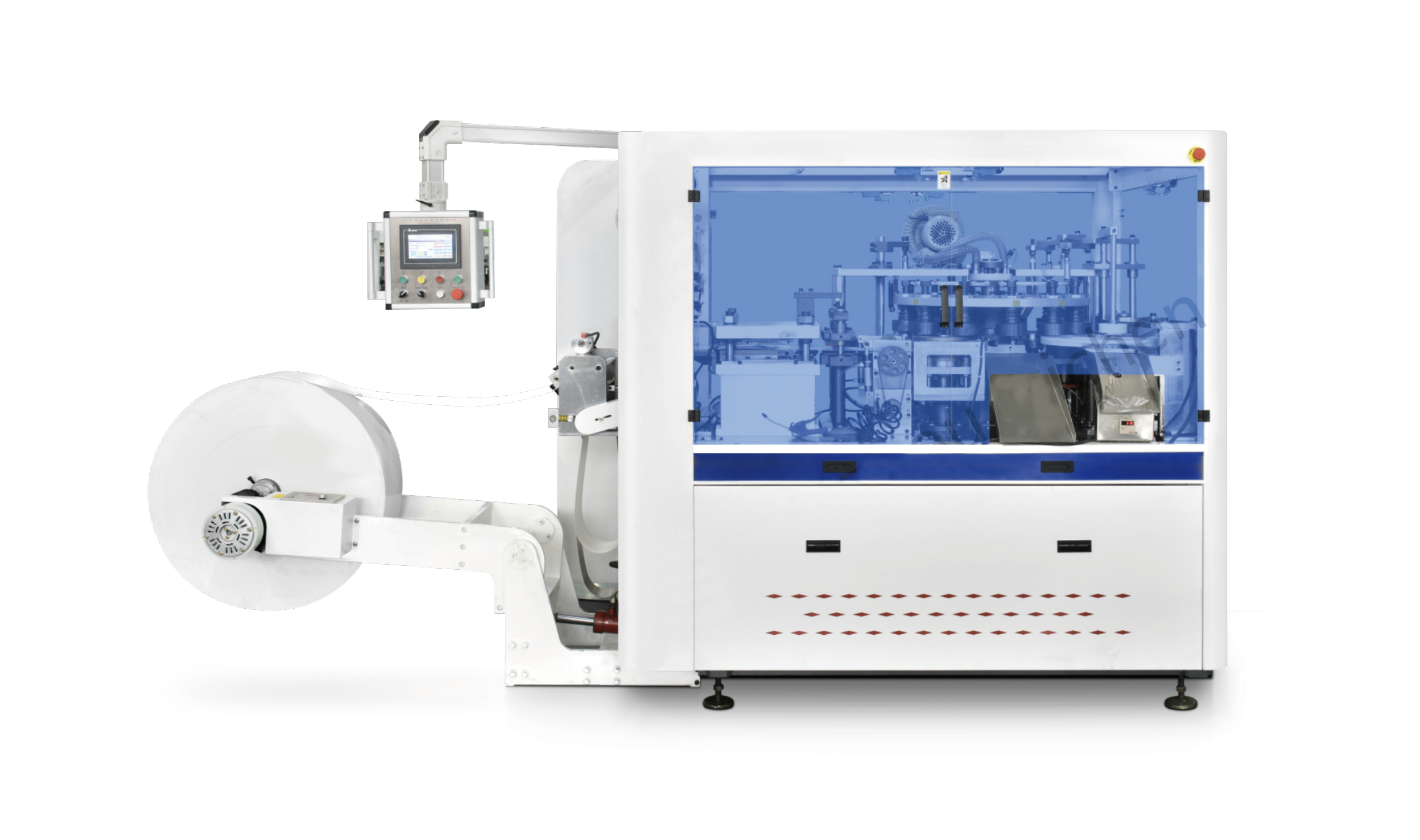
A paper cover machine represents a significant advancement in packaging automation, engineered to produce multiple container shapes and lid variations without requiring extensive equipment reconfiguration. Modern manufacturing demands flexibility, and a paper cover machine delivers precisely that capability by combining precision mechanics with adaptable tooling systems. This functionality allows production facilities to maximize output versatility while maintaining consistent quality across diverse product formats, making the paper cover machine an essential investment for businesses serving varied market segments.

Industrial packaging operations face mounting pressure to reduce downtime between product runs while responding quickly to customer specifications. The paper cover machine addresses this challenge through intelligent design that separates shape-critical components from the core automation framework. When a paper cover machine operator needs to switch between dome lids, rectangular covers, or custom configurations, the process involves minimal mechanical intervention, translating directly into reduced production interruptions and faster changeover cycles compared to traditional rigid equipment.
Shape Flexibility and Tooling Architecture
Modular Die Systems in Paper Cover Machine Design
The paper cover machine achieves its remarkable shape versatility through modular die systems that form the foundation of the production process. Each die set within the paper cover machine corresponds to a specific shape profile, and quick-change mechanisms allow operators to swap dies without disturbing core machine calibration. This architectural approach means a paper cover machine can transition from producing standard circular lids to oval, rectangular, or polygonal variants within minutes rather than hours. The paper cover machine maintains dimensional consistency across these transformations because the underlying feed, compression, and ejection systems remain unchanged; only the forming surface varies.
Modern paper cover machine platforms include magnetic or hydraulic die-locking systems that ensure rapid, secure engagement without manual adjustment. The paper cover machine operator simply aligns the new die, actuates the locking mechanism, and proceeds with production. Advanced paper cover machine models store multiple die configurations in onboard memory, automatically adjusting compression force, dwell time, and ejection pressure to match the selected shape profile. This intelligence within the paper cover machine eliminates guesswork and reduces the likelihood of defects during format transitions.
Material Adaptability Within Paper Cover Machine Operations
Beyond shape variation, a paper cover machine accommodates different material thicknesses and compositions without mechanical overhaul. Whether processing kraft paper, cardboard blends, or specialized coated materials, the paper cover machine adjusts compression parameters to suit material characteristics. This adaptability means a single paper cover machine can serve multiple production lines, switching between different material batches as demand fluctuates. The paper cover machine approach to material flexibility reduces capital expenditure because manufacturers avoid purchasing dedicated equipment for each material type.
Operational Efficiency and Minimal Adjustment Requirements
Quick-Change Mechanisms Reduce Downtime
The competitive advantage of a paper cover machine lies substantially in its ability to minimize adjustment time between production runs. Traditional rigid machines require technician intervention, recalibration, and test cycles before returning to full production, consuming four to eight hours per changeover. By contrast, a modern paper cover machine designed for flexibility typically requires only fifteen to forty-five minutes from format decision to full production restart. This dramatic reduction in downtime translates directly into higher equipment utilization rates and improved overall manufacturing productivity across the production facility.
The paper cover machine achieves this efficiency through pre-calibrated quick-change tooling, standardized mounting interfaces, and automated parameter loading. When an operator selects a new shape configuration on the paper cover machine control panel, the machine automatically retrieves stored settings for compression, speed, and temperature that were previously optimized for that specific format. The paper cover machine executes these parameter adjustments electronically without manual intervention, allowing production to resume immediately after die installation. This seamless transition capability makes the paper cover machine particularly valuable for contract manufacturers and facilities serving multiple customer accounts with varying packaging requirements.
Cost-Benefit Analysis of Paper Cover Machine Flexibility
From a financial perspective, investing in a versatile paper cover machine rather than purchasing multiple single-purpose machines offers substantial long-term savings. A paper cover machine capable of producing ten distinct shapes eliminates the need for ten separate machines, dramatically reducing capital expenditure, floor space consumption, and maintenance overhead. The paper cover machine consolidation strategy also simplifies training, inventory management, and spare parts logistics. For facilities with seasonal demand fluctuations or diverse product portfolios, the paper cover machine flexibility model converts fixed production capacity into adaptive, responsive infrastructure.
Quality Consistency Across Multiple Shapes
Precision Control in a Versatile Paper Cover Machine
Production consistency represents a critical concern when a single paper cover machine manufactures multiple shapes. However, modern paper cover machine technology incorporates closed-loop feedback systems that monitor pressure, temperature, and timing throughout the production cycle regardless of active shape profile. The paper cover machine continuously compares actual process parameters against target specifications, automatically adjusting hydraulic pressure or servo positioning to maintain dimensional accuracy. This self-correcting capability ensures that a paper cover machine produces dome lids with the same precision as rectangular covers, maintaining tolerances within 0.5 millimeters across all shape variants.
The paper cover machine achieves this consistency through sensor integration at critical junctures in the production sequence. Pressure sensors within the paper cover machine confirm compression force, load cells verify product weight, and optical sensors inspect edge definition. When measurements deviate from acceptable ranges, the paper cover machine automatically compensates or alerts the operator before defective products reach the collection bin. This quality assurance infrastructure built into the paper cover machine ensures that flexibility does not compromise product reliability.
Repeatability and Customer Satisfaction
Manufacturing customers expect consistent product quality across all shapes and batch runs, and a paper cover machine equipped with precision controls delivers exactly that expectation. The paper cover machine maintains production stability because core mechanical systems remain unchanged when switching formats; only shape-specific dies rotate into position. Customers receive covers that meet specifications regardless of whether the paper cover machine produced them yesterday in circular configuration or today in hexagonal format. This repeatability strengthens customer relationships and reduces warranty claims, yielding competitive advantages that justify the paper cover machine investment.
FAQ
What shapes can a paper cover machine produce?
A paper cover machine can produce any shape that fits within its forming die dimensions, including circular, oval, rectangular, square, hexagonal, and custom polygonal designs. The versatility of the paper cover machine depends on the range of available dies, and most modern systems accommodate four to twelve shape variants. Many manufacturers design the paper cover machine die interface to accept custom dies tailored to specific packaging requirements, further expanding shape possibilities beyond standard catalogs.
How quickly can adjustments be made on a paper cover machine?
Adjustments on a paper cover machine typically require fifteen to forty-five minutes for die changes and parameter loading. The exact timeline for a paper cover machine adjustment depends on operator experience, die complexity, and how thoroughly the paper cover machine system has been pre-calibrated for the target shape. Advanced models featuring automated parameter loading reduce adjustment time on the paper cover machine to nearly fifteen minutes for standard shape changes.
Does using one paper cover machine for multiple shapes affect product quality?
No, using one paper cover machine for multiple shapes does not negatively affect quality when the equipment includes closed-loop feedback systems and precision controls. A well-maintained paper cover machine produces consistent results across all shape configurations because the core production mechanisms remain stable; only the forming die changes. Quality consistency on the paper cover machine depends more on proper maintenance, calibration discipline, and material quality than on the number of shapes produced.