
 EN
EN



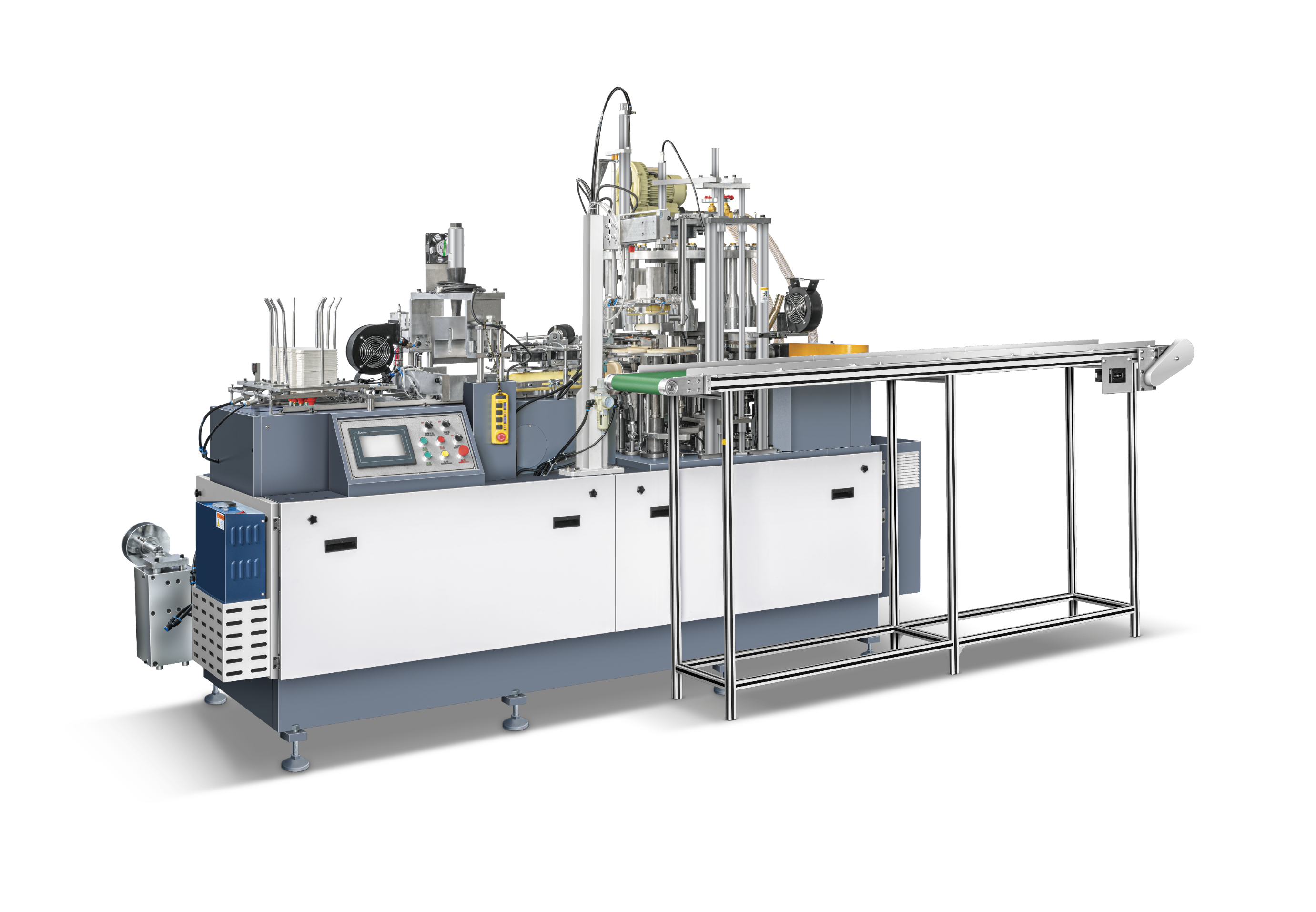
When foodservice operators and packaging manufacturers evaluate container quality, leak resistance sits at the top of their requirements list. A finished paper bowl that allows liquids to seep through the base or sidewall seam is not just a product failure — it is a direct liability for brands, retailers, and end consumers. Understanding how a paper bowl machine achieves consistent leak resistance requires looking beneath the surface of the finished container and into the engineering logic that governs each stage of the forming process.
Leak resistance in paper bowls is not an accidental outcome. It is an engineered result that depends on precise heat settings, controlled pressure application, accurate material positioning, and tightly synchronized mechanical timing. A modern paper bowl machine is designed to replicate these conditions at high speed across thousands of cycles per shift, ensuring that every unit leaving the production line meets the same structural integrity standard. This article explains exactly how that result is achieved — from raw blank to sealed, leak-proof container.
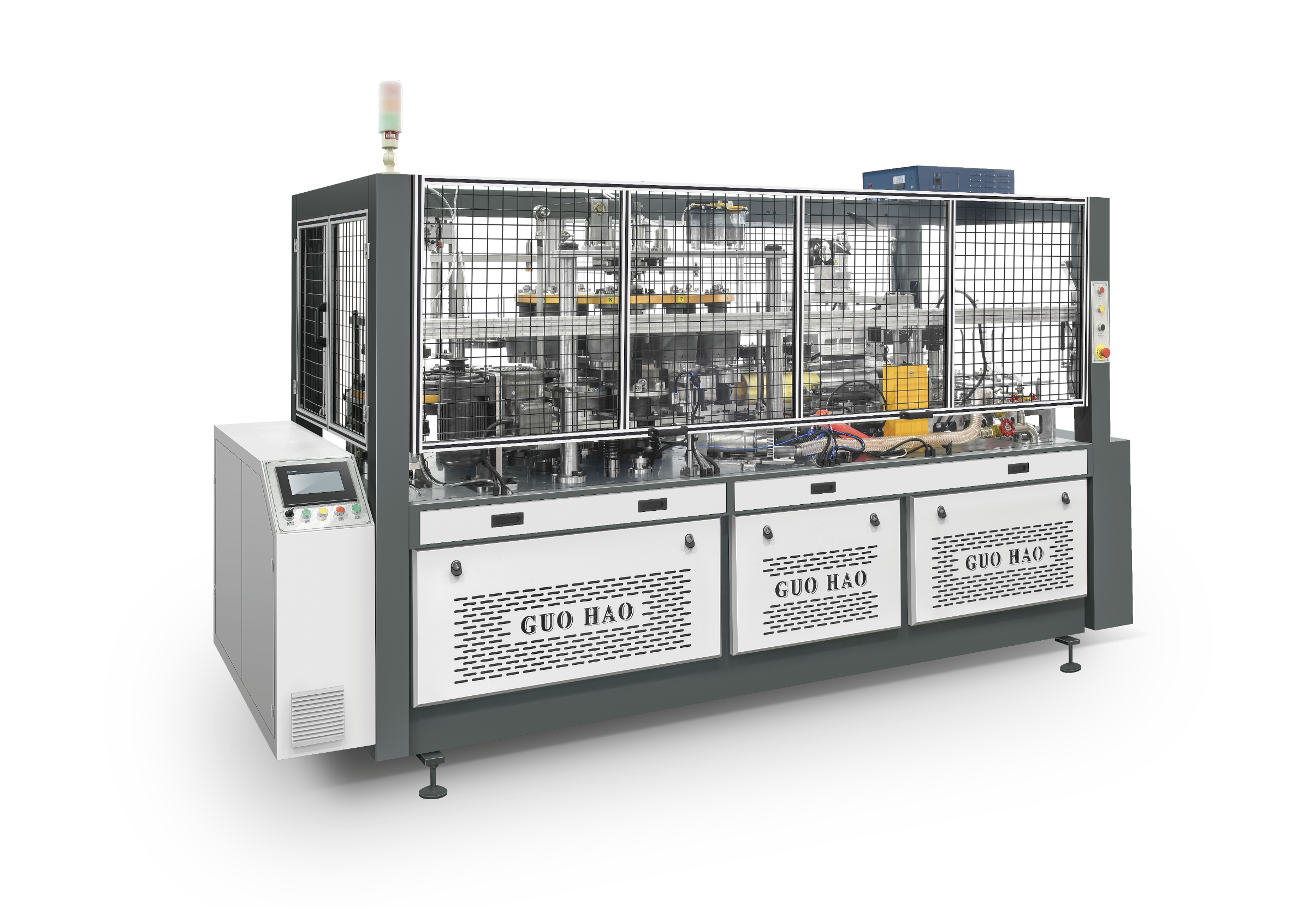
The Role of Heat and Pressure in Sealing
How Heat Activates the PE Coating Layer
Paper bowls are not made from plain paper stock. The blanks fed into a paper bowl machine are coated with a thin layer of polyethylene on the interior surface. This PE layer is inert at room temperature but becomes thermoplastic when exposed to precise levels of heat. During the forming cycle, heating elements within the machine raise the temperature of the blank's coated surface to a calibrated threshold, causing the PE layer to soften and become bondable.
When two coated surfaces are pressed together under this heated state — particularly at the base disk joint and the sidewall overlap seam — the PE layers fuse into a single continuous barrier. Once cooled and set, this fused zone creates a watertight boundary that prevents liquid from migrating through the paper substrate. The paper bowl machine must maintain heating element temperatures within a narrow tolerance band; too low and the bond is weak, too high and the paper substrate risks scorching or deformation.
Experienced operators understand that humidity, ambient temperature, and raw material batch variations can all affect how the PE layer responds to heat. A well-engineered paper bowl machine accounts for these variables through adjustable temperature controls and sensor feedback systems that maintain consistent output quality across extended production runs.
Mechanical Pressure and Seam Compression
Heat alone cannot guarantee a leak-resistant seam. Pressure must be applied simultaneously to compress the softened PE layers together and eliminate any microscopic air gaps that could later become liquid pathways. The paper bowl machine uses precisely machined forming dies and curling tools that apply controlled mechanical force at each sealing point during the forming cycle.
The base seam, where the circular bottom disk meets the cylindrical sidewall blank, is the most structurally demanding joint in the finished bowl. If this junction is not compressed evenly and completely, even a tiny gap can allow hot soup, sauces, or other liquids to penetrate over time. The forming tooling in a paper bowl machine is engineered to apply uniform radial pressure around the entire perimeter of this joint, leaving no section unsealed.
Similarly, the sidewall lap seam — where the blank wraps around and overlaps itself to form the cylindrical body — must be bonded under consistent pressure. Uneven lap pressure results in seams that appear visually intact but fail under liquid stress. High-quality paper bowl machine designs integrate seam-compression mechanisms that self-adjust for minor blank thickness variations, maintaining reliable seal quality across different paper grades.
Blank Feeding Accuracy and Material Alignment
Why Blank Positioning Determines Seal Quality
The integrity of a leak-resistant seam depends heavily on how accurately the paper blank is positioned before and during forming. If a blank enters the paper bowl machine slightly misaligned, the overlap seam will be off-center, resulting in an uneven bond width. A narrow bond zone is more vulnerable to delamination under thermal or mechanical stress, which translates directly into leak risk during end-use.
Modern paper bowl machine designs incorporate precision blank-feeding mechanisms that use mechanical guides, vacuum suction, and registration stops to ensure each blank arrives at the forming station in the exact correct orientation. These systems operate in synchronization with the main drive mechanism, so blank delivery timing matches the open and close cycle of the forming dies precisely.
Even small deviations in blank feed timing — fractions of a second — can cause the blank to enter the forming zone while the dies are mid-cycle, producing misformed seams. This is why high-speed paper bowl machine designs invest heavily in servo-driven feed systems with real-time positional feedback rather than relying solely on cam-driven mechanical timing.
Base Disk Integration and Bottom Seal Formation
The bottom disk is a separately cut circular piece that forms the floor of the finished bowl. Its integration with the sidewall blank is the most critical leak-resistance junction in the entire container. A paper bowl machine feeds both the sidewall blank and the base disk in precisely timed sequences so that the two components arrive at the base-forming station in perfect registration.
The base-forming station applies heat and pressure in a single coordinated motion, folding the lower edge of the sidewall blank over and around the perimeter of the base disk to create a mechanically locked and thermally bonded joint. The quality of this fold is determined by the geometry of the forming tools and the accuracy of the disk placement. A paper bowl machine with worn or improperly calibrated base-forming tooling will produce bowls with incomplete bottom seals, regardless of how well other parameters are controlled.
Regular tooling inspection and replacement schedules are therefore not optional maintenance activities — they are fundamental to sustaining leak resistance output quality on a paper bowl machine over its operational lifespan.
Curling and Rim Formation as a Structural Contributor
The Function of the Rolled Rim in Leak Prevention
The top rim of a paper bowl serves multiple purposes. It provides rigidity for handling, creates a surface for lid sealing in covered applications, and — critically — seals the top edge of the sidewall so that the paper substrate is not exposed. An exposed paper edge at the rim is a direct path for liquid absorption, which leads to softening, deformation, and eventual leakage through the degraded material.
A paper bowl machine forms the rim by curling the upper edge of the sidewall blank outward and rolling it tightly upon itself. This curling operation encapsulates the raw paper edge entirely within the rolled structure, preventing any direct contact between the paper fiber and the bowl's liquid contents. The tightness and consistency of this curl is controlled by the curling tools' geometry and the speed at which the curl is formed.
Inconsistent rim curling — where the roll is too loose, uneven, or incomplete — leaves portions of the paper edge partially exposed or creates a rim profile that does not seat properly against a lid. Either condition increases the risk of liquid contact with unprotected fiber zones. Operators monitoring a paper bowl machine should include rim curl uniformity as a routine visual and dimensional quality check.
Rim Stiffness and Container Handling Integrity
A well-formed rim also contributes indirectly to leak resistance by maintaining the container's structural shape under load. A bowl that deforms when filled with hot liquid or gripped by a consumer creates stress concentrations at its seams. These stress points can open micro-gaps in previously sound bonds, particularly at the base-to-sidewall junction.
The paper bowl machine's curling station directly influences rim stiffness. A properly formed, tightly rolled rim distributes handling loads across the entire circumference of the container, reducing localized stress at any single seam point. This structural benefit works in combination with the thermal bonds at the seams to produce a container that maintains its leak-resistant integrity throughout its intended use lifecycle.
Machine Calibration, Maintenance, and Process Consistency
Why Calibration is Central to Leak-Resistance Repeatability
A paper bowl machine is capable of producing leak-resistant containers only when it is operating within its designed parameter envelope. Temperature settings, pressure values, feed timing, and tooling clearances must all be calibrated to the specific combination of paper weight, PE coating thickness, and bowl dimensions being produced. Deviating from calibrated settings — even incrementally — introduces variability that erodes seal quality over time.
Operators running a paper bowl machine across multiple product SKUs must perform full recalibration when switching between bowl sizes or paper grades. Using settings optimized for a lightweight soup bowl on a heavier hot pot container, for example, will produce under-bonded seams that pass visual inspection but fail under liquid load. Documented calibration procedures and standardized changeover checklists are essential operational practices for any production facility using a paper bowl machine at commercial scale.
Digital control systems on modern paper bowl machine models simplify this process by storing pre-verified parameter sets for each product configuration, reducing human error during changeovers and ensuring that the machine returns to the correct operating state each time a product is run.
Preventive Maintenance and Its Direct Impact on Seal Integrity
Mechanical wear is unavoidable in any high-cycle production machine. On a paper bowl machine, the components most directly affecting leak resistance — forming dies, sealing plates, curling tools, and heating elements — are also among the highest-wear components because they are in direct contact with material under heat and pressure during every cycle.
Worn sealing surfaces lose the surface flatness and sharpness needed to create complete PE fusion bonds. Degraded heating elements develop hot spots and cold zones that create uneven heat distribution across the sealing area. Fatigued spring mechanisms in compression assemblies deliver inconsistent pressure. Each of these degradation modes translates directly into reduced leak resistance in finished bowls produced by the paper bowl machine.
A structured preventive maintenance program — including scheduled tooling inspections, heating element resistance checks, pressure calibration verifications, and lubrication of mechanical drive components — keeps the paper bowl machine performing at its designed capability. Reactive maintenance, by contrast, allows degradation to accumulate until a visible quality failure triggers intervention, by which point a significant volume of substandard product may already have been produced.
FAQ
What type of paper is required for a paper bowl machine to produce leak-resistant bowls?
The paper blanks used in a paper bowl machine must be coated with polyethylene on the food-contact side. The PE coating is what enables thermal bonding at the seams and provides the moisture barrier that makes the finished bowl leak-resistant. Plain uncoated paperboard will not form watertight seams in a standard paper bowl machine and is not suitable for liquid-holding food applications.
How does bowl size affect the sealing process on a paper bowl machine?
Larger bowl sizes require adjusted heat levels, pressure settings, and tooling geometry to maintain seal integrity across a wider seam area. A paper bowl machine must be recalibrated when switching between bowl diameters and volumes to ensure that all seam zones receive consistent thermal and mechanical treatment. Applying settings from a smaller bowl configuration to a larger bowl typically results in under-bonded seams.
Can a paper bowl machine produce bowls suitable for hot liquid contents?
Yes, provided the machine is correctly calibrated and the raw materials are rated for hot-fill applications. The PE coating on the blanks must be of sufficient thickness and grade to maintain its barrier properties at elevated temperatures. The paper bowl machine's sealing parameters must also be set to produce bond strengths that withstand thermal expansion stress, which increases when hot liquids are introduced into the finished container.
How often should the tooling on a paper bowl machine be inspected for wear?
Tooling inspection frequency depends on production volume, but most commercial operators inspect forming dies and sealing surfaces at intervals of every few million cycles or on a monthly basis for high-volume lines. Any visible scoring, edge rounding, or surface pitting on the tooling of a paper bowl machine should be addressed immediately, as even minor surface degradation can compromise seal quality and lead to leak failures in finished products.
Table of Contents
- The Role of Heat and Pressure in Sealing
- Blank Feeding Accuracy and Material Alignment
- Curling and Rim Formation as a Structural Contributor
- Machine Calibration, Maintenance, and Process Consistency
-
FAQ
- What type of paper is required for a paper bowl machine to produce leak-resistant bowls?
- How does bowl size affect the sealing process on a paper bowl machine?
- Can a paper bowl machine produce bowls suitable for hot liquid contents?
- How often should the tooling on a paper bowl machine be inspected for wear?